

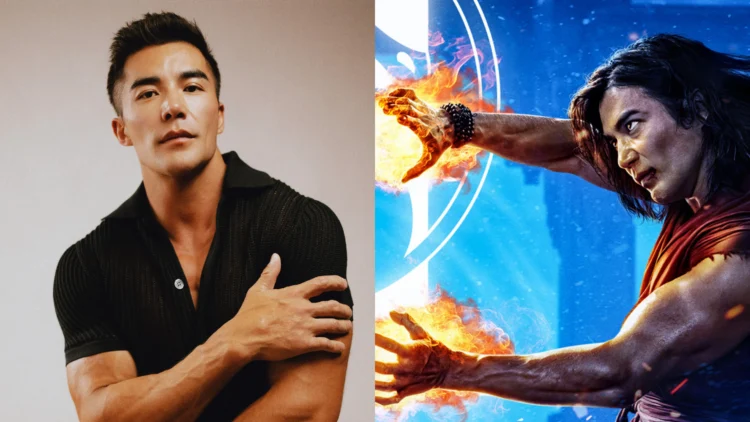
Ludi Lin is navigating the “Mortal Kombat 2” press junket with a black eye.
This is no cinematic artifice. The actor exudes a spirited, almost defiant confidence, clearly relishing the moment regardless of his physical state. It has been five years since our last encounter, but as we reconnected with him via Zoom during his stay at the Pan Pacific Orchard in Singapore, it was clear that the quintessence of Ludi Lin remains unchanged.
When we spoke to him, he had just been in the centrifugal force of a global tour for “Mortal Kombat 2”, which just released in Malaysian cinemas on the 7th of May, spiraling through Los Angeles and Jakarta in a matter of days. Yet, there’s a nonchalance about the bruise. He reveals the mark was earned during a sparring session just before the promotional machine reached full velocity. The timing, he concedes, was perhaps less than surgical, yet the injury is a secondary concern.
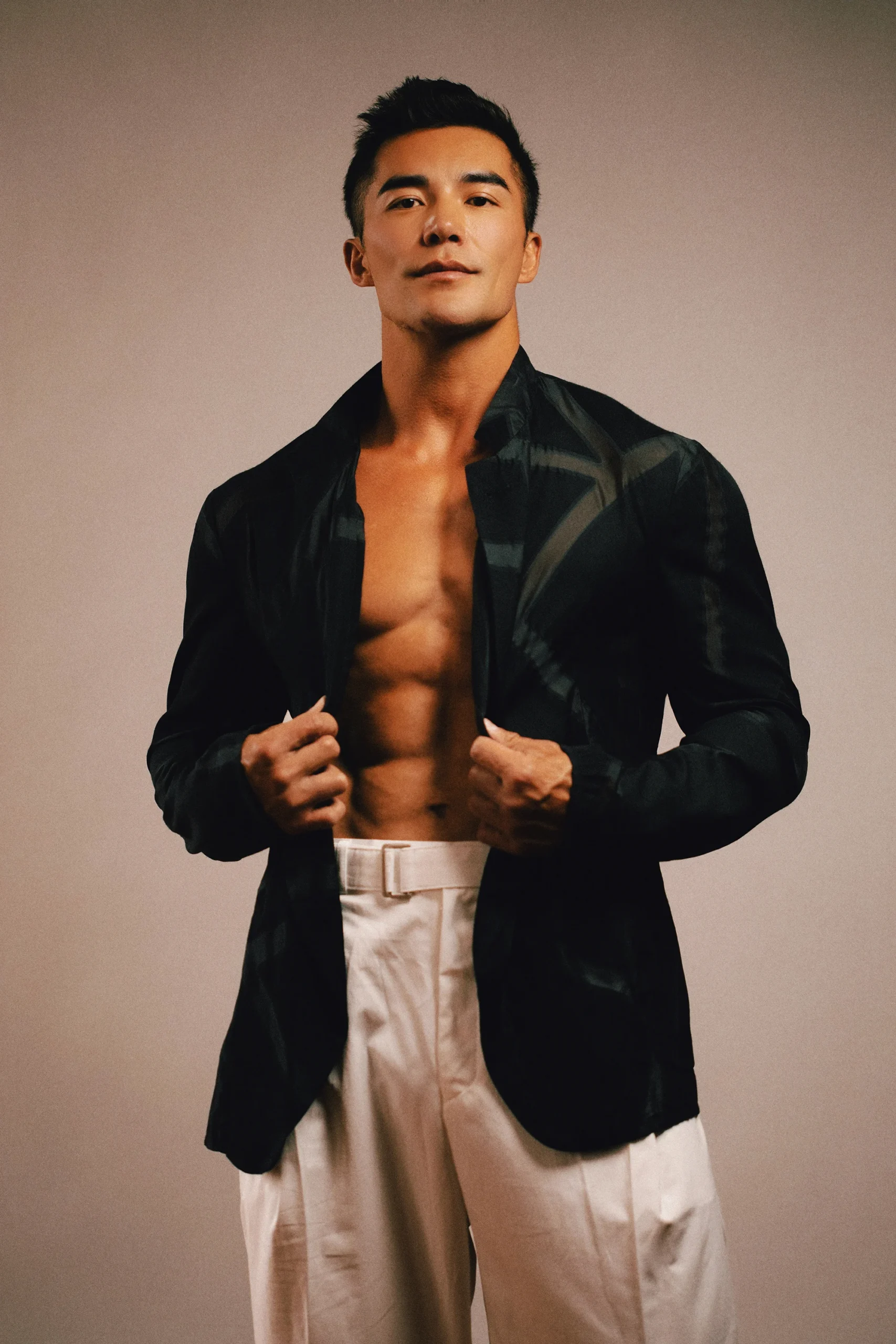
“That’s real and that’s fun,” he says. There’s something about the way he treats this that makes him a total badass.
For audiences who have tracked Lin’s trajectory from the “Power Rangers” revival and “Aquaman” to the visceral carnage of the “Mortal Kombat” mythos, this temperament is entirely consistent. Over the past decade, the Chinese-Canadian actor has meticulously cultivated a career defined by rigorous physical demands, expertly oscillating between blockbuster bombast and a contemplative philosophy regarding art and purpose.
Now, half a decade after the first “Mortal Kombat” reboot emerged amidst the sterile uncertainty of a pandemic, Lin returns to the fray as Liu Kang. And now, he’s seasoned, battle-scarred, and imbued with an emotional gravity that far outweighs his previous iterations.
Back Into The “MK” Arena
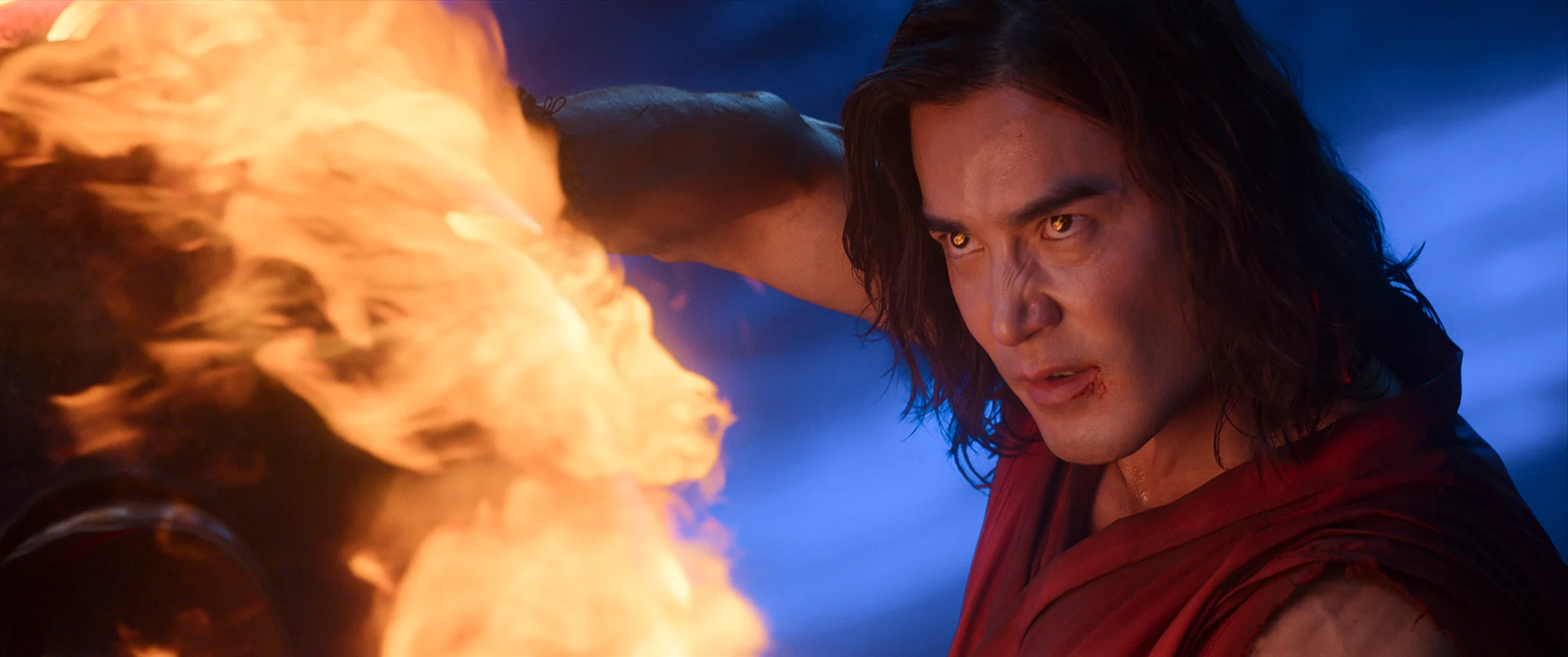
Photo Credit: Photo Courtesy Warner Bros. Pictures
CopyrightNotice: © 2026 Warner Bros. Ent. All Rights Reserved
The journey toward the realization of “Mortal Kombat 2” has been a saga of endurance.
The genesis of the first installment was forged amidst the sterile isolation of a global pandemic, where visceral combat choreography was stifled by clinical protocols. Subsequent industry-wide labor disputes and fluctuating production schedules further threatened to stall the sequel’s momentum, casting the project into a liminal space not unlike the very realms the fighters inhabit.
Yet now, half a decade after the reboot first ignited the cultural zeitgeist, the ensemble has finally secured the one element that eluded them during their inaugural outing: authentic, unmediated connection.
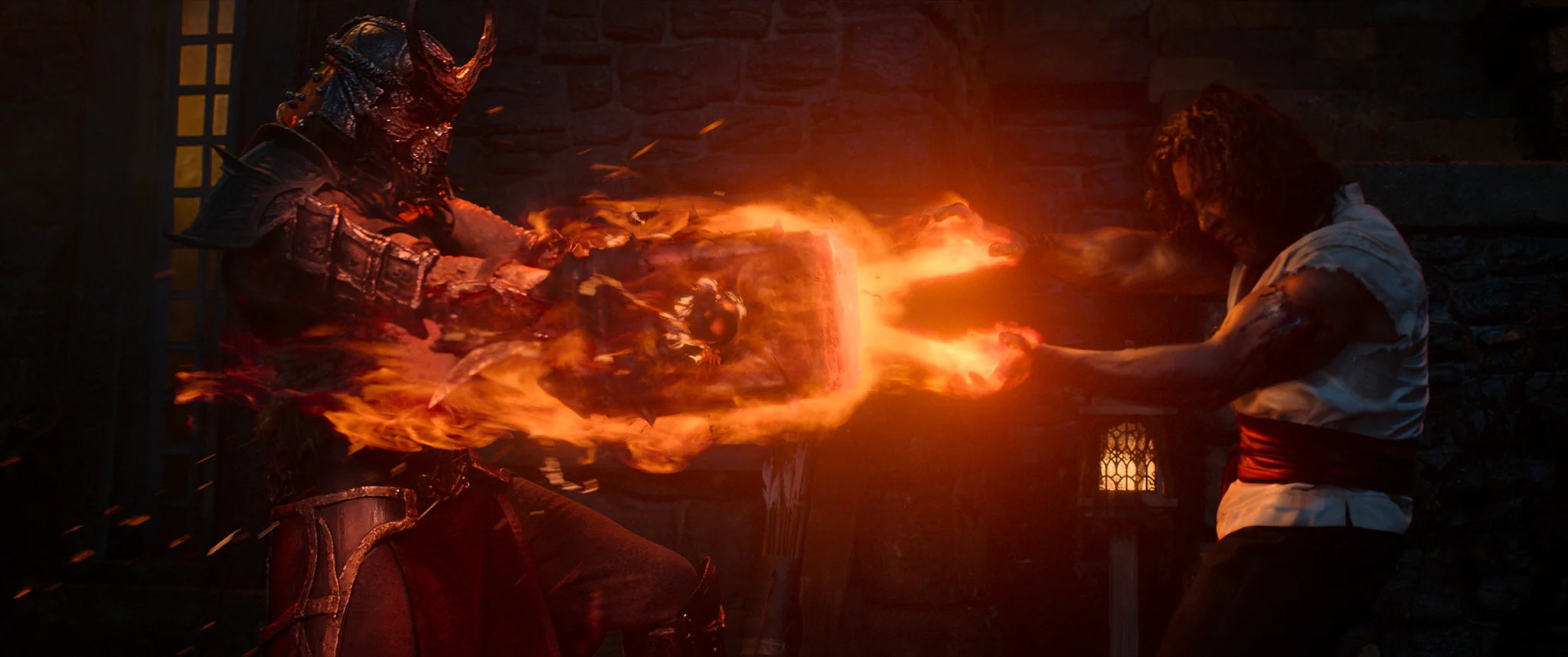
“It feels awesome. It’s unimaginable how good it feels,” Lin says. “To be able to do this in person… to be able to have the premieres in person, to be able to do press in person with my castmates and actually physically touch each other, it’s great.”
PhotoCredit: Photo Courtesy Warner Bros. Pictures
Copyright Notice: © 2026 Warner Bros. Ent. All Rights Reserved
There is a palpable gravity when he emphasizes the tactile nature of this reunion. It serves as a testament to a rapport deeply ingrained by weathering a singular epoch of history in tandem.
“We’re such a close family,” Lin reflects. “Not only on screen when we’re fighting and grabbing each other… and doing fatalities, but off screen too. As much as we fight on screen, we try to care for and love each other off screen.”
New Faces, Same Energy
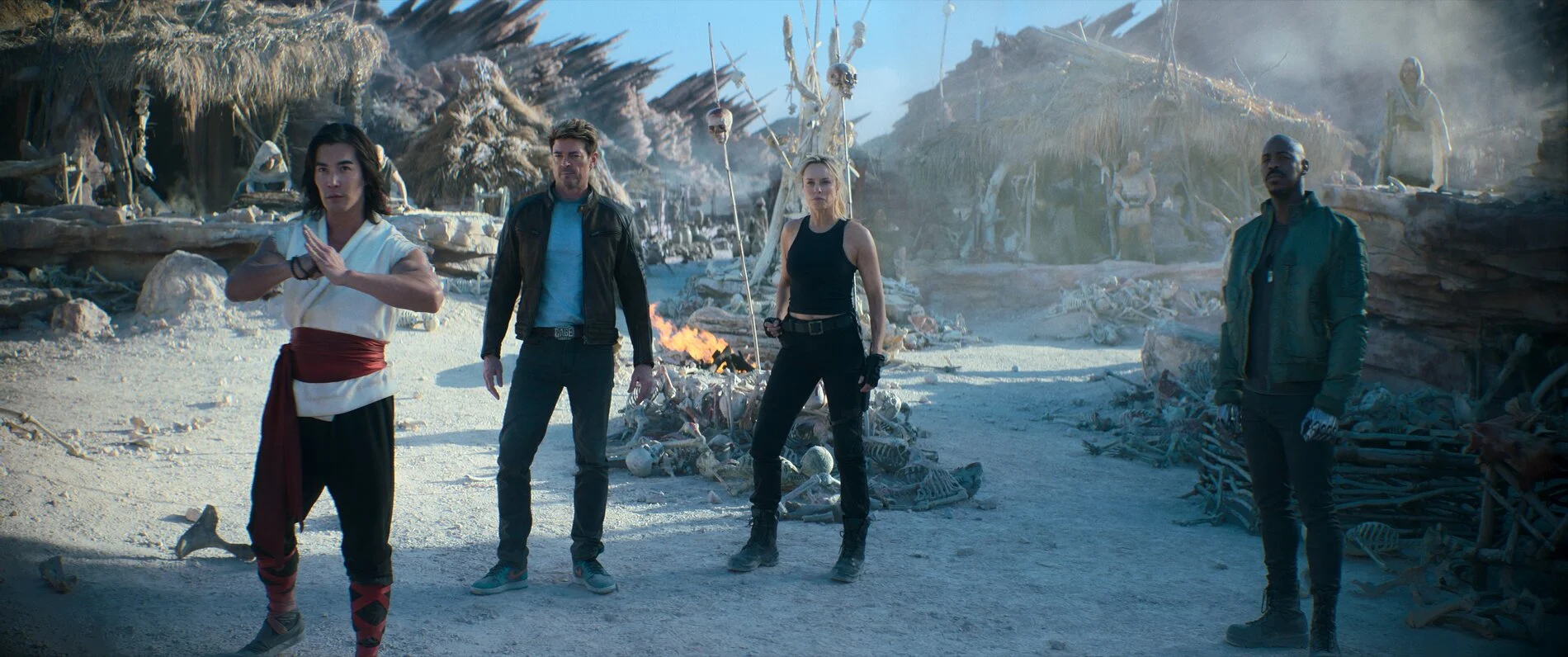
The burgeoning roster of Mortal Kombat 2 necessitated a grand expansion of the ‘Choose Your Fighter’ pantheon, ushering in formidable presences like Karl Urban and Adeline Rudolph. Yet, according to Lin, this influx of established titans never threatened the production’s hard-won equilibrium; if anything, it solidified it.
PhotoCredit: Photo Courtesy Warner Bros. Pictures
CopyrightNotice: © 2026 Warner Bros. Ent. All Rights Reserved
Lin initially pivots to a dry, deadpan wit when asked about the newcomers. “Oh yeah, we don’t like them at all,” he quips. “We don’t hang out. We call them newbies. Or noobs.” But the jest is a playful mask for a profound camaraderie. “In fact, it felt like the first movie was us building a little nest for the rest of the family to migrate into the Mortal Kombat universe.”
That spirit of radical hospitality became the sequel’s defining ethos. Despite the escalating scale of the production, the atmosphere remained remarkably democratic, untouched by the ego-driven stratification that often plagues high-stakes filmmaking. “Sometimes there’s a hierarchy on film sets—the big stars and the newcomers,” Lin observes. “But it didn’t feel like that at all.”
“Everything felt like a round table. It felt like friends hanging out.”
This sense of communal intimacy transformed the blockbuster experience into something deeply personal. “Watching the movie honestly felt like when you’re kids making home videos with your camcorder,” he says. “That’s what the premieres have felt like. We made this little movie, and now we get to watch it together while sharing it with the rest of the world.”
The Fire Beneath Liu Kang
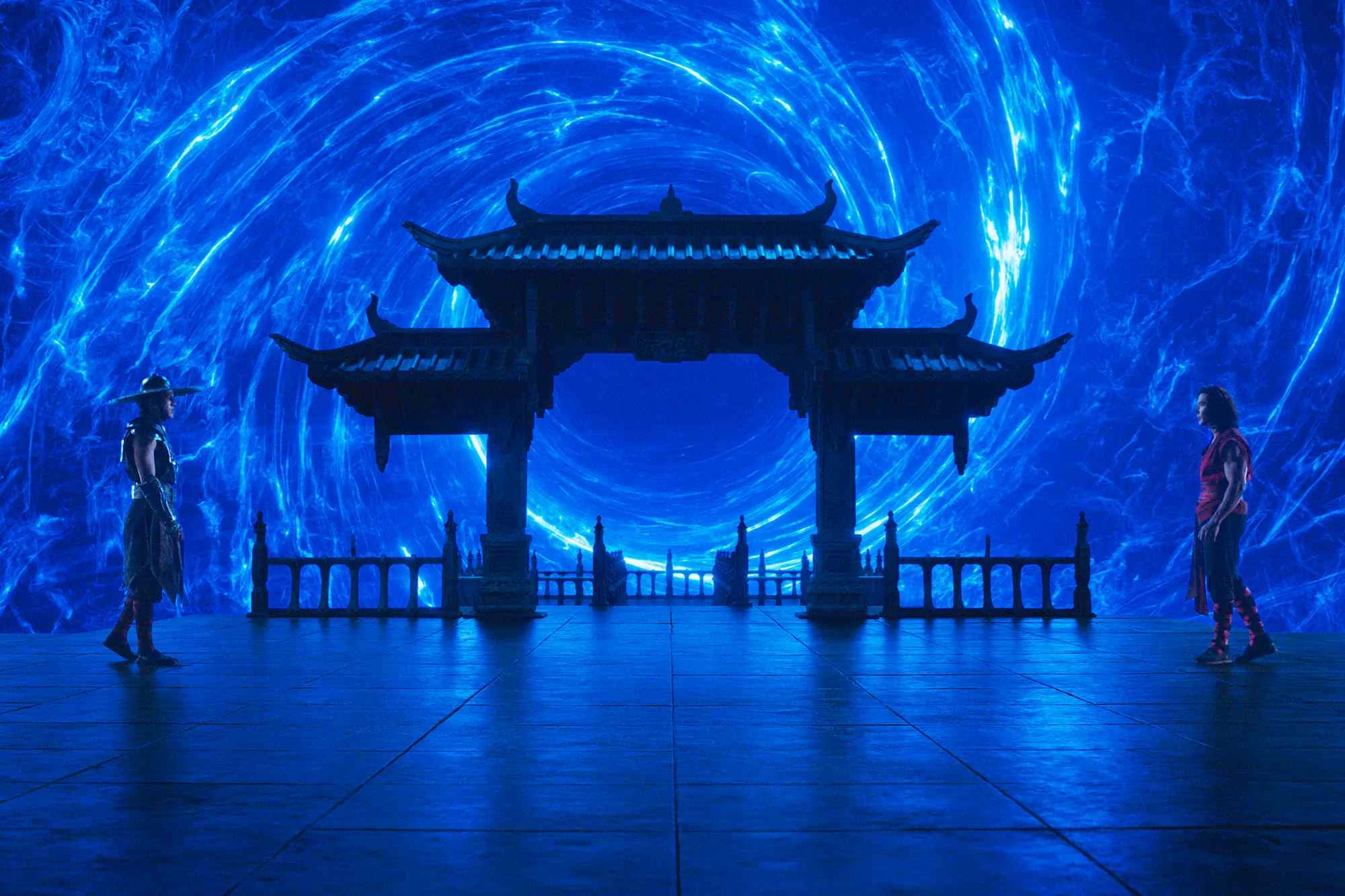
In “Mortal Kombat 2”, Lin’s Liu Kang returns burdened by a weight far heavier than the defense of Earthrealm. While the first installment centered on discovery, the sequel propels the character into a darker psychological landscape shaped by profound grief and unresolved loss.
At the heart of this emotional rupture is the death of Kung Lao, Liu Kang’s brother-in-arms. For Lin, this tragedy transcends the loss of a tactical ally; it represents the erasure of a foundational part of Liu Kang’s identity.
“You could see that he lost his brother,” Lin notes. “The person closest to him. They grew up together, trained together, and complemented each other. They were partners, and he lost him.”
CopyrightNotice: © 2026 Warner Bros. Ent. All Rights Reserved
Lin approaches this mourning with a quiet gravity, ensuring that the character’s pain resonates beneath the film’s trademark brutality. “For anyone who knows that kind of grief, it’s a very heavy place,” he says. “So definitely, he has a lot of grief inside him at the start of the second movie. A lot of fury, anger, and complex emotions.”
The Invisible Architects Of Action
Within the visceral, bone-shattering landscape of Mortal Kombat, Lin has cultivated a profound reverence for one of cinema’s most overlooked pillars: the stunt department. He is swift to deconstruct the “polished fallacy” of the omnicompetent movie star. It’s the industry myth that a single individual can master dramatic nuance, acrobatics, and precision combat simultaneously.
“People don’t realize stunt performers aren’t just athletes anymore. They’re filmmakers.”
To Lin, these teams are the architects of a production’s kinetic vocabulary. Months before the first frame is captured, they are meticulously engineering the “previs”, which is the high-fidelity action blueprints that dictate everything from combat styles to camera placement. “They build the entire framework of the action before we ever step onto set,” Lin reveals.
Even with his own extensive martial pedigree, Lin remains tethered to this essential collaboration. While he cites co-star Max Huang as a rare physical phenomenon, he remains adamant that specialized expertise is irreplaceable. “You can’t expect actors to spend their lives mastering dramatic arts while also somehow being able to pull off a double backflip 540,” he says with a laugh. “That takes a lifetime of training.”
He recalls the sheer exhilaration of performing a canyon leap on the set of “Power Rangers” as a career highlight: “We got to do it ourselves… it was so much fun.” Yet, he insists such moments of individual triumph are only possible because of a human foundation. “As actors, we add emotion and soul to the fights, but the stunt team lays the groundwork. It’s truly collaborative art.”
This perspective makes the Academy’s recent decision to formally recognize stunt design particularly poignant. For Lin, it is more than a salute to the perils of the trade; it is the official canonization of a creative discipline that has, until now, shaped the evolution of modern spectacle from the shadows.
Art Without Shortcuts
For Lin, the art of the stunt is a visceral manifestation of effort. It is the very marrow of cinematic meaning. This reverence for tangible labor fuels his ambivalence toward the burgeoning influence of artificial intelligence. While he acknowledges AI as an inescapable fixture of modern workflows, he remains wary of the “temptation of convenience” over the sanctity of the struggle.
“It’s hard because AI is very tempting to embrace,” he notes, comparing the technology to digital shortcuts. “AI feels like using cheat codes in a video game. It’s tempting because it makes everything easier, but once you use it, that’s kind of the end of the game. You can’t go back.”
In Lin’s philosophy, art is not defined by the polished aesthetic of the final frame, but by the “irrefutable reality” of the process—the repetition and discovery that audiences sense instinctively beneath a performance. “A lot of art isn’t about the final product,” he insists. “It’s about the process.”
Invoking Christopher Nolan’s The Prestige, Lin suggests that the allure of cinema, much like magic, resides in the tension between the impossible feat and the mechanical grit required to manifest it. “What I love about magic is that everything feels impossible,” he says. “But behind it are real people building contraptions and figuring things out step by step.”
Ultimately, Lin fears that by bypassing this human industry in favor of binary algorithms, we risk a spiritual dead end. “With AI,” he concludes, “you lose the journey, and eventually you lose the emotional connection and the fun.”
Making Space In Hollywood
Half a decade ago, Lin famously remarked that Asians were the late arrivals to the Hollywood gala—a demographic that, having been denied an invitation for so long, had no choice but to “party loud” upon arrival. Today, his assessment of the industry’s progress is more nuanced, characterized by a keen awareness of the systemic rhythms that govern Tinseltown.
“In every struggle, there’s progress, then backlash,” he observes. “It swings like a pendulum.”
Lin acknowledges the undeniable cultural seismic shifts of recent years. There’s the historic ascent of Bong Joon Ho’s “Parasite”, the quiet intimacy of “Minari”, and the maximalist triumph of “Everything Everywhere All at Once”. Yet, he remains wary of a recurring phenomenon: a glass ceiling that seems to permit only a solitary Asian success story to occupy the cultural zeitgeist at any given time.
“It also feels like we’re only allowed one at a time,” he notes, highlighting the industry’s tendency toward singular “exceptions” rather than sustained inclusion.
“I grew up feeling left out of the party. So now whenever I’m at a Hollywood afterparty, I’m always trying to sneak my friends in too.”
This is precisely why a franchise like “Mortal Kombat” serves as a vital counter-narrative for him. In a cinematic landscape often criticized for its “tokenism,” the Mortal Kombat universe operates as a genuine meritocracy of diversity. After all, it’s a sprawling ensemble featuring prominent Asian stars like Lewis Tan, Joe Taslim, Tadanobu Asano, Adeline Rudolph, Max Huang, Tati Gabrielle, etc. . Well, it’s a long list, and that’s a testament to “Mortal Kombat’s” drive for representation.
“It’s not just one token Asian character,” Lin insists. “None of us feel tokenized. None of us feel left out.”
For Lin, the ultimate goal of representation has shifted from mere visibility to a radical form of communal responsibility. He is no longer interested in simply being the man in the room; he is focused on who he can bring through the door behind him and dismantling the “Hunger Games” architecture that’s currently in place… as he puts it.
Of Puppies And Purpose
Beneath the veneer of martial arts prowess lies a man profoundly devoted to the animal kingdom. What began as a simple quest for companionship three years ago has blossomed into a transformative odyssey; Lin has since fostered six puppies and currently shares his life with a six-month-old companion, Pax.
“I was always a cat person growing up,” he notes. “Then I got my first dog… I feel like I’ve got a real connection with them.”
Lin is quick to dismantle the sanitized, social-media version of pet ownership, leaning instead into the unvarnished and often messy realities of the experience. To him, the burden of care is not a weight, but the very crucible of significance. “Every day you wake up with a purpose,” he says. “A lot of that isn’t pleasant, but it’s meaningful.”
Initially, he describes this dynamic as entirely asymmetrical. it’s a one-way street of caretaking for a creature devoid of “dog software.” However, through consistent investment, a profound inversion occurs. “Eventually the roles reverse,” Lin explains. “My dog starts showing me things… It’s a wonderful give-and-take relationship, and I think it applies to other parts of life too.”
This ethos of reciprocity radiates into Lin’s professional calling, linking domestic duty to the complexities of cultural representation and his debt to a global fanbase. For Lin, the “giving back” is a non-negotiable extension of his journey. “I feel that with acting, with representing my culture properly, and with Mortal Kombat fans,” he insists. “They’re the people who made this possible… it took a lot to get here, and I need to give that back.”
Exhausting Life to The Fullest
“We’re all going to die someday, right?” Lin notes when asked about his discipline. Yet, it’s not with morbid dread, but rather with a certain serenity.
For Lin, the inevitability of the end is an argument for immersion rather than avoidance.
“I’d rather run toward it as fast as I can. Exhaust myself. Experience things fully.”
This philosophy acts as the connective tissue of his life, whether he is absorbing the physical toll of stunt training, navigating the chaos of fostering puppies, or exploring the emotional shadows of Liu Kang. In his worldview, exhaustion is not a symptom of fatigue, but the ultimate metric of a life lived with intentionality.
“It’s like running a marathon,” he suggests. “When people finish, they’re completely exhausted, but they’re also incredibly happy because they know they truly did something meaningful. That’s how I want to feel at the end of my life.”
This hunger for the arduous explains his penchant for seeking out the unfamiliar. He admits to intentionally pursuing disciplines where he lacks mastery, circling back to the bruise currently adorning his face with a grin. “I’m doing press with a black eye because I went sparring right before these premieres. I like finding things I suck at.”
This radical openness extends to his emotional landscape. Unlike peers who retreat from the digital fray, Lin refuses to insulate himself behind a celebrity facade. He aims to be a “permeable membrane,” remaining receptive to the world even at the risk of discomfort. “If something hurts, so be it,” he says. “At least I know I still have feelings.”
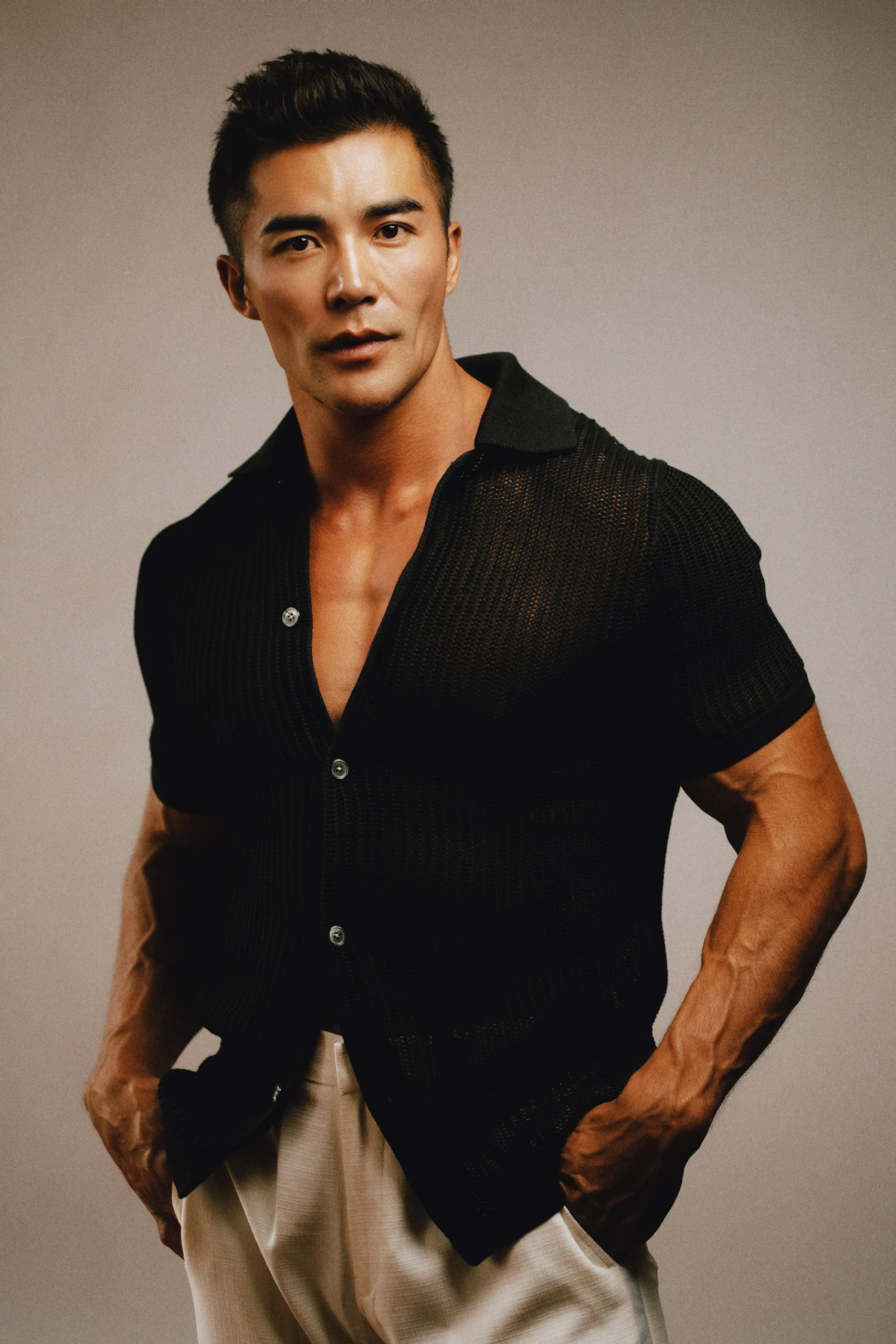
As he looks toward the horizon, this desire for the unpredictable is recalibrating his career trajectory. While he retains a deep-seated love for the franchises of his youth, he is increasingly drawn to original narratives and roles that defy his own self-perception.
“I’d love for a writer or director to surprise me,” Lin concludes. “Ideally, someone would approach me with a role where they see something in me that I don’t even see myself… Something that genuinely challenges me.”
It is a rare thing in Hollywood to find an actor so comfortable with his own edges such as the physical bruises, the emotional vulnerabilities, and the looming unknowns. Yet, as our conversation winds down, Ludi Lin remains entirely optimisitic by the chaos of the journey ahead. He offers one final, reassuring smile, sounding every bit like a man who has already mastered the art of the fall.
“Don’t worry,” he says. “Everything’s going to be fine.”
Get over here and watch the “Mortal Kombat 2” trailer starring Ludi Lin here:

“Mortal Kombat 2” is currently playing in cinemas nationwide.