

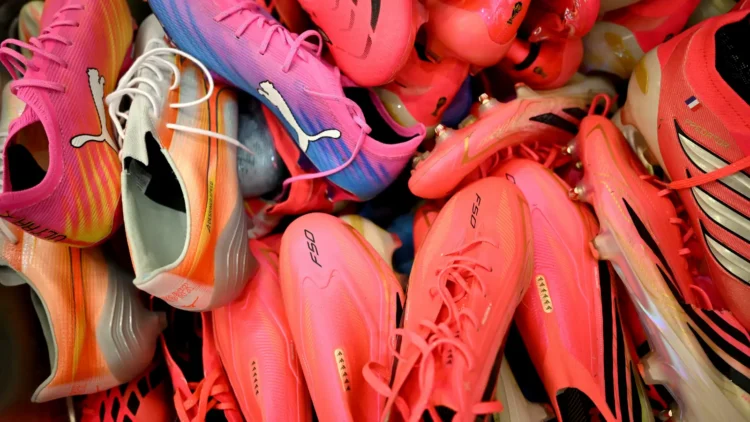
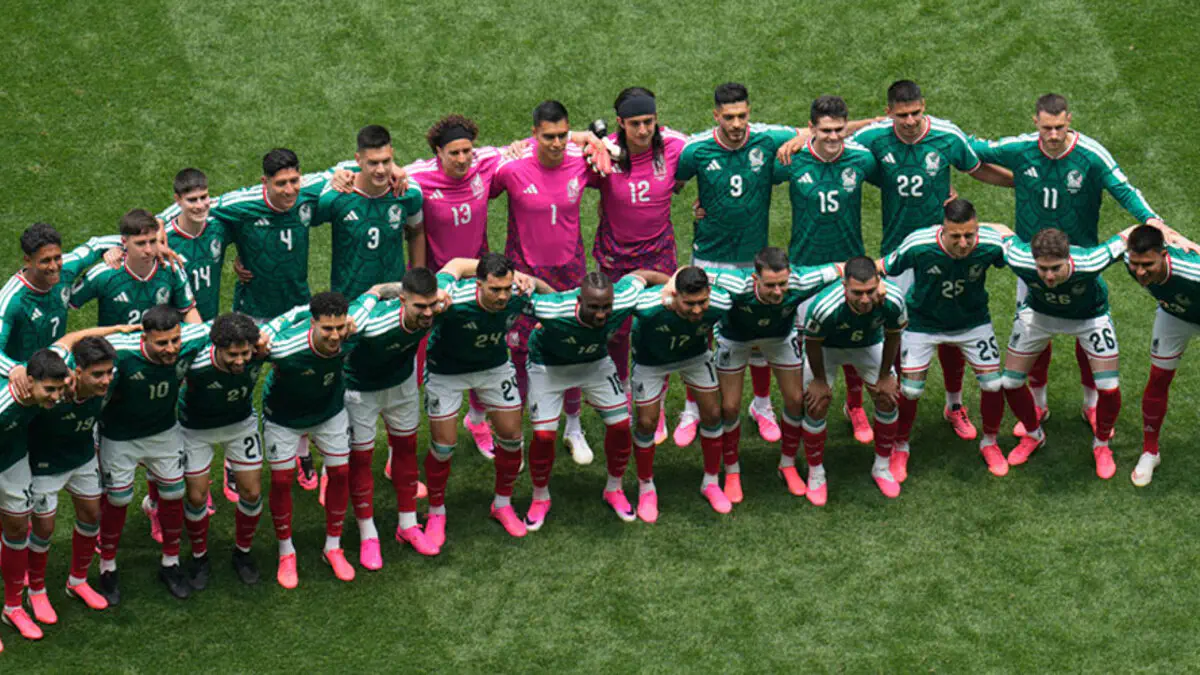
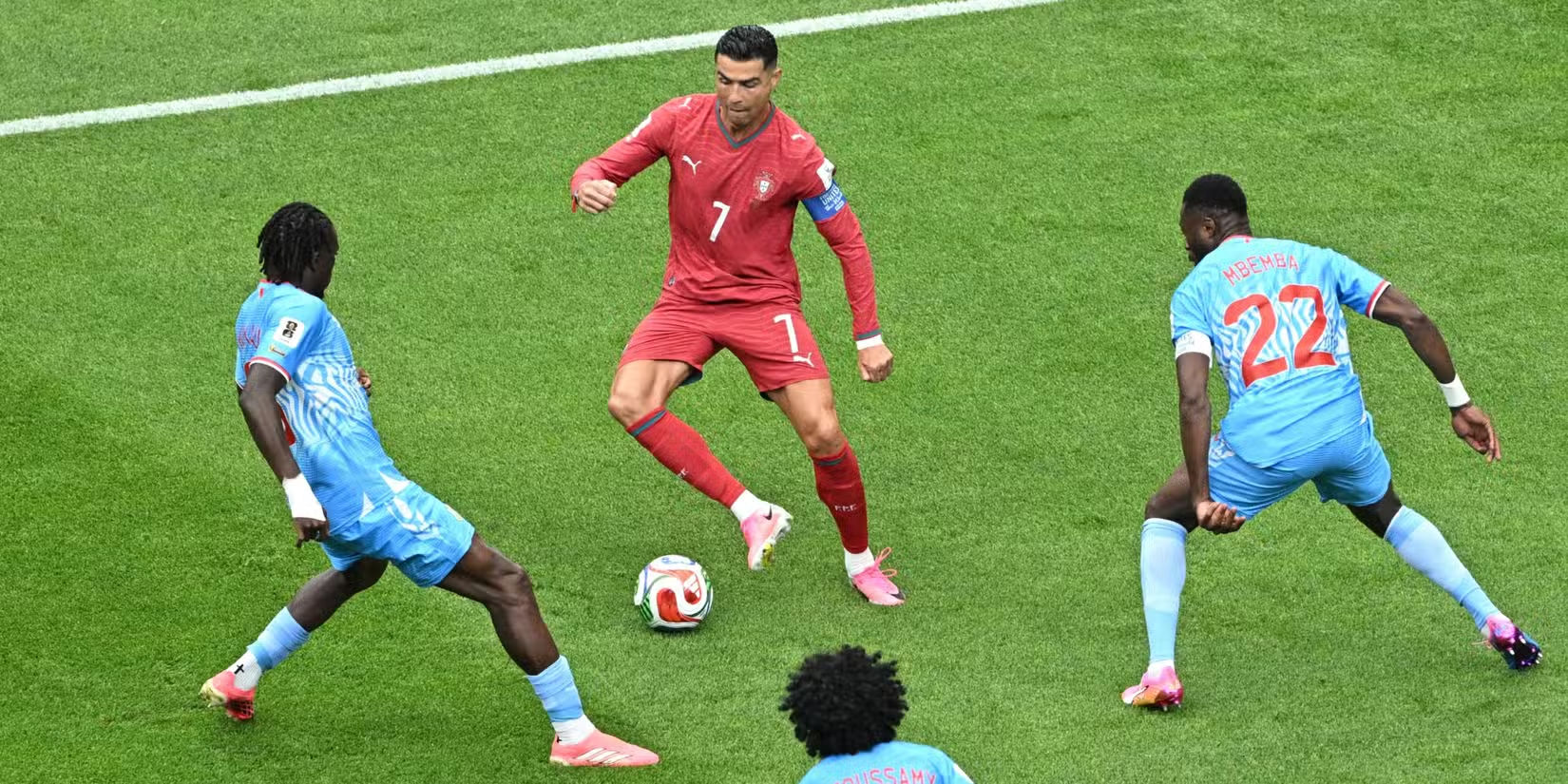
It’s been 10 days since the World Cup kicked off in the Estadio Azteca and if you have tuned into a single broadcast of the event held across North America, a highly specific visual trend has likely hijacked your television screen. From the tournament’s first whistle, the green grass of the pitch has been completely overrun by a blinding wave of neon footwear. Far from a random player preference or a singular brand endorsement, hot pink, fluoro, and electric fuchsia have officially become the tournament’s unofficial uniform, worn by everyone from the game’s best like Cristiano Ronaldo, Kylian Mbappé and Jude Bellingham to regular squad players.
The driving force behind this sudden aesthetic takeover comes down to unprecedented synchronization among the industry’s absolute heaviest hitters. Rather than trying to outdo one another with radically different color templates as they’ve done in previous World Cup cycles, Nike, Adidas, Puma, New Balance, and Skechers all independently arrived at the exact same conclusion for their summer tournament packs. Designers heavily leaned on major global fashion trend forecasts that identified digital-inspired fuchsia as the definitive shade of the summer, prompting brands to start developing these specialized, hyper-visible collections up to two years in advance.
One Nike designer offered up a completely different POV. “It’s a way to stir up conversation and allow for expression beyond the stale classic white or black colourways,” they said. “If anything, it’s nice to see a world where we all get to wear something that brings us together. Perhaps it’s unity. In times like this, we need connection.”
From a corporate standpoint, this color obsession is anchored in a relentless battle for maximum brand visibility in the digital age. With modern soccer consumption rapidly shifting from massive television screens down to smartphones, TikToks, and high-definition social media replays, sportswear companies spend hundreds of millions of dollars to ensure their logos pop instantly. Because no competing nation at the tournament sports a primarily pink kit, the boots provide the ultimate visual clash against the green grass, ensuring that key match moments like high-speed dribbling, tackling, and goal celebrations draw the human eye directly to the product under intense stadium floodlights.
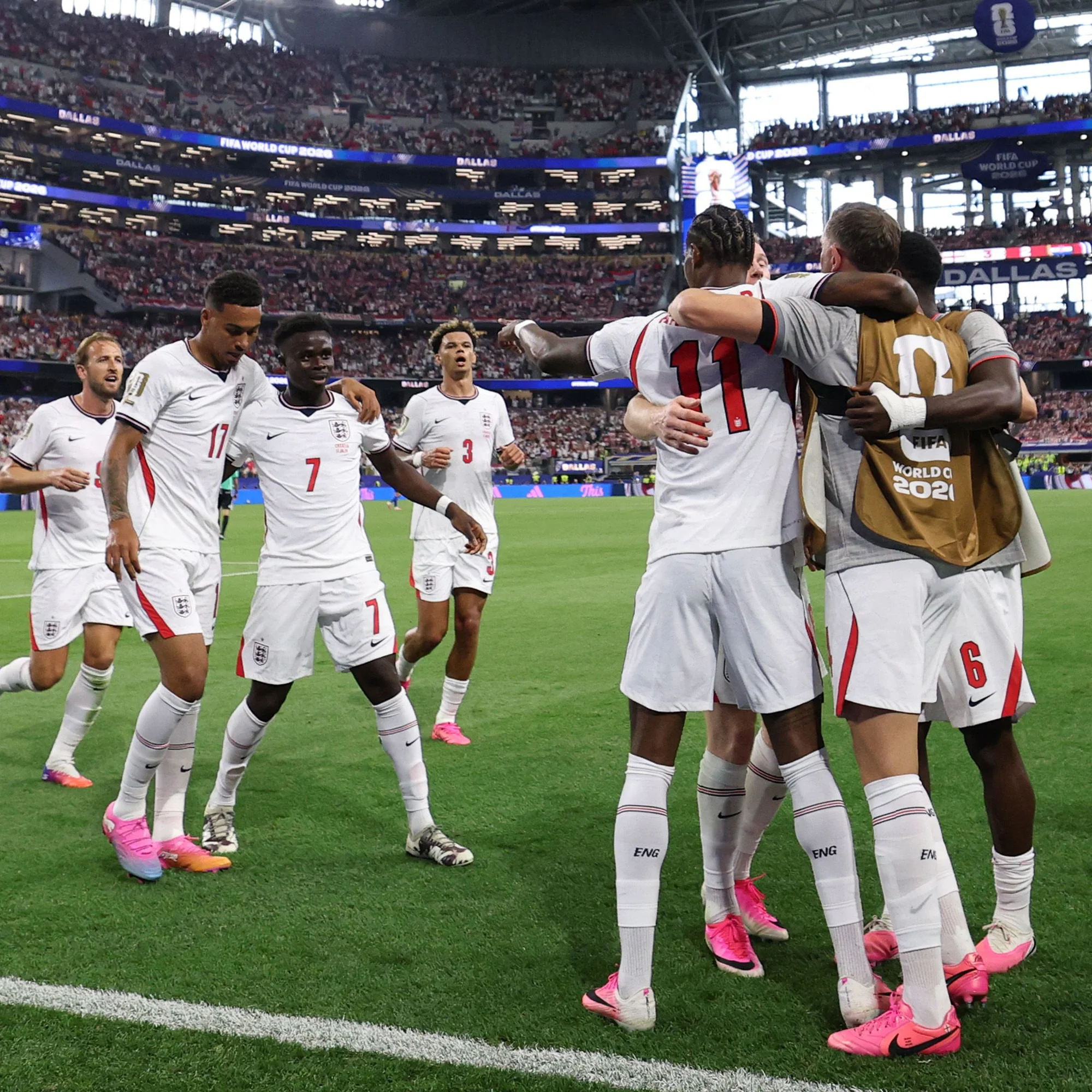
Beyond the corporate marketing machinery, the trend highlights a massive psychological shift in modern sports culture regarding confidence and self-expression. Footwear executives note that today’s elite athletes actively crave the loudest, brightest colors possible during high-pressure international tournaments because it provides a genuine psychological edge on the field. Wearing a shade as unapologetic and bold as hot pink signals an inherent swagger and elite performance mindset, heavily reinforcing the unspoken rule among top-tier players that you have to be exceptionally good at the game to confidently pull off a color that commands that much attention.
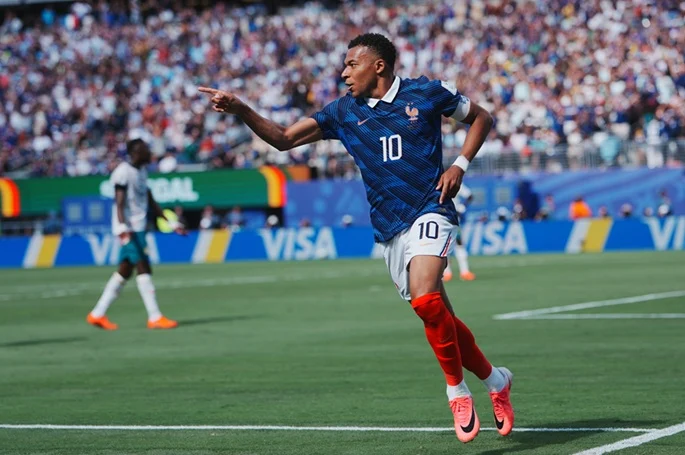
In 2026, the color pink has completely conquered the cultural landscape. Because of this, the neon takeover on the pitch might not actually be driven by sports trends at all; instead, football boots are simply mirroring the dominant aesthetic shifts taking over the wider world. The phenomenon boils down to a perfect storm of massive brand visibility, aggressive trend forecasting, global fashion movements, and a desire for raw self-expression, with the ultimate truth likely sitting right at the intersection of all four.
Either way, when the next World Cup cycle kicks off and the world’s elite players suddenly walk out sporting blinding, electric lime green boots, you shouldn’t be shocked. Somewhere in a high-level creative office right now, a trend forecasting report is almost certainly mapping it out.