

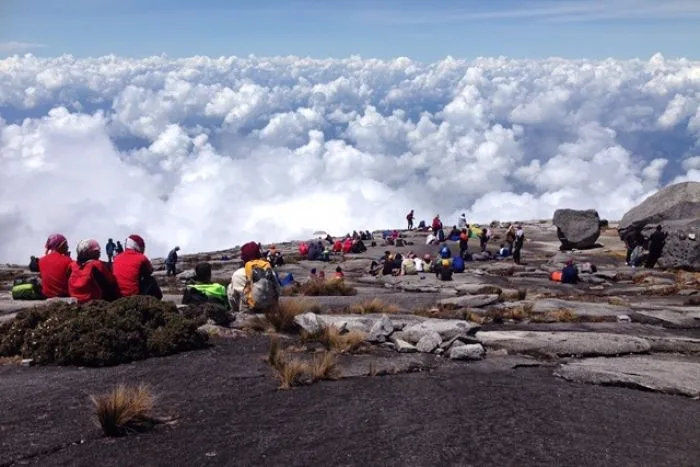
15 more seismic stations will be installed in various parts of Sabah, with 5 stations planned to be built on Mount Kinabalu. The stations will be in place by the end of 2016 as part of a move to improve earthquake monitoring activities in the state.
Science, Technology, and Innovation Minister Datuk Seri Wilfred Tangau explained that the stations will be located at the west coast (Kota Belud, Tamparuli, Kota Marudu), central area (Tenom district), and east coast (Lahad Datu, Beluran, Kinabatangan).
On further earthquakes in Mount Kinabalu, Universiti Malaysia Sabah geologist Dr Felix Tongkul said:
It is unlikely (…) because much of the energy within the FAULT LINES there were released in the magnitude 6.1 temblor a year ago.
Although it’s been a year since the Sabah earthquake, the effects of it continue to be felt by locals. Boulders, soil, and plants that were dislodged along the slopes during the earthquake washed into the rivers, causing water levels at Sungai Mesilou, Sungai Kedamaian, and Sungai Penataran to remain low.
It affects the villagers as the aforementioned rivers are key water sources for them. Mud floods at rivers along Mount Kinabalu’s foothills are also a regular occurrence nowadays.
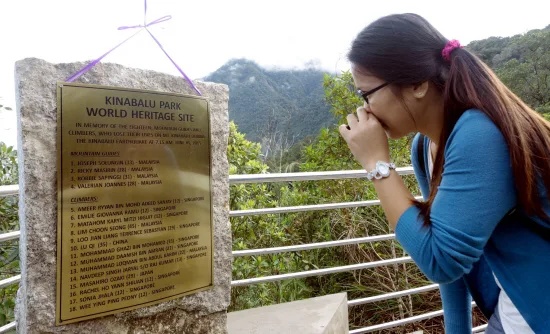
A monument was also erected in Kundasang in memory of the 18 who perished. The monument was built of granite stones that came crushing down during the earthquake.
The 2015 Sabah earthquake measured 5.9 on the Richter scale and damaged the iconic “Donkey Ears” peak of Mount Kinabalu. The epicentre was 16 km northwest of Ranau but tremors could be felt in Kundasang, Tambunan, Interior, Tuaran, Kota Kinabalu, and Kota Belud.
Sources: The Star Online, The Sun Daily, Daily Express.