

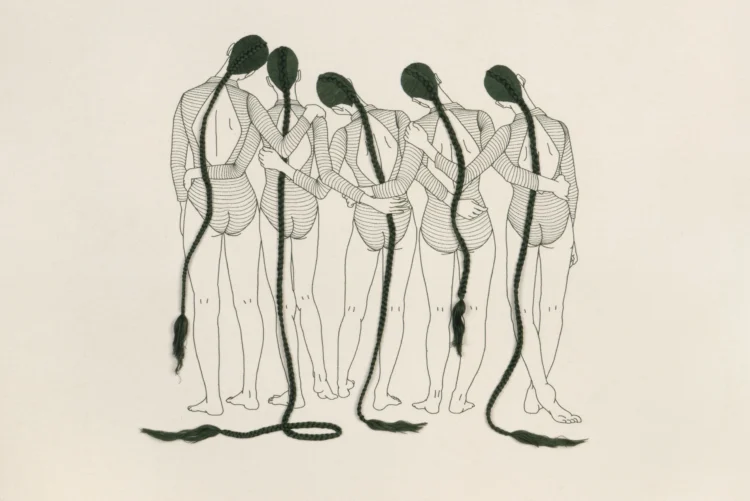
November 2026 Item Gallery is proud to present “The Unbearable Lightness”, a new solo exhibition by multidisciplinary artist Sheena Liam, also known online under the moniker Times New Romance. Opening on November 19, 2026, the exhibition marks Sheena’s return to Paris following her debut solo exhibition at the gallery in 2018.
The exhibition brings together a powerful new body of original work that expands upon her signature visuals: intricate feminine figures hand-stitched in deep green thread on raw canvas, the stripes adding depth and weight to otherwise simple line stitches, their hair extending to the ground. Liam’s figures are captured in the delicate, fleeting space between movement and stillness- suspended moments that have neither fully begun nor ended.
In addition to her embroideries, The Unbearable Lightness debuts a striking new series of copper etchings, published in collaboration with the legendary fine arts print house Idem Paris, with which Item Gallery shares a deep historical connection. This expansion into printmaking highlights Liam’s ongoing exploration of gesture, repetition, and the physical trace of the artist’s hand across different mediums.
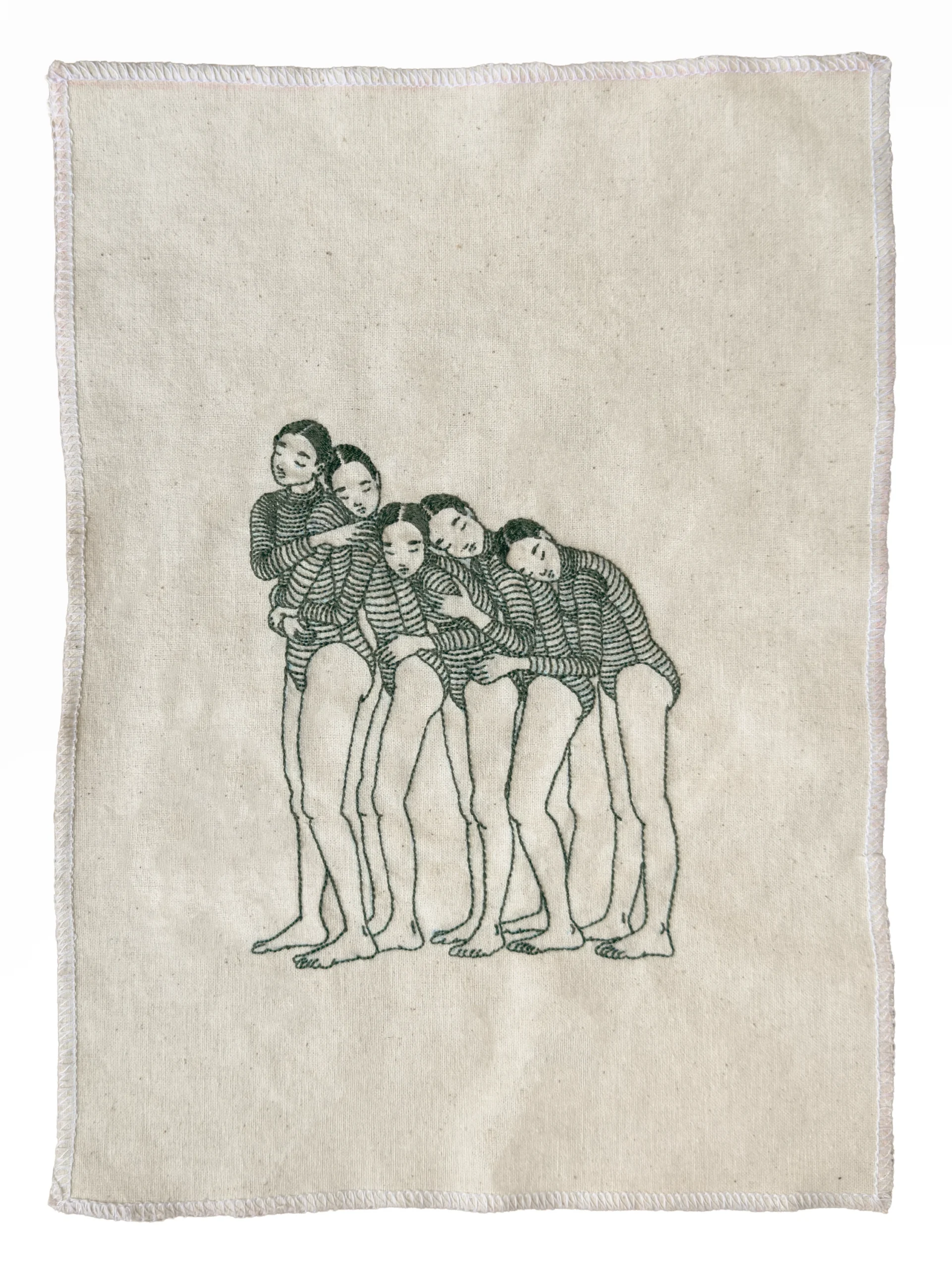
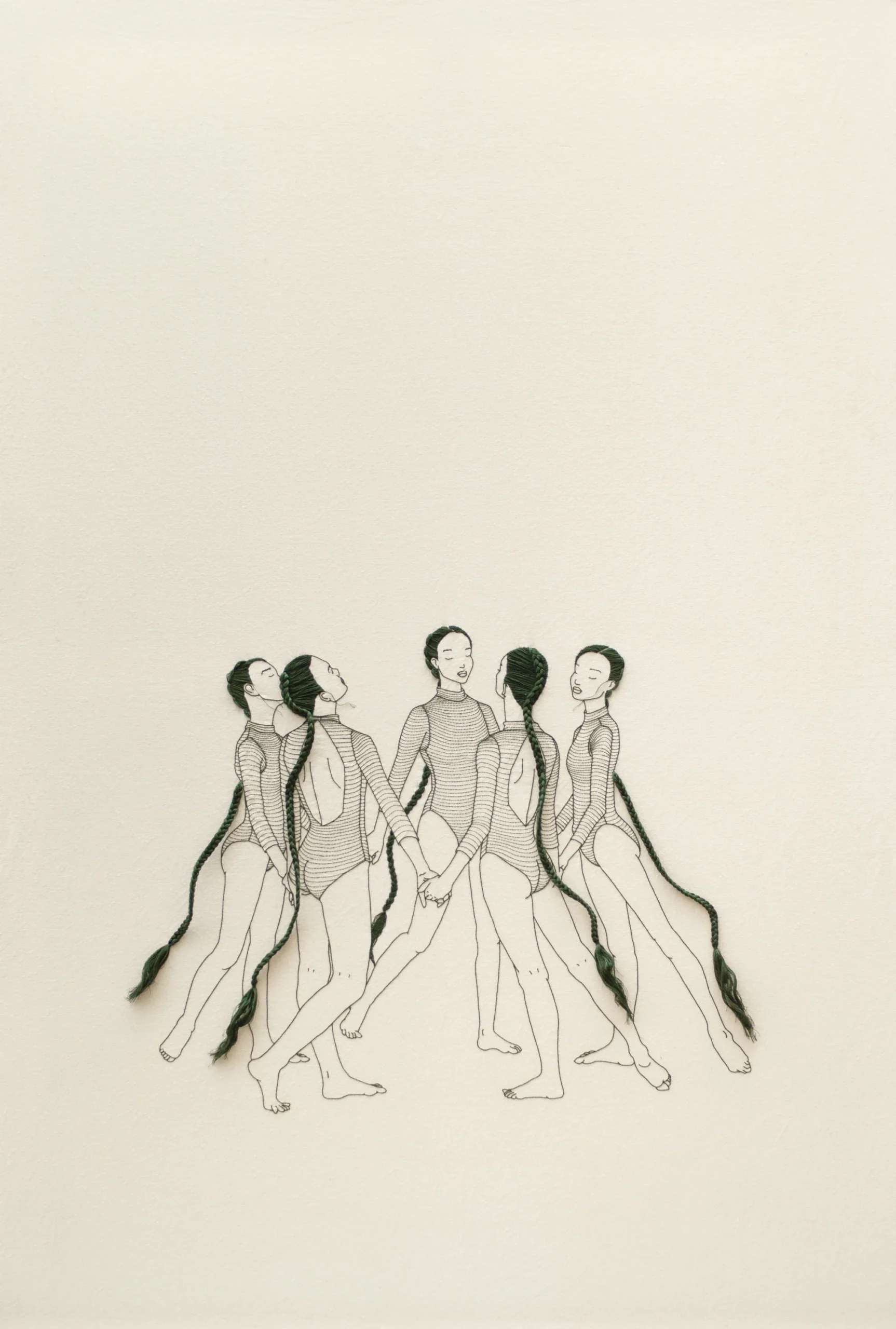
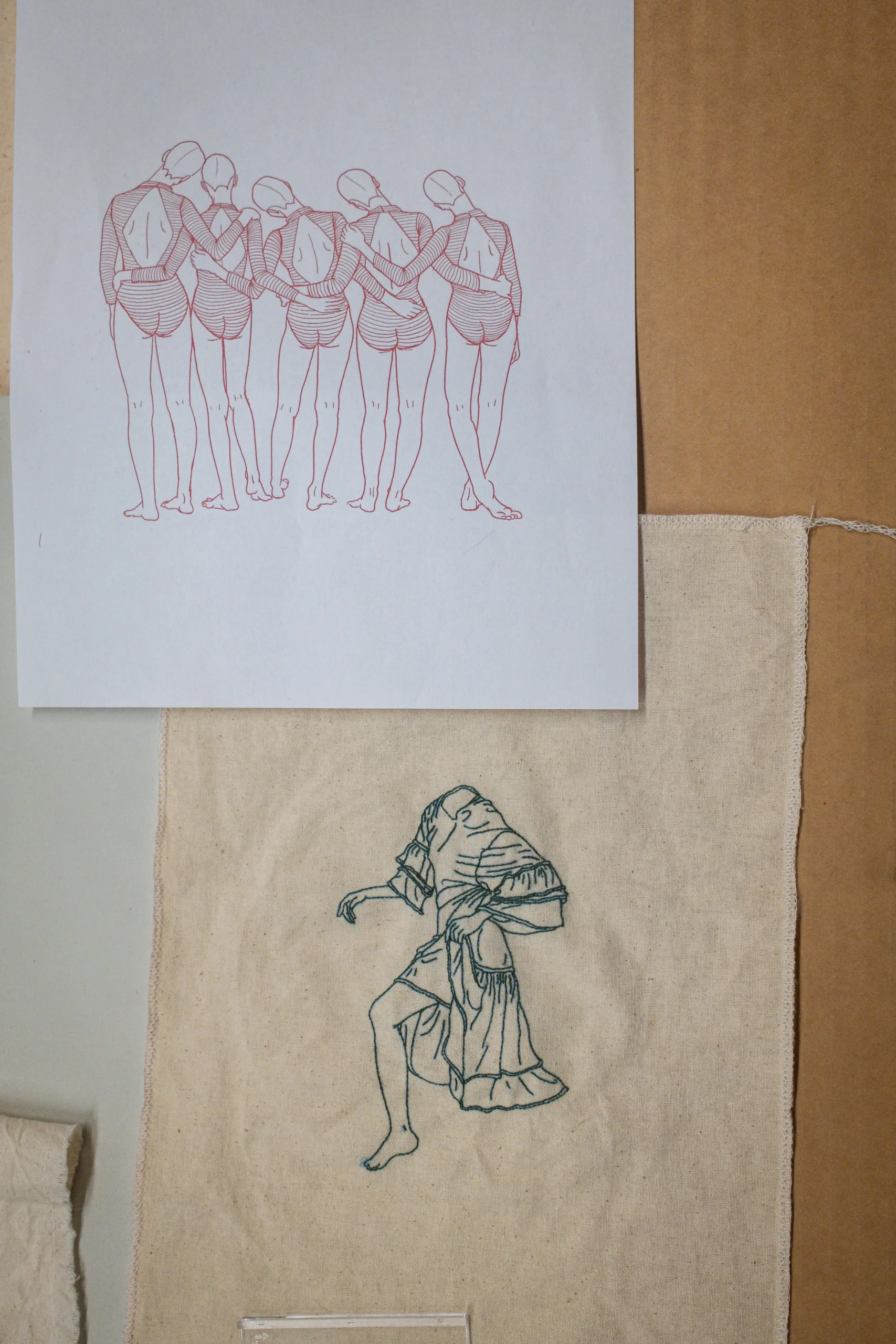
Rooted in slowness, Liam’s practice directly challenges the accelerated pace of contemporary visual culture. Her meticulous process- where single-line backstitches accumulate over hundreds of hours- transforms a medium historically relegated to the domestic sphere into a powerful site of artistic autonomy and conceptual weight.
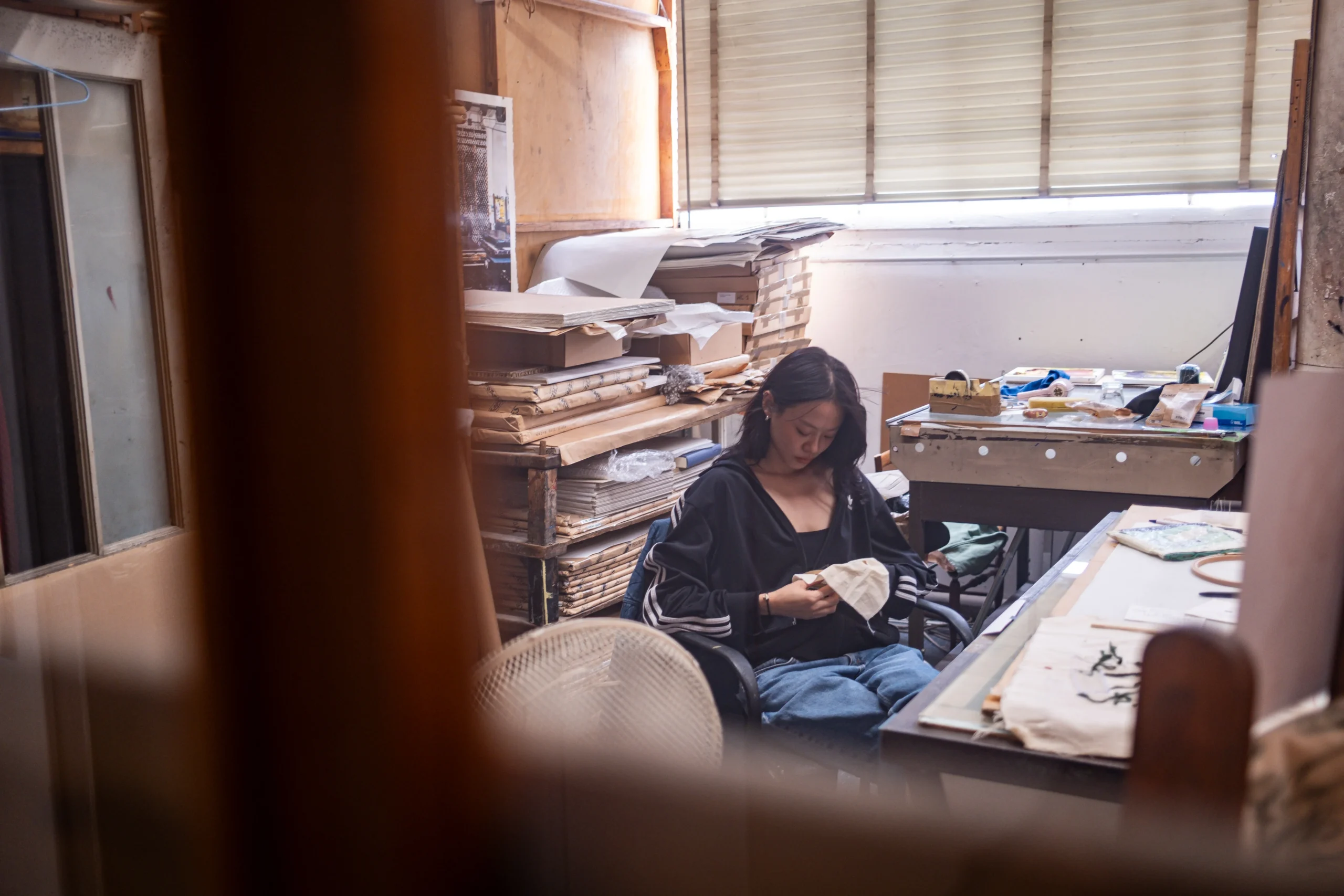
“To create art in an age of velocity and automated replication is an act of deliberate, quiet resistance,” reflects Liam. “My practice is rooted in the physical weight of time, the repetition of the needle, and the reclamation of spaces historically deemed domestic, passive, or ornamental. Where contemporary culture demands instant gratification and algorithmic efficiency, my work asks the viewer to slow down, to step into a space of contemplation, and to witness the existence of women who refuse to perform. My embroidery functions as a visual journal, mapping internal states that language cannot fully capture.”