

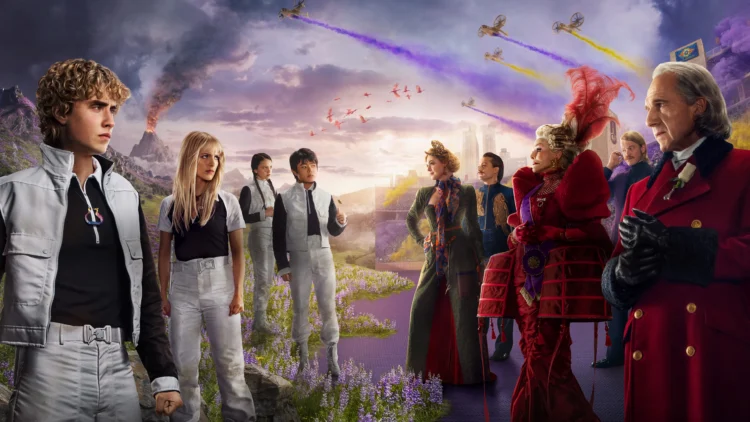
Panem’s soirée is the Hunger Games. There is a host, a stylist, a gleaming build-up, and an audience that never has to leave its couch. The whole enterprise hinges on one quiet sleight of hand. Make cruelty entertaining, and nobody thinks to ask why it exists.
So let’s ask. As Viola Davis’ Dr Gaul once asked a young Snow on a random Thursday evening… “What are the Hunger Games for?”
Here is the curious part. More than a decade on, “The Hunger Games” endures, while the YA dystopian craze that surrounded it has long since guttered out. Remember “The Maze Runner”, “The Host”, “Ender’s Game” and “Divergent”? Precisely. They have retired to the bargain bin of our collective memory, resurfacing now and then on TikTok clip farms. Dylan O’Brien edits, anyone?
Yet Panem has outlasted them all. Why? Because it cuts uncomfortably close to the bone. We inhabit a world that bends to the whims of the ultra wealthy, where corporations and governments quietly curate what passes for truth in the media we consume. Ahem, Skydance.
Look to the protests in Myanmar a few years back, where demonstrators took to the streets singing “The Hanging Tree”, or to Paris more recently, where student protesters sang the same tune. Few things illustrate art’s potency better where it outgrew its medium and ascended into symbol.
Perhaps that resonance is what lured author Suzanne Collins back. Her original series was maybe a little ahead of its time, and as reality spirals deeper into the machine, she lends her voice to Panem once more. The message is less subtle now, with her ideas more explicit about taking down the machine, quite literally.
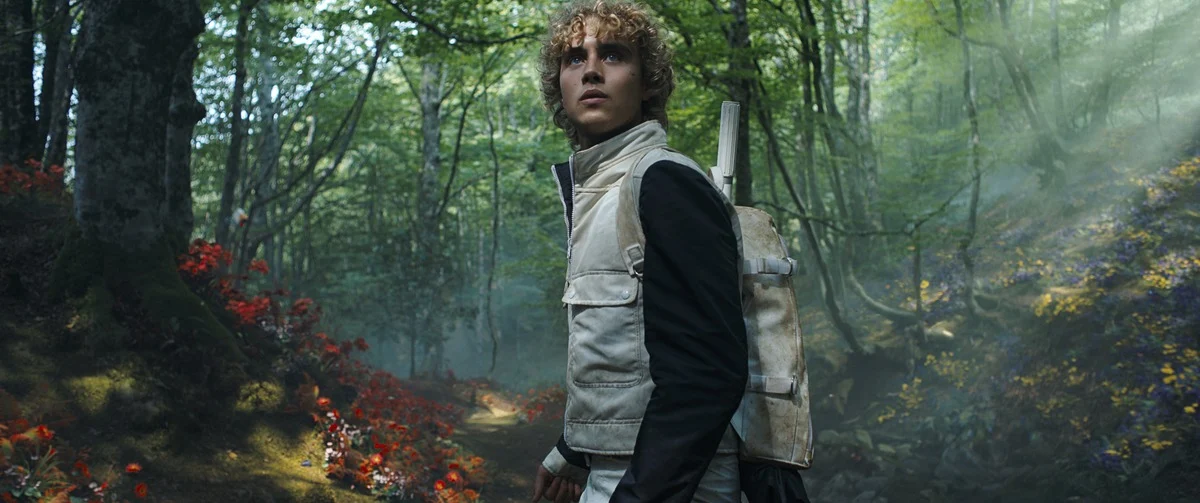
This time, the emblem is a young, fresh-faced Haymitch Abernathy (Joseph Zada). The brutal, alcoholic cynicism Woody Harrelson wore so well in the originals does not arrive from nowhere, and this film charts its making. Tellingly, Haymitch begins his journey by insisting he doesn’t drink. Well, famous last words, son.
We open at sunrise in District 12, on Haymitch’s sixteenth birthday, and for a fleeting moment, all is tranquil. The kid shares a tender interlude with his love, Lenore Dove (Whitney Peak), and later with his younger brother and his mother. The embraces are warm and unguarded, and they tell us precisely what this family stands to lose.
District 12 hums along with business as usual, but as the camera drifts through town, the sweet air turns metallic. Then comes the reason. It is reaping morning. It is also the 50th Hunger Games, the Second Quarter Quell, and the Capitol has resolved that its customary cruelty needs an upgrade. So twice as many tributes go in, and more names are drawn, all for its own amusement.

Weigh that pairing for a moment. A birthday says the future is yours. A reaping says it isn’t. Placed under the same dawn, the two distil the Capitol’s method which is to schedule the violence around daily routine until routine itself reads as a threat.
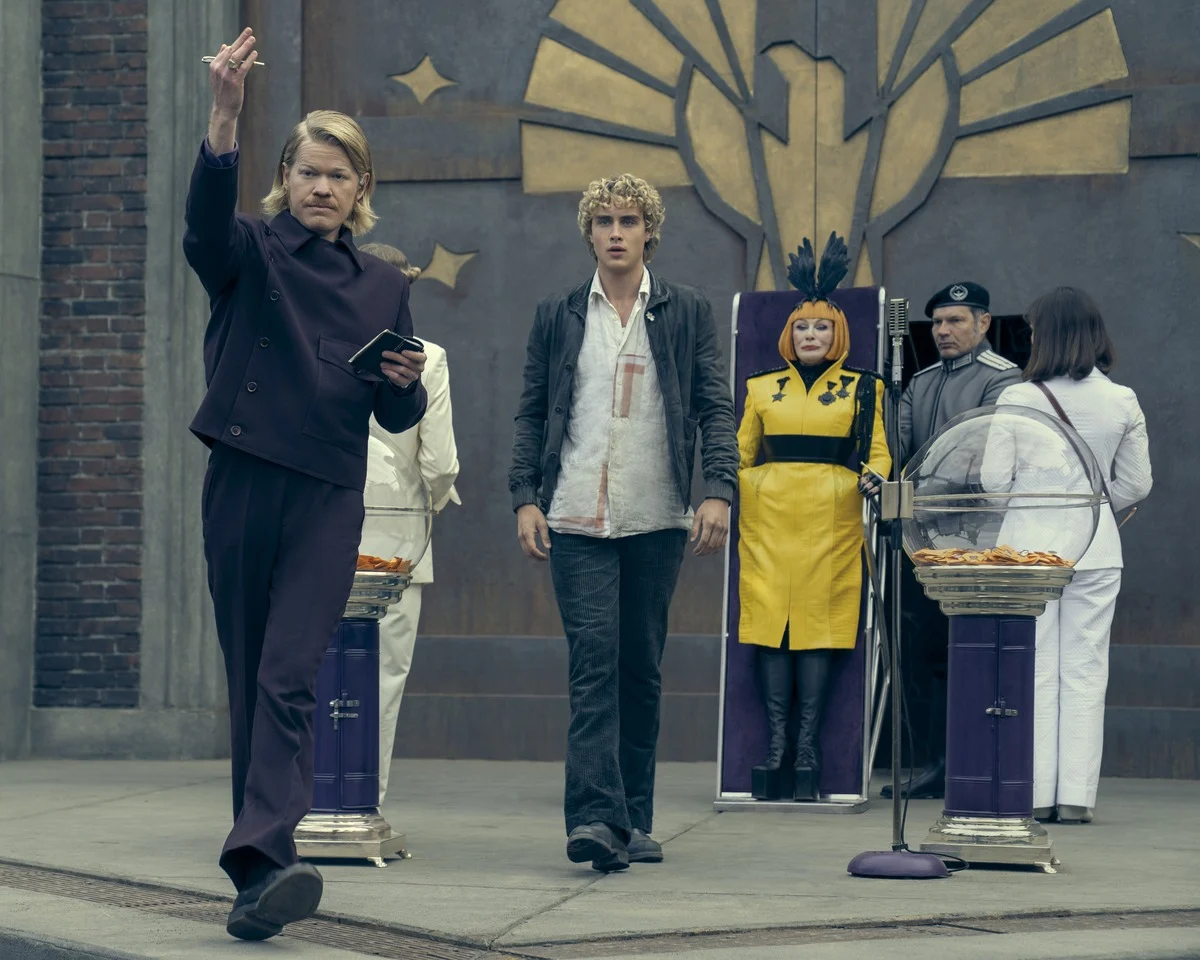
Then Drusilla Sickle (Glenn Close) sweeps onto the stage with glitter, an overbite, and two glass bowls, as the children are herded into the district square to await their fate. The names arrive one by one: Louella McCoy (Molly McCann), Maysilee Donner (McKenna Grace), Wyatt Callow (Ben Wang)… and not Haymitch? Not yet, it seems. Fate turns cruel, and it is his selflessness in breaking up an altercation that gets him picked.
And so, the Games begin.
Francis Lawrence’s fingerprints are everywhere. He is directing his fifth film in Panem, and it feels as though he is coparenting the world Collins built, eager to go bigger and bolder and to show us still more of it. Returning with him are his trusty crew, and of course, the magician behind the tunes, James Newton Howard, whose soaring score became a major part of what made those films so memorable.
Unlike “The Ballad of Songbirds and Snakes”, which showed some restraint in the arena because it unfolds so early in the Games’ chronology, this one goes all out.

Characters old and new crowd the frame, injecting some much-needed chaos. Wiress (Maya Hawke), Beetee (Kelvin Harrison Jr.), Mags (Lili Taylor), and Effie (Elle Fanning) are names we met a decade ago, and they return in younger form. These are the early days of rebellion, after all, so none has yet gathered the scars they bore in Katniss’ era, though some are about to. Wiress, for one, is far less “Nuts” and considerably more intelligently sombre.
Then come the fresh faces. McKenna Grace’s Maysilee brings a ferocious attitude that sparks plenty of clashes early on. Ben Wang, the new Karate Kid, reunites with Lawrence after “The Long Walk” and is handed a role steeped in irony: as Wyatt, his family runs a betting business on the tributes.
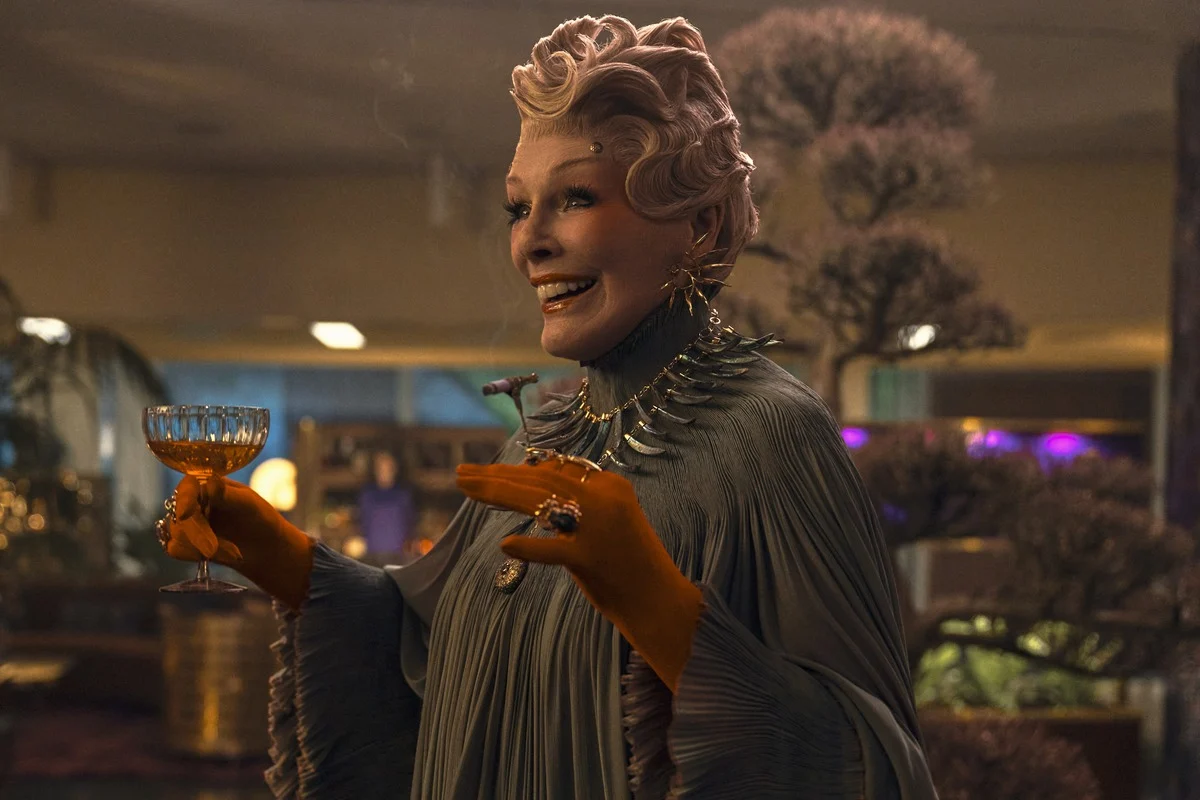
The standout newcomer is Drusilla, whom Close devours at every appearance. She is plainly having a ball, resurrecting her Cruella days in an absurd getup and prosthetics, cigar in hand. Best make sure the dogs stay in.
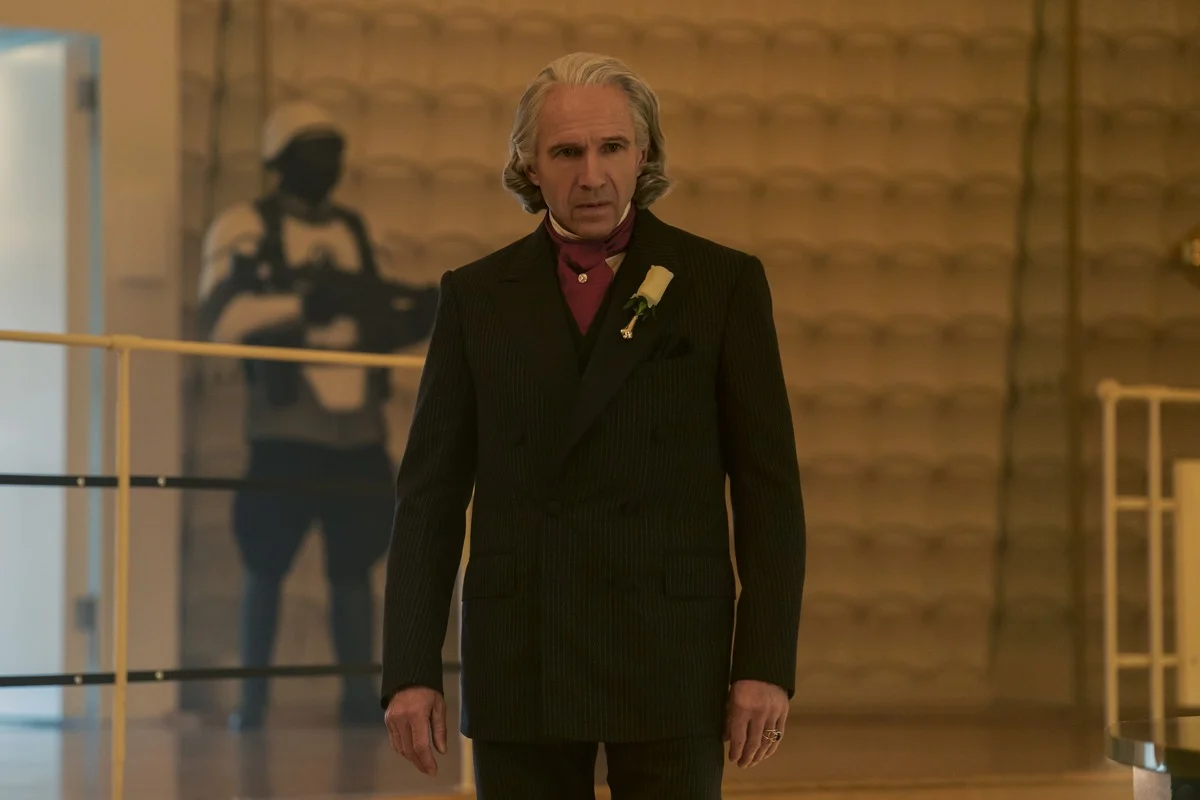
Of course, President Snow has now worn three faces. Donald Sutherland gave us the sly, cunning president in his twilight years, and Tom Blyth the similarly self-serving young man slowly discovering his potential. Ralph Fiennes now assumes the mantle at Snow’s zenith, the most ruthless, calculating, and game-playing incarnation yet. This is a man who toys with his food, a serpent that coils around the rabbit and strikes only once it whimpers. Even then, he might spare it.
Fiennes makes him a man you love to hate, though we do wish he had borrowed a little more of Sutherland’s delicious mannerisms (the wide eyes, the toothy grin). Perhaps this Snow simply declines to lick his lips. Either way, his actions speak loudest, and they haunt the story to the point of heartbreak. He never quite recovered from his brief stay in District 12, and the spite behind his deeds makes that plain.
He is also a worthy foil for our hero, and Zada excels here too. This is a very different Haymitch from the drunk we know, one who feels he can do something about all of this, about the machine and the arena. Zada ensures that the weight of his responsibility is felt, along with the pain of his actions and the loneliness that follows. Yet whenever Haymitch believes he holds an advantage, Snow answers with a vicious bite to his detriment, and we watch Zada’s Haymitch spiral further and further down.
If we have a quibble, it is one of proportion. A little more time with Haymitch and Lenore Dove would have made their bond ache harder, and several of the deaths could have used firmer groundwork to land with full force. Admittedly, we have not read the novel, so some of this may be better explained on the page. And with a runtime of two hours and 38 minutes, we understand why Lawrence kept the pace brisk rather than bog the film down.
There is a smaller gripe waiting in the closing credits. Noah Kahan’s song does not carry the same weight as Olivia Rodrigo’s “Can’t Catch Me Now”, the eerie epilogue that lingered long after “Songbirds and Snakes” had ended.
Visually, the film abandons the dreary industrial complexes and forest greens of Jennifer Lawrence’s Katniss Everdeen films, along with the browner palette of “The Ballad of Songbirds and Snakes”. This one wears iridescent plumes on its jacket for the killing spree it is about to commit.
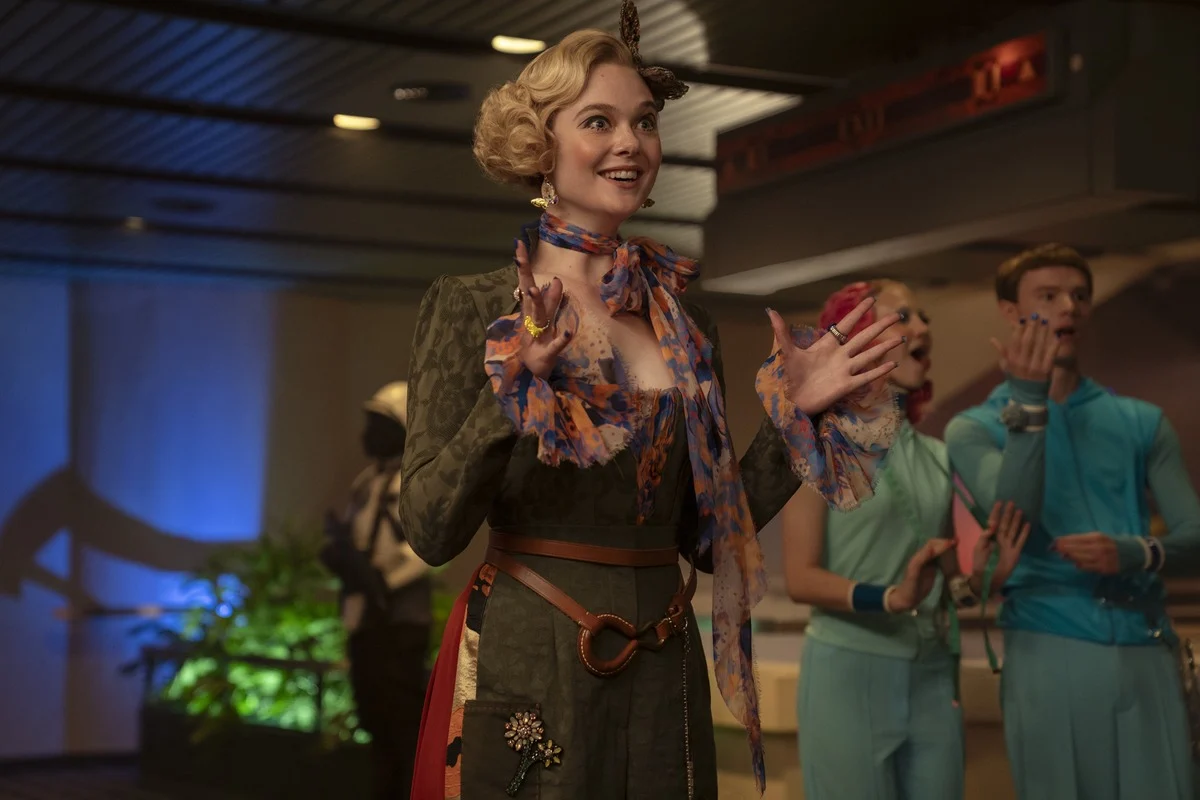
Even the Capitol, a touch less vibrant by the time Katniss comes of age, grows far more ostentatious in its pageantry. Case in point: the chariot parades in their Olympic-sized stadiums, where purple and yellow smoke heralds the Games and every edifice floods with light. Even this pageant ends in a particularly horrifying tragedy.
Lawrence also revives a flourish from “Catching Fire” which is the IMAX aspect-ratio gimmick. When the tributes arrive at the arena, the frame swells to fill the entire screen, and it is gloriously cool. The format is put to splendid use, and the effect has a sly double edge. The world opens up at precisely the moment the walls close in.
The arena itself, shot in Spain’s Somiedo Natural Park, is dire yet pretty, a floral-filled paradise that only deepens the tragedy. It resembles a desktop wallpaper postcard, which is exactly how the Capitol wants its viewers to see it. Beauty has never had a better disguise for brutality.
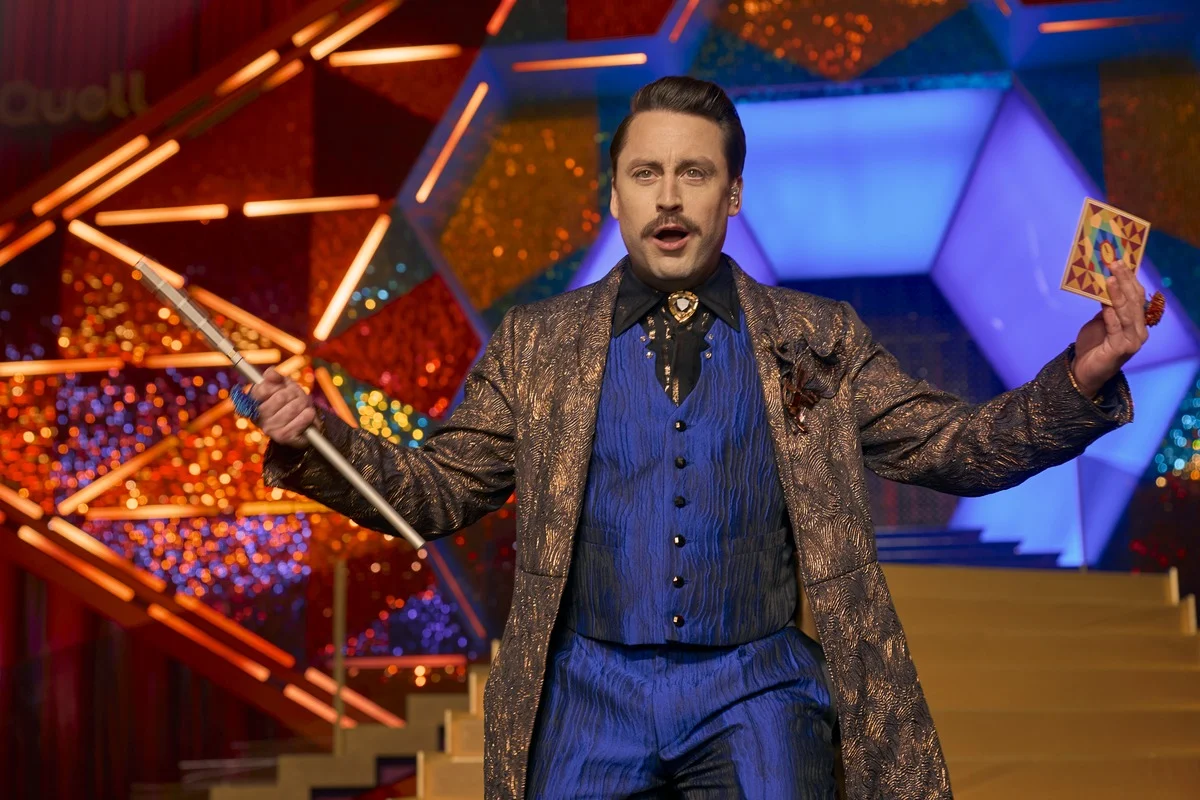
Which returns us to Dr Gaul’s question. Is the spectacle the point? Look no further than MrBeast and “Beast Games”, which proved that audiences will gladly watch strangers compete under immense pressure for a prize, so long as the budget is vast and the production gleams. A high-stakes survival contest for cash and mass appeal? Granted, nobody dies. But the appetite is identical.
That is why “The Hunger Games” keeps hurling its question back at us. The Games were never really about the tributes. They are about the people watching, and about who controls the narrative.
In Panem, the Capitol commandeers the story first and the people second. Every gleaming parade, floodlit edifice, and flower-strewn vista is a line in a script the districts never get to edit, and the cameras do not merely record the Games so much as decide what they mean.
By the Second Quarter Quell, the Capitol has mastered the art of the edit. That is evident from the start, with Haymitch’s reaping stitched together to suggest everything went as planned. The manipulation, some of it shrewd calculation by Plutarch Heavensbee (Jesse Plemons) himself, is only the opening move in a larger campaign to decide whom the audience will adore and whom it will forget.

Surely, outrage alone is easily harnessed, and the Capitol knows it. Haymitch’s fury is real, and so is its price: each time he believes he has the upper hand, the Capitol makes him pay for it. Left unorganised, anger becomes one more resource for the machine to exploit, and one more thread in the broadcast.
Revolution demands more than anger. It needs memory, allies, and timing. The first stirrings of resistance here prove that a movement is assembled from patience and kinship rather than a handful of angry children.
It is also why “The Hunger Games” holds up as both critique and storytelling, and why revolutionary works like “Andor” will stand the test of time. To borrow from Stellan Skarsgård’s Luthen Rael in that series, it is about burning your life for a sunrise you will never see. Here, the title itself answers the call – a sunrise on the reaping.
So, back to the question. What are the Games for? It is not mere masochism, nor glee at watching kids die in an arena. It is not cynical philosophy either. The Capitol built them to smother hope, yet they keep striking the match – the spark of revolution, of change that can and will come, perhaps not in this film, perhaps not for years, but when the time is right.

“The Hunger Games: Sunrise on The Reaping” is currently playing in theaters.
The Review
“The Hunger Games: Sunrise on the Reaping” returns to the dystopian world of Panem with a prettier palette, a sharper bite and a Haymitch worth rooting for. Joseph Zada and Ralph Fiennes anchor a rebellion in the making that asks what the Games are really for. A few emotional beats could have used more room, but the spark of revolution lands.
Review Breakdown
- Great