

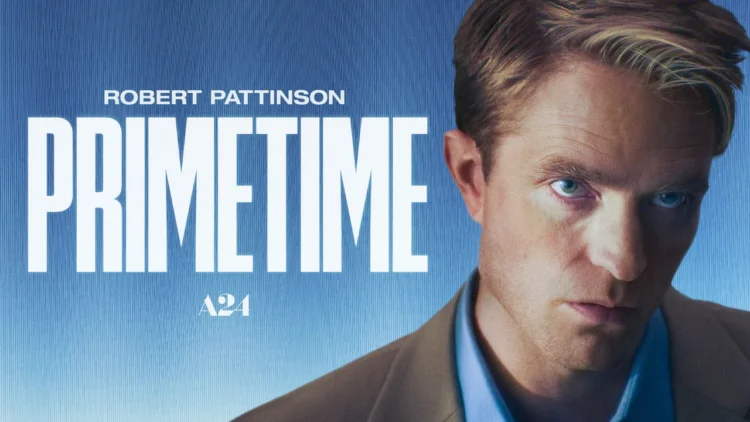
Well, it’s time we took a seat over there. A24’s psychological thriller “Primetime” has been banned in Malaysia by the Film Censorship Board (LPF), according to local distributor Antenna Entertainment. The news dropped just two days before the film was due to open.
What Antenna Entertainment said
In its statement, Antenna said “the film has been BANNED by Lembaga Penapis Filem (LPF)” and that “Primetime” will not be released in Malaysia. The distributor then apologised for the disappointment and thanked fans for their interest.
Cinema chain GSC confirmed the cancellation in their joint post, telling moviegoers the film would no longer be screened locally.
Here is the part that matters. Antenna did not disclose the details for the ban, and the LPF had yet to issue a public statement explaining its decision. So we can’t tell you exactly why either.
This was a bumpy ride from the start. Antenna had earlier moved the Malaysian debut from 1 October to 8 October, announcing the delay on 19 September. That notice also teased “something in the works” for 2 October. So, now, the ban is the final nail in the coffin for this film’s release in this region.
What is “Primetime” about?
Cast your mind back to 2006. NBC’s “To Catch a Predator” is a hit, and its host wants an even bigger one.
Robert Pattinson plays a fictionalised version of that host, Chris Hansen. If you’ve never seen the show, here’s the gist. Decoys pose as minors online, adults show up at a house expecting to meet them, hidden cameras roll, and police wait outside. Then Hansen walks in and asks the visitor to take a seat. The trailer recreates all of it, right down to the line we opened with.
The film follows Hansen, his producer Andie Bender (Merritt Wever), and their small crew as they get the show off the ground and watch it find an audience. Then NBC moves it to primetime, straight into a slot against ABC’s “Lost”. Hansen is thrilled. He wants to be bigger than “Lost”, and the film makes sure we see how far he’ll go to get there.

The cast also includes Skyler Gisondo, Phoebe Bridgers, Matthew Maher, and Bokeem Woodbine, with Ari Aster among the producers.
The script, by Ajon Singh, adapts Luke Dittrich’s 2007 Esquire article “Tonight on Dateline This Man Will Die”. That piece covers a fatal 2006 sting in Murphy, Texas, involving assistant district attorney Bill Conradt. We won’t say more, because the film is better left unspoiled.
The film premiered at the Venice International Film Festival and opened in North American cinemas in late September. It holds an 86% Tomatometer score on Rotten Tomatoes.
Why is “Primetime” rated R in the US?
The Motion Picture Association rated “Primetime” R for disturbing sexual material, graphic nudity, some violent content and language. In the US, that means anyone under 17 needs a parent or adult guardian to get in.
That’s the official wording. Here’s what it looks like on screen, according to parents’ guide breakdowns.

Sex and nudity: Expect full-frontal male nudity, brief kissing, and pornography sounds coming from a laptop. One character tries to end an extramarital relationship. The bigger factor is the dialogue, which includes crude, explicit descriptions of sex acts. Most of it involves unlawful interactions with minors, since that’s the show’s whole premise.
Violence: Guns appear throughout, punching, and blood. The film also includes violent descriptions and fantasies, shouting matches, and the threat of sexual harm to minors.
Language: The swearing is strong and constant, including “f–k,” “s–t” and “motherf—-r.” The film also uses slurs, and the vulgar online chats appear on computer screens.
Substances: There is talk of bringing drugs and alcohol to minors, and adults drink socially.
Given the subject, none of this will surprise anyone, as this was never going to be a family night out.
Wait, didn’t Malaysia say it was loosening up?
In August, FINAS CEO Datuk Azmir Saifuddin Mutalib said the LPF had been allowing more films to screen under stricter age classifications like PG-18 or PG-16 instead of demanding extensive cuts. Prime Minister Datuk Seri Anwar Ibrahim also backed greater openness in the arts, as long as it stays grounded in Malaysia’s values, culture, and morality.

A follow-up statement came with fine print. Every film still gets assessed, and content doesn’t necessarily need cuts if it can sit under the right age classification. Films with content that can’t be adjusted to meet requirements won’t be approved for screening.
So what exactly didn’t pass?
This is the question that keeps nagging at us. Nobody has said what the LPF objected to in “Primetime”. The R rating doesn’t answer it either, because films with similar material have reached Malaysian screens before.
Nudity, crude sex talk, strong language, and violence are nothing new to the board’s desk. The usual outcome is a trim. The LPF can approve a film as is, or with cuts the distributor must make before release, and those cuts often come as a blur or a brief snip. That is how plenty of raunchy Hollywood titles ended up on local screens.
So the ban is hard to read. Maybe something in “Primetime” couldn’t be fixed with a blur. Maybe the problem isn’t about individual scenes at all. We don’t know, and anyone claiming otherwise is guessing.
The August statement gives one hint at how the board thinks. Content that can’t be adjusted to meet requirements doesn’t get approved. There is also at least one precedent for the LPF explaining a ban that way. When 2019’s “Hustlers” was blocked, the board reportedly said there would be little film left once the necessary cuts were made.
That is one way a ban can happen, and we can’t say it’s what happened here. Until the Malaysian Censorship Board says more, this shall remain a mystery.