
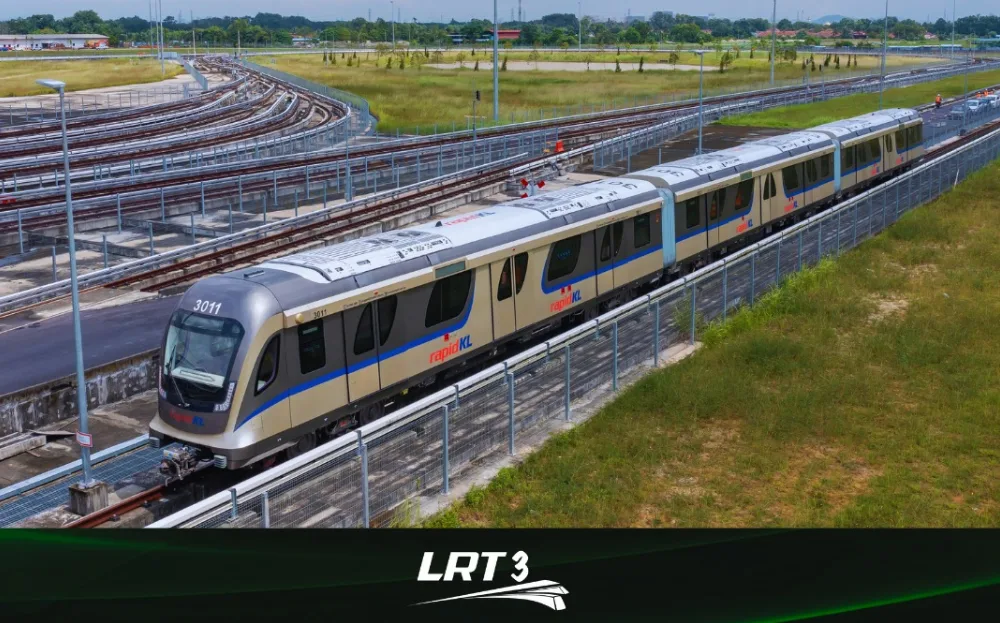
After years of planning, revisions and shifting timelines, the LRT3 Shah Alam Line is entering its final stretch but commuters may need to wait a little longer before stepping onboard. Although initial plans targeted a December 2025 opening, the latest developments indicate that the line may not begin operations until well into 2026.
Industry insiders and officials have confirmed that system testing issues, particularly those involving software, signalling and operational reliability, lie at the heart of the delay. While construction of the physical infrastructure is nearly complete, the final phase which ensures the new driverless trains can run safely and consistently, remains ongoing and more complex than anticipated.
What Is LRT3 And What Will It Do?
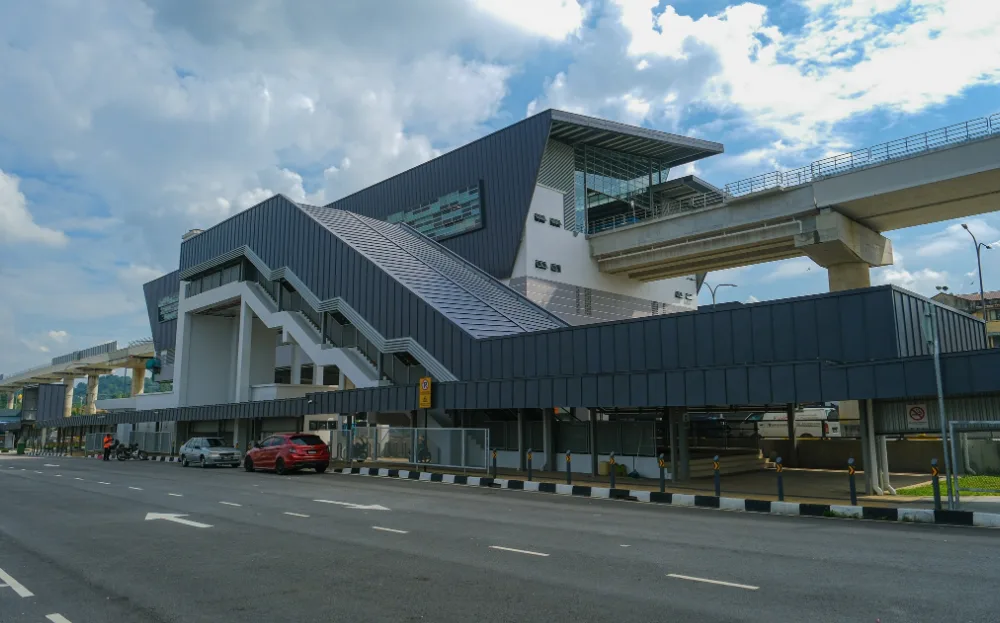
The LRT3, officially named the Shah Alam Line, is a 37.8-kilometre light-rail project designed to link Bandar Utama in Petaling Jaya to Johan Setia in Klang. The route passes through major residential and commercial areas across the western Klang Valley, providing improved connectivity for communities in Petaling Jaya, Shah Alam and Klang. It aims to ease road congestion by offering a reliable rail alternative for daily travel.
Originally planned to feature more stations, the project underwent cost-cutting revisions in 2018, which led to the shelving of five stations. However, the government reinstated these stations in Budget 2024, restoring Tropicana, Raja Muda, Temasya, Bukit Raja and Bandar Botanik to the project. These additions raised the overall cost but were seen as essential for long-term network expansion and commuter access.
Stations Along The LRT3 Line
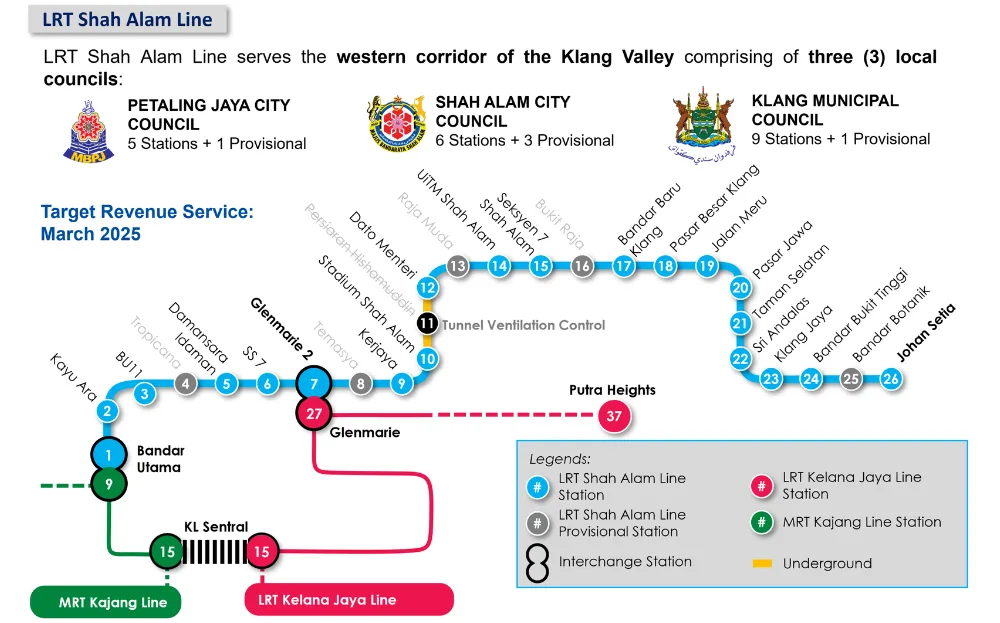
The completed line comprises 25 permanent stations, designed to serve densely populated residential areas and growing business districts across Bandar Utama, Petaling Jaya, Shah Alam and Klang. Five of these stations are designated provisional and are marked with an asterisk (*) to indicate that they may be developed later as demand increases.
- Klang: Johan Setia, Bandar Botanik*, Bandar Bukit Tinggi, Klang Jaya, Seri Andalas, Taman Selatan, Pasar Jawa, Jalan Meru, Pasar Klang, Bandar Baru Klang, Bukit Raja Selatan*
- Shah Alam: Seksyen 7 Shah Alam, UiTm Shah Alam, Raja Muda*, Dato Menteri, Stadium Shah Alam, Kerjaya, Temasya*
- Petaling Jaya/Damansara: Glenmarie, SS7, Damansara Idaman, Tropicana*, BU 11, Kayu Ara, Bandar Utama
A Budget That Evolved Over Time
When first introduced under the Barisan Nasional government in 2016, the project carried an estimated price tag of RM9 billion. That figure ballooned over the years to RM31.7 billion due to fees, operational requirements and interest accrued during construction. Later, the Pakatan Harapan government sought to rein in expenditure, revising the budget to RM16.63 billion. The addition of the five reinstated stations in 2024 then contributed another RM4.7 billion, reflecting the scale and complexity of a modern driverless rail system.
Timeline Updates: Shifting Targets And Testing Challenges
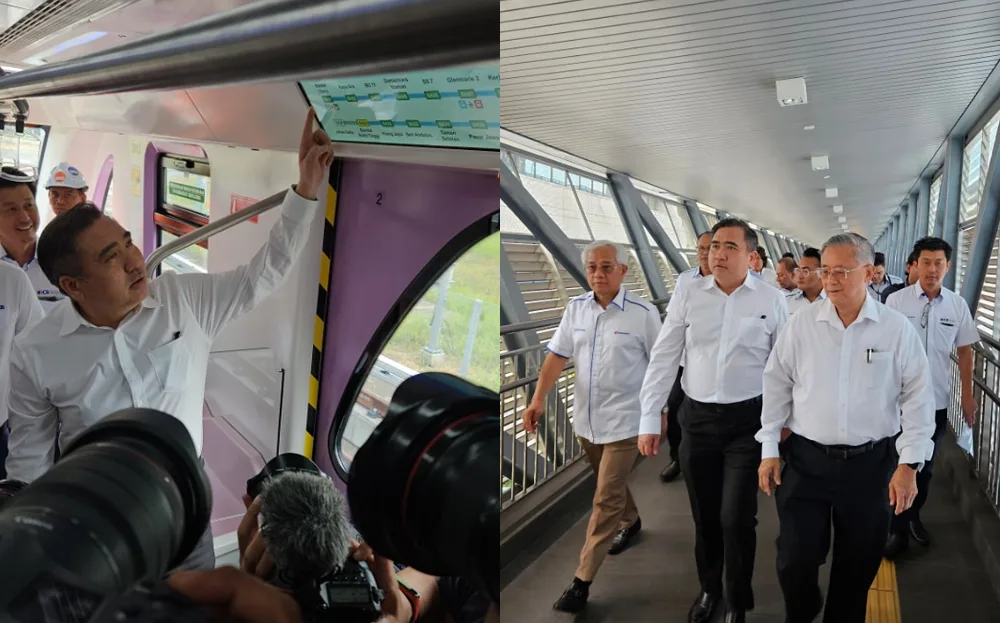
In July 2023, Transport Minister Anthony Loke projected that the line could start operations as early as March 2025. By early 2025, construction progress reached approximately 98.6%, prompting a revised opening timeline of the third quarter of 2025. The main contractor had been expected to hand over the completed system to Prasarana Malaysia Bhd by July, raising hopes of a late-2025 launch.
However, difficulties emerged as system testing progressed. Integrating key systems including signalling, communications and electrification proved more challenging than anticipated, requiring additional time and multiple rounds of adjustments. By August 2025, the Ministry of Transport confirmed that a “slight delay” had occurred, shifting expectations to the end of the year. Safety-critical tests such as the Train Run (TR) and Full Fast Running (FFR) were scheduled from April to June, followed by trial operations pending approval from the Land Public Transport Agency (APAD).
Why The Testing Phase Is Taking Longer
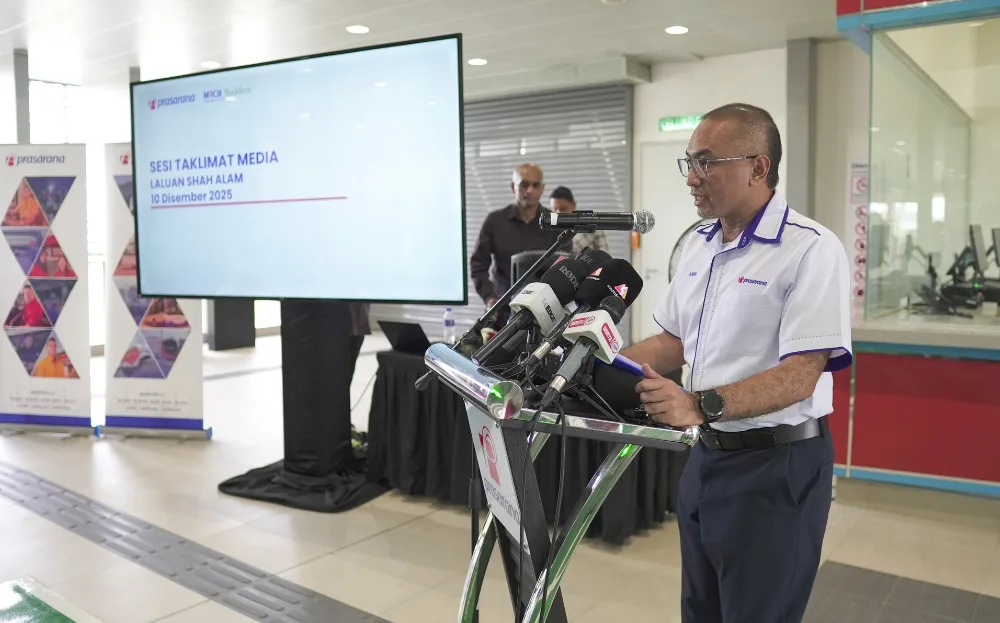
On 17th November 2025, the Transport Minister acknowledged that the LRT3 opening would be postponed to 31st December 2025 or later, depending on test outcomes. Shortly after, reports emerged that the trains were struggling to consistently hit operational speeds of 80 to 90kph, a requirement for smooth and efficient service. Without fully approved standard operating procedures and complete documentation, testers were unable to proceed with a structured evaluation process.
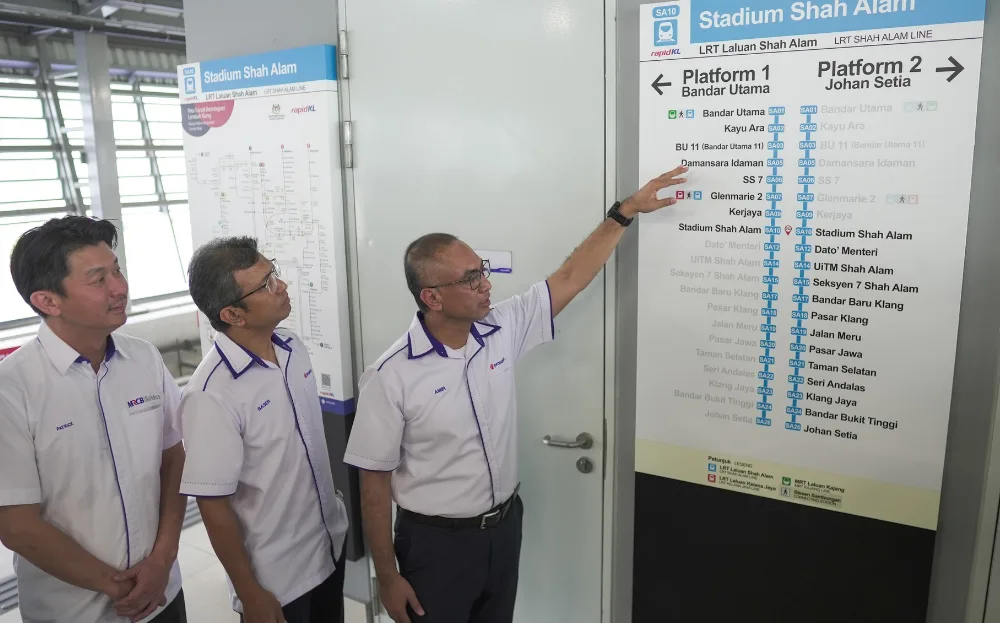
By December, Prasarana group president Amir Hamdan confirmed that the LRT3 would not operate in 2025 at all due to instability in the signalling and software systems. He emphasised that the team could not commit to a first- or second-quarter 2026 opening until the system demonstrated reliable performance. A comprehensive update is expected in January, contingent on progress in stabilising the software.
The “Golden Train” Endurance Test
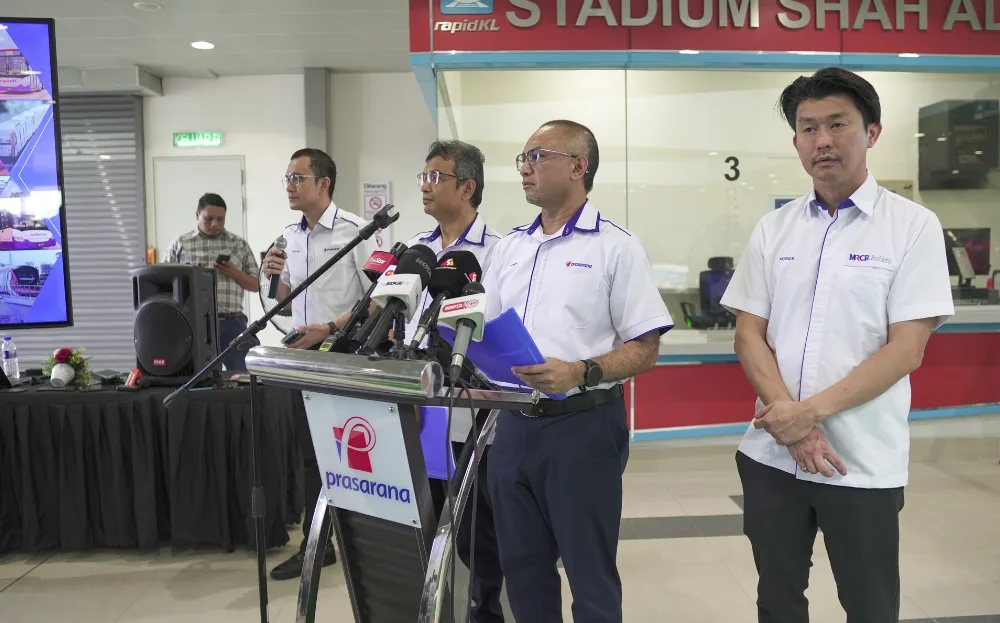
Further clarity came from Setia Utama LRT3 Sdn Bhd (SULRT3) chief executive Patrick Hwang, who explained that Siemens’ system requires an extensive 4,000-kilometre “Golden Train” endurance run. This lengthy test is designed to reveal faults that shorter trials may not uncover. While systems often perform well during the initial 100 to 200 kilometres, deeper issues typically emerge only over extended distances, making the endurance phase critical for long-term reliability.
He also highlighted that the LRT3 uses a signalling system distinct from those employed on existing LRT lines. Built on Siemens’ latest software platform, it demands a new testing approach and, as a result, a longer and more meticulous commissioning process. Despite the delays, he maintained that the project remains on track and does not require additional systems consultants at this stage.
What The Delay Means For Commuters
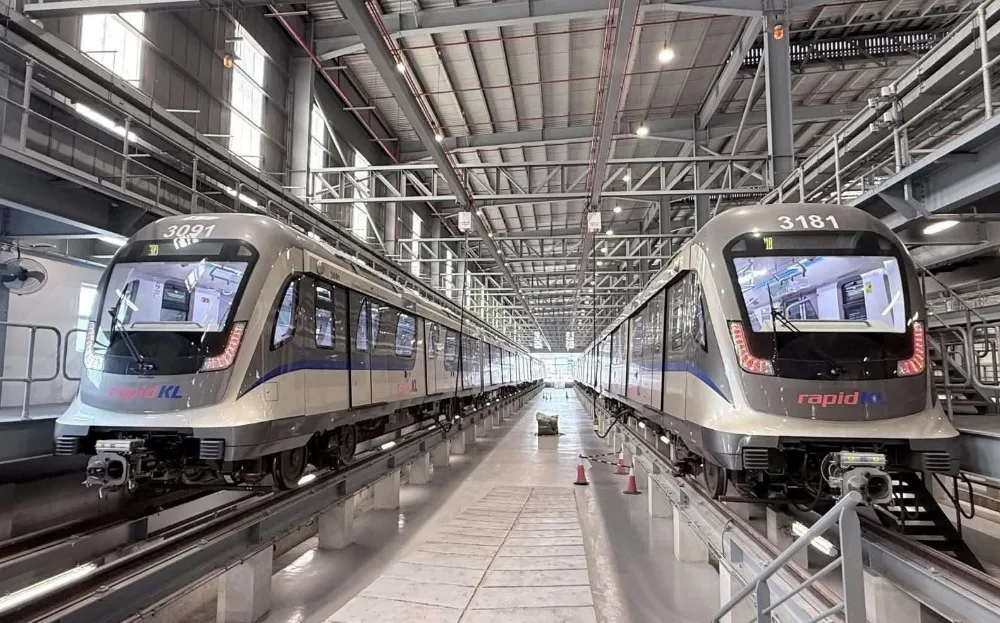
For commuters in Petaling Jaya, Shah Alam and Klang, LRT3 represents a long-awaited public transport link that promises to reduce travel times, improve connectivity and provide a viable alternative to driving. The line is expected to ease congestion along major routes while integrating with existing rail services to create a more seamless travel experience across the Klang Valley.
However, repeated setbacks mean that the previously targeted year-end 2025 opening is no longer realistic. While authorities continue to aim for a 2026 launch, they stress that safety and reliability remain the top priorities. For now, commuters are urged to remain cautiously optimistic as the final testing phase unfolds, with updates expected in the months ahead.
Source: Malay Mail