
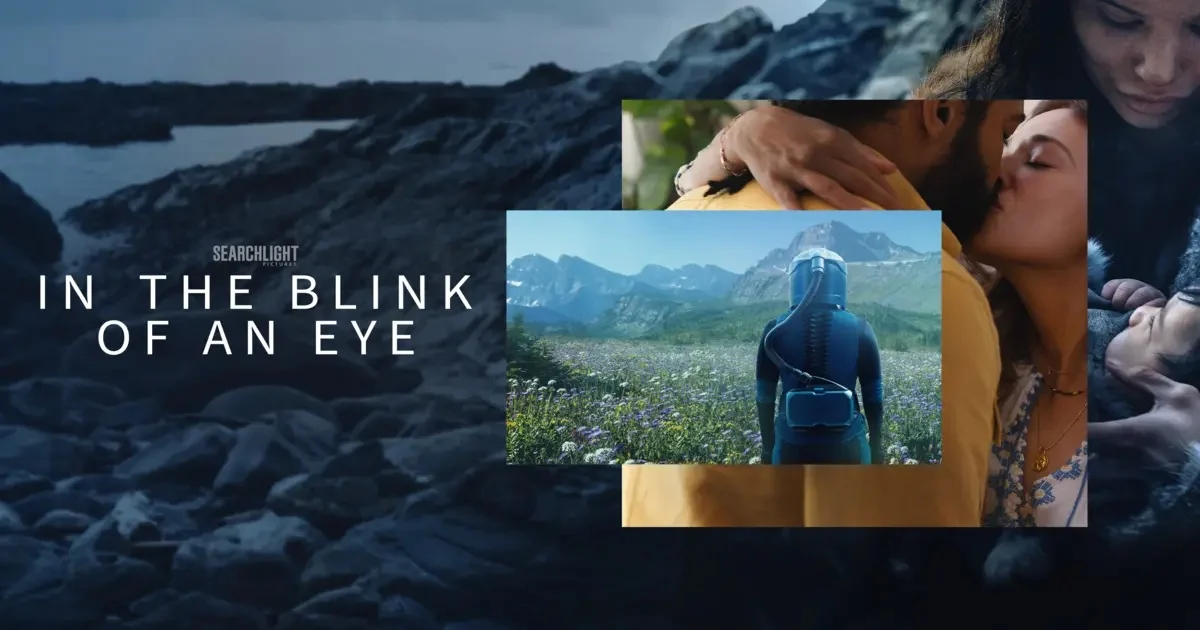
“Remember, remember, this is now, and now and now.” The line from the poet, Sylvia Plath, opens “In the Blink of an Eye” with a quiet insistence, establishing a meditation on the relentless passage of time. From the very first moment, the film asks us to reckon with the fragility of the present, reminding us that each heartbeat, each breath, is fleeting against the sweep of history.
Well, this is the premise of Andrew Stanton’s latest live-action work that won a prize at Sundance. Stanton, the mind behind the emotional depths of “Finding Nemo” and “WALL-E”, now attempts to hold the breadth of human existence in a single, contemplative gaze. Amid its cosmic ambition, the film returns to a haunting question: how much of our “modern” soul is still rooted in our deepest past?
So how does a Neanderthal family, a dysfunctional modern couple, and an ageless woman with her AI companion factor into a single, cohesive thread?
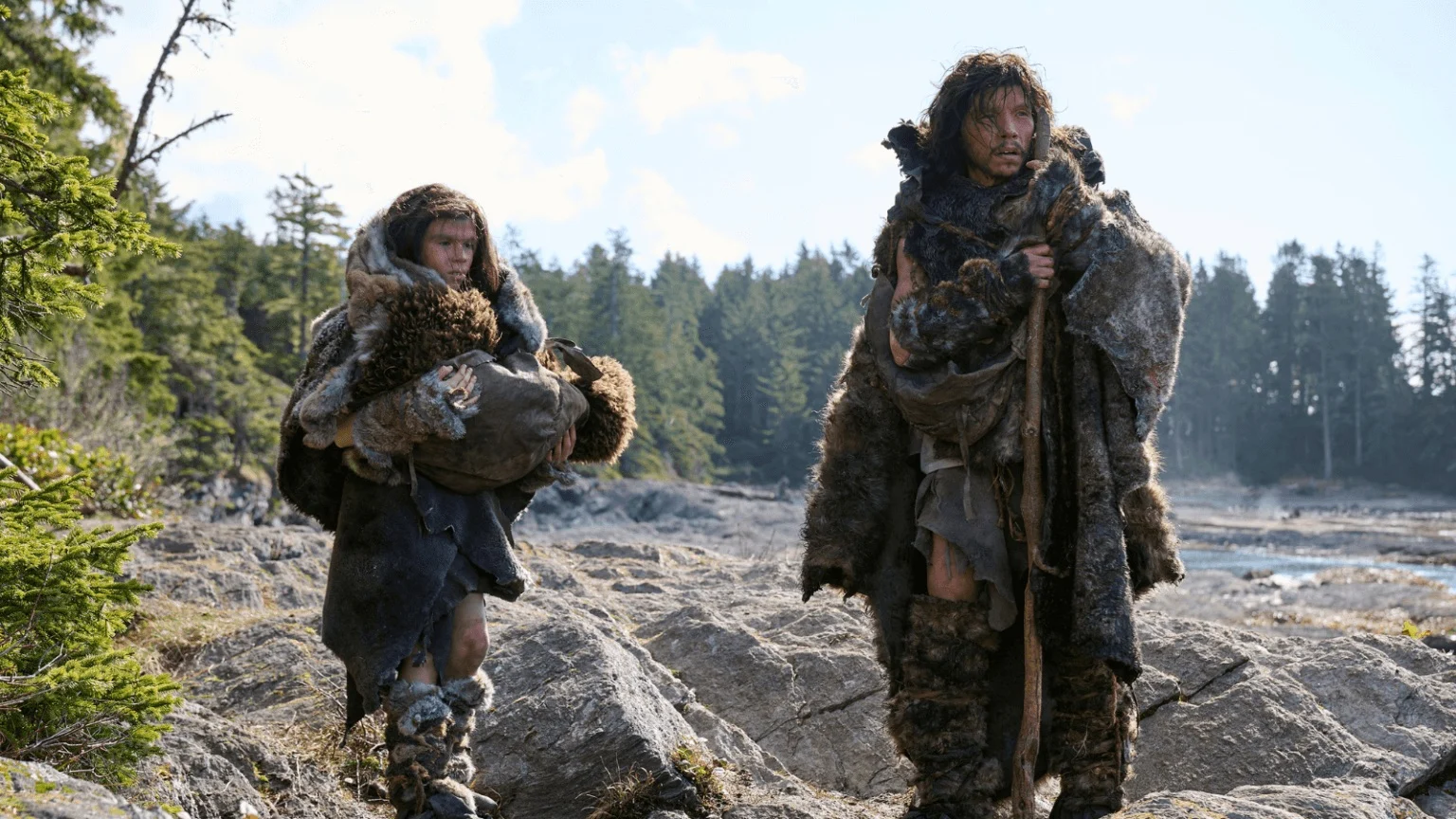
From the get-go, Stanton’s love for “2001: A Space Odyssey” is unmistakable—after all, he did give us AUTO in “WALL-E”. The film opens on Neanderthals, centring on a simple acorn pressed into the dirt, a small object that gathers symbolic weight as the story unfolds. We meet Thorn (Jorge Vargas), his partner Lark (Tanaya Beatty), their son Lark (Skywalker Hughes), and the infant Ebb. Stanton lingers on bodies at rest, on touch and breath, letting intimacy establish the stakes before a word of exposition intrudes.
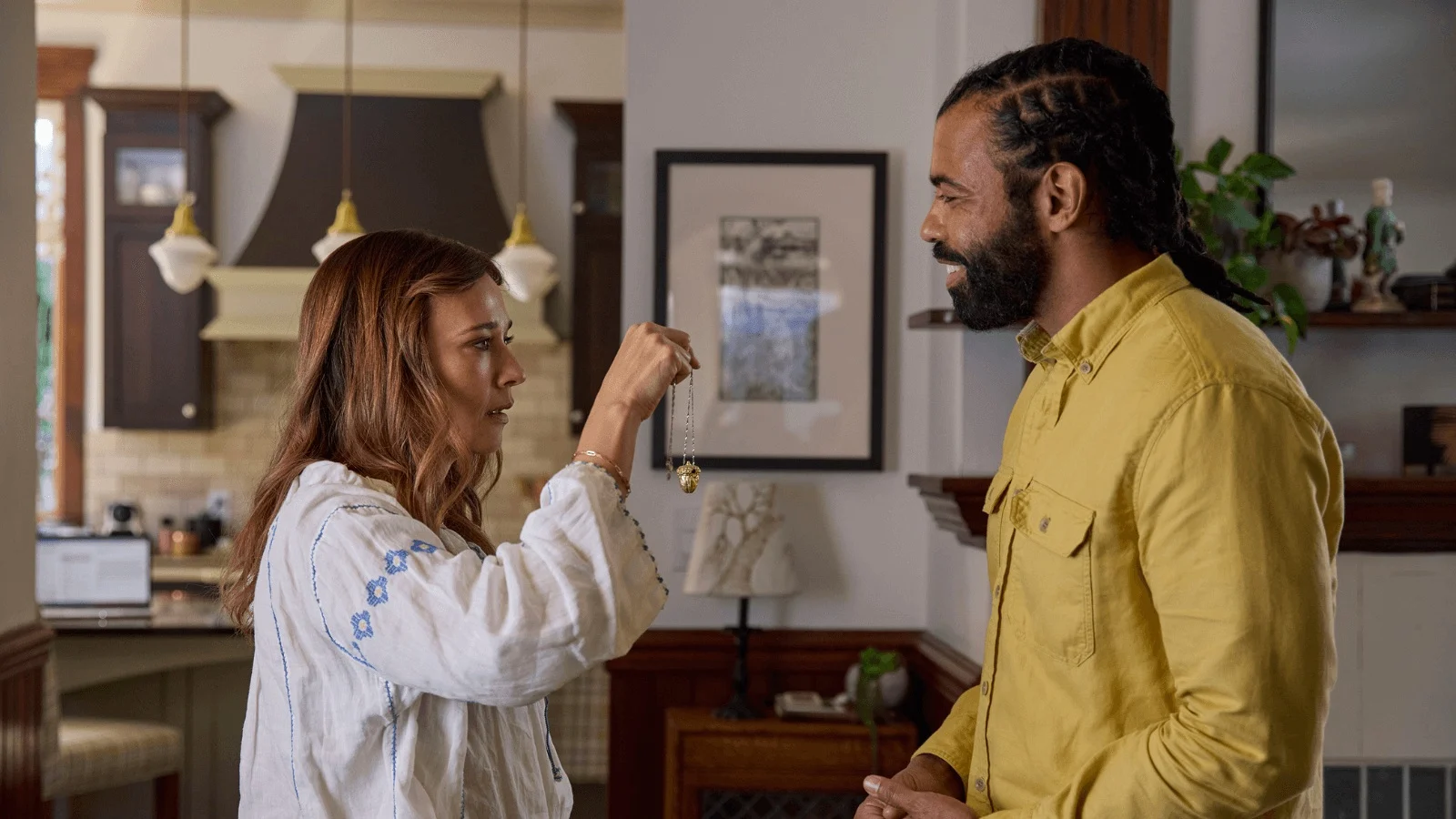
The narrative cuts sharply to 2025. Claire (Rashida Jones), an anthropologist, moves through her present with a careful emotional remove. Greg (Daveed Diggs), a statistician—or something close—hovers at the edge of her life. Their connection feels studied, provisional. Claire keeps him at arm’s length, dismissing him at one point before retreating into solitude to satisfy her sexual desire privately.
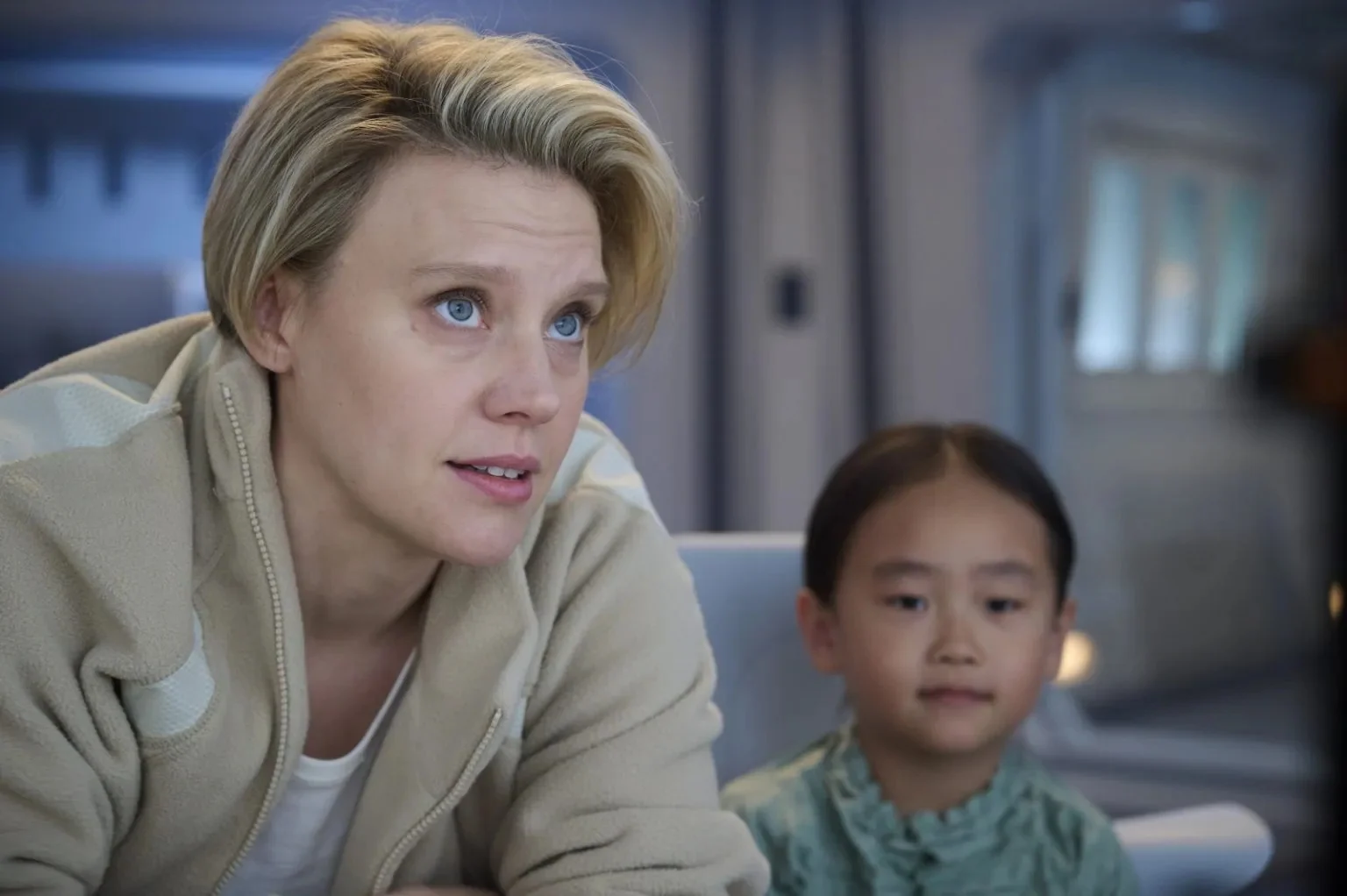
In a strangely comedic move, Stanton uses that spark of desire as a temporal hinge. Specifically, the story leaps centuries forward to Coakley (Kate McKinnon), alone in deep space, accompanied only by an AI named ROSCO. At this point in time, she carries human embryos bound for Kepler-16b, an Earth-like planet that promises renewal. While the film offers little explanation about Earth’s fate, we simply understand that survival requires departure, and Coakley stands as the custodian of what remains.
From here, the film tightens around the inevitability of death and the fragility of life.
Thorn takes a sudden and brutal fall. He slips, crashes onto his back, and the impact reverberates. Soon, he burns with fever, ribs likely broken, breath shallow. He cannot rise and cannot hunt. His family gathers around him as strength drains from the body that once steadied them. In this world, injury is a sentence, and only the family can help him shoulder and press forward if he has to get better.
The present mirrors that fragility. Claire unravels as her mother declines, her scholarly distance dissolving under the weight of imminent loss. She has spent her life studying fossilised remains, tracing humanity through bone and sediment. Now death confronts her directly, refusing abstraction.
In the future, Coakley faces a quieter but no less severe crisis. The oxygen-producing plants aboard her vessel begin to fail, struck by an unexplained blight. Air thins. The mission falters. Humanity’s second chance rests inside a sealed craft, sustained by fragile systems that prove as vulnerable as flesh.
Then come the harder questions. Claire chooses her mother. She stays, watching the slow erosion of a life that shaped her own. Her decision strains her bond with Greg, and she withholds the truth, favouring silence over confrontation.
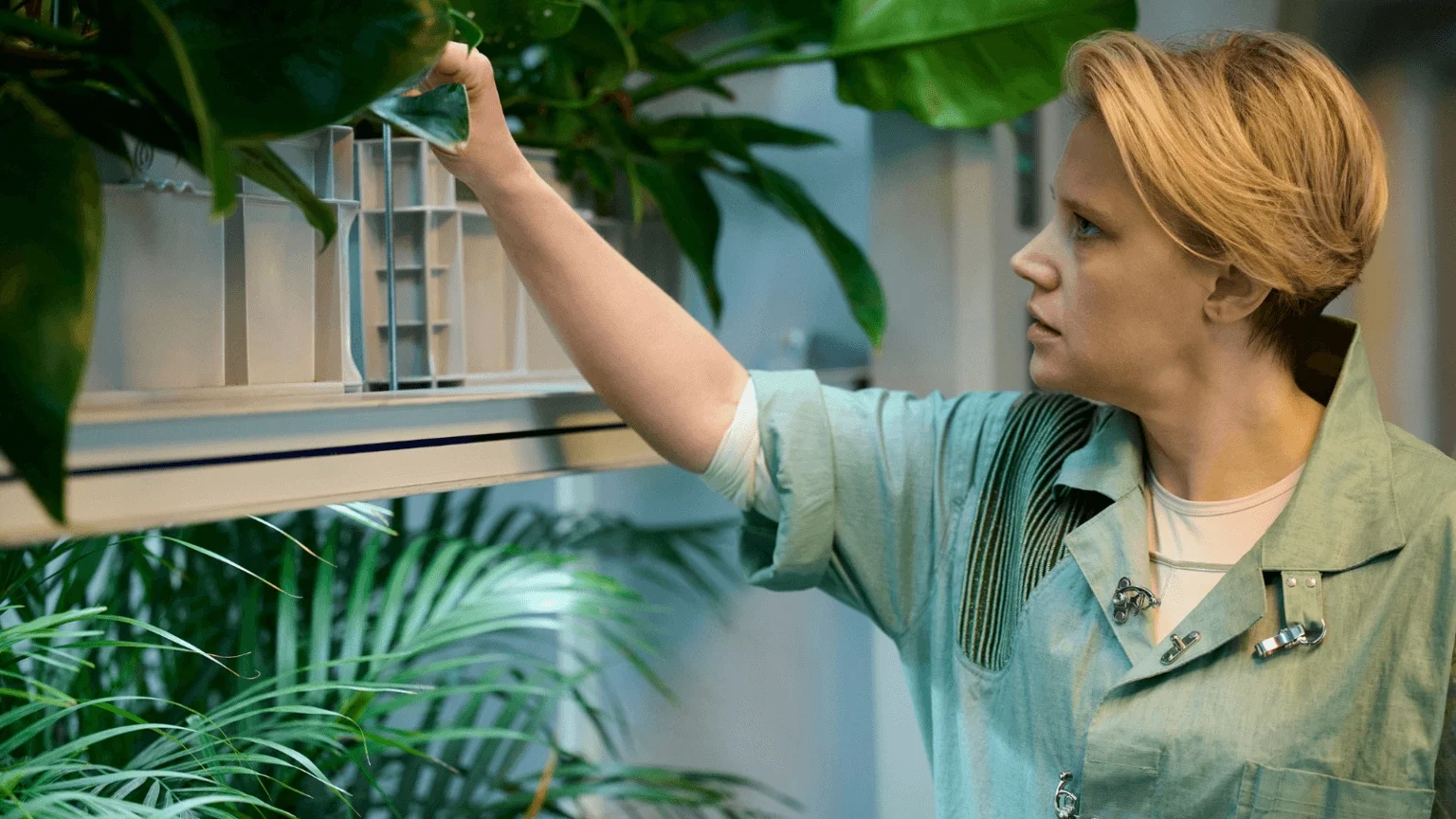
Coakley confronts an arithmetic of survival. To contain the blight, some of the oxygen-producing plants must die. Soon, the air supply will be insufficient for all life aboard. Either consumption decreases, or one life must end. Coakley and ROSCO grapple with sacrifice, calculating the odds of survival.
For lack of a better term, this is a Temu “Cloud Atlas” which searches for spiritual continuity rather than narrative symmetry. Stanton prioritises the persistence of longing, fear, and devotion across time over clever structural echoes.
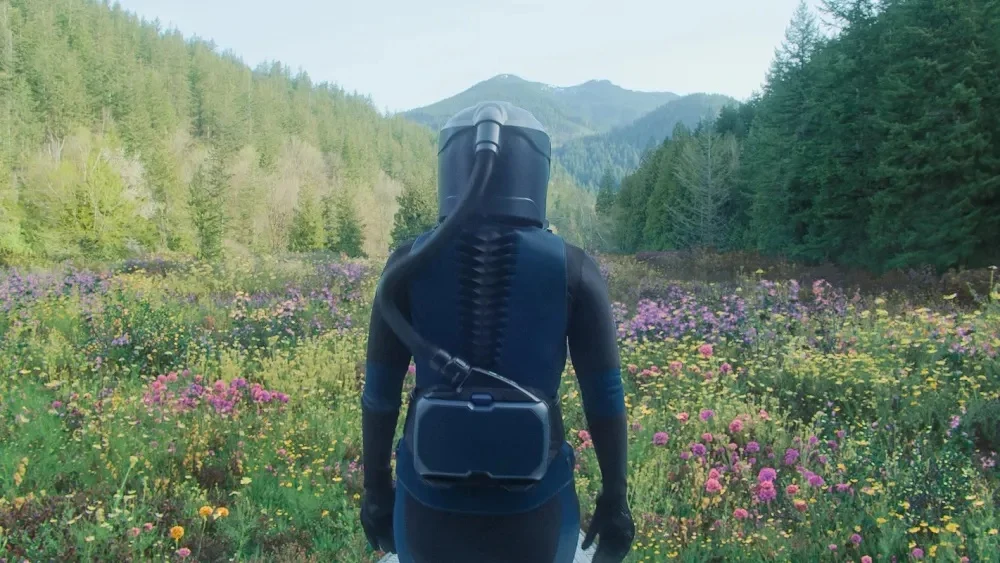
However, a closer parallel may be Robert Zemeckis’ “Here”. Like that film, “In the Blink of an Eye” pivots restlessly between past, present, and future, asking us to hold competing emotional realities at once. It creates a memorable effect. Yet, that film also possesses a lot of issues which are the same over here. Each cut interrupts momentum just as it gathers force. Each return demands renewed emotional investment. Indeed, it’s an ambitious way to tell a story, but it’s also a gamble that doesn’t always pay off when you’re trying to stay connected across three different time zones.
Stanton pursues Plath’s notion of “now.” The acorn travels through generations as a quiet talisman, being the metaphor of elegance in this journey through time. Yet the relentless crosscutting across temporal pillars dulls its impact. Tension builds, then dissipate and moments that should linger pass by way too quickly. It’s frustrating.
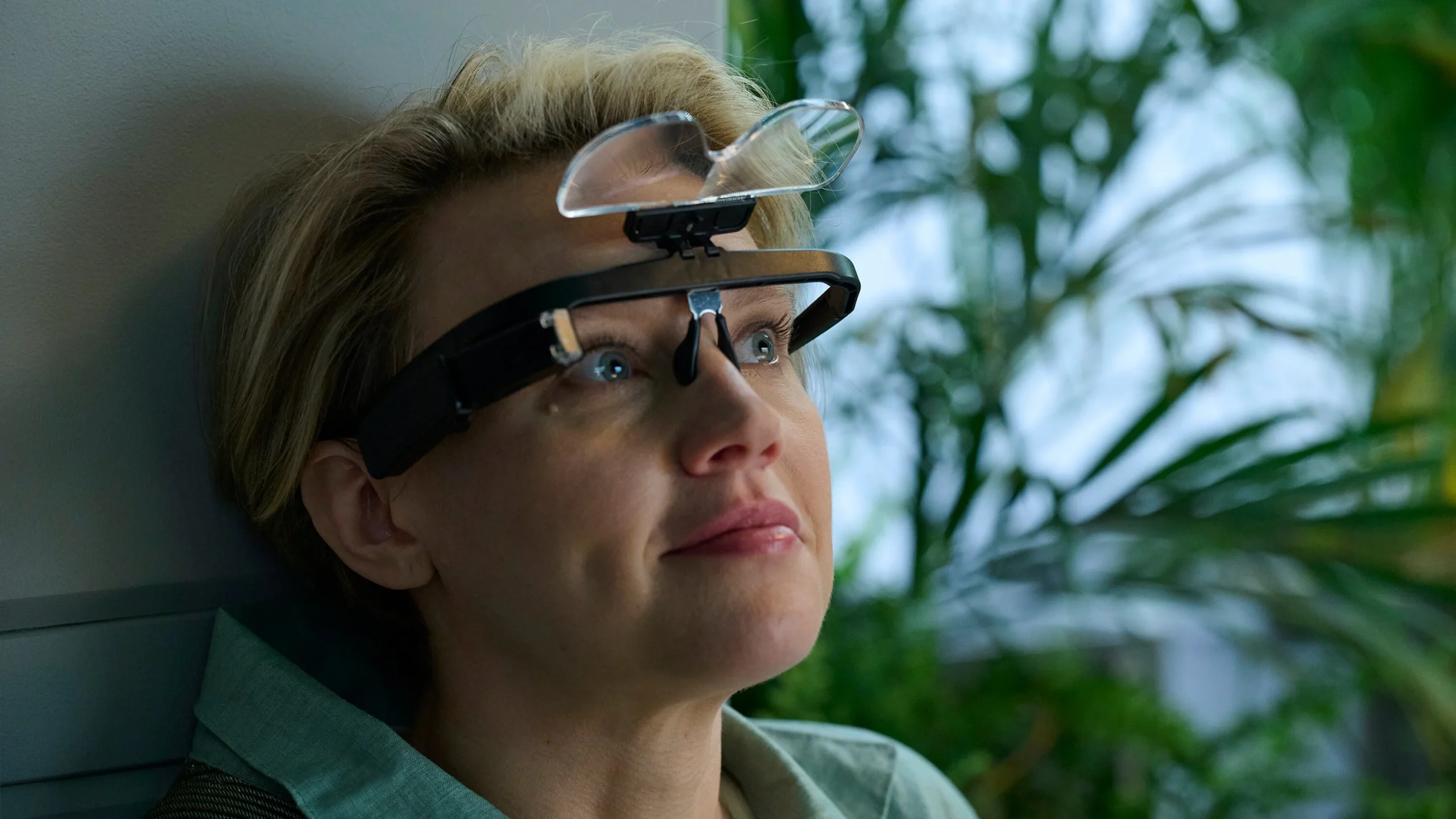
At ninety minutes, the film promises precision but feels compressed. Thorn’s decline, Claire’s grief, and Coakley’s isolation all carry the marrow of something profound. None receives the space to fully unfold. We sense outlines of devastation more than its full weight.
A leaner cut could have distilled the meditation to its sharpest essence. A longer one could have allowed characters room to breathe. As it stands, the film occupies an uneasy middle ground. Its themes carry gravity. Its emotional impact often proves fleeting. For a story so intent on confronting mortality, that transience feels both deliberate and limiting.
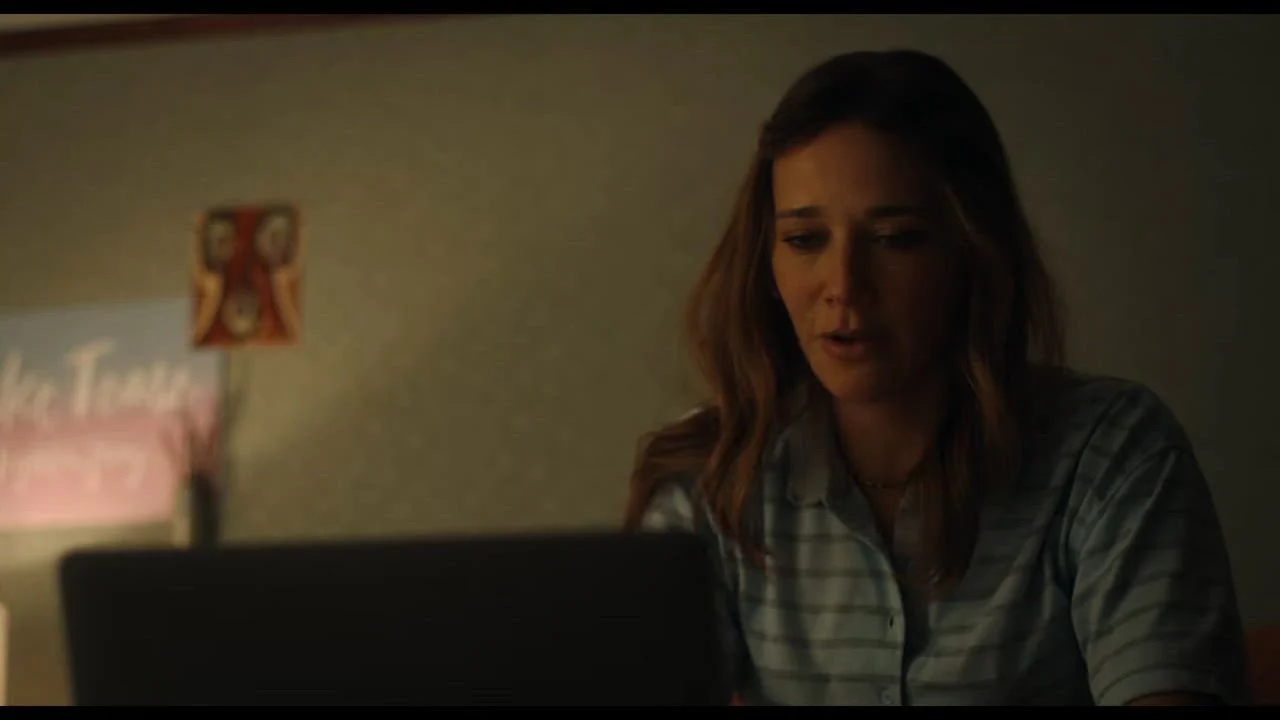
Colby Day’s script, following his work on “Spaceman”, continues his fascination with isolation and technological mediation. Grief threads through each storyline. Death levels the centuries. Still, the constant crosscutting disrupts momentum. The modern and futuristic narratives never quite reach clarity, as do the prehistoric ones. Claire and Greg’s relationship unfolds through conversations that feel dutiful rather than intimate. Their love registers in theory, but rarely in texture. In 2417, McKinnon carries the weight of humanity’s future with conviction, yet the tone occasionally falters, and the emotional stakes never fully land.
So, again, how does a Neanderthal family, a dysfunctional modern couple, and an ageless woman with her AI companion factor into a single, cohesive thread? While the answer might lie in an acorn necklace, which supposedly contains the film’s quiet heart, the truth is that the cohesiveness is never really there. From cave to laboratory to an alien field of flowers, it gestures at continuity and survival. The metaphor carries elegance. Yet the symbolism is lost and cannot sustain itself. For all its meditation on the “missing link,” the film struggles to forge an unbroken emotional chain that feels palpable and meditative. It’s a shame.
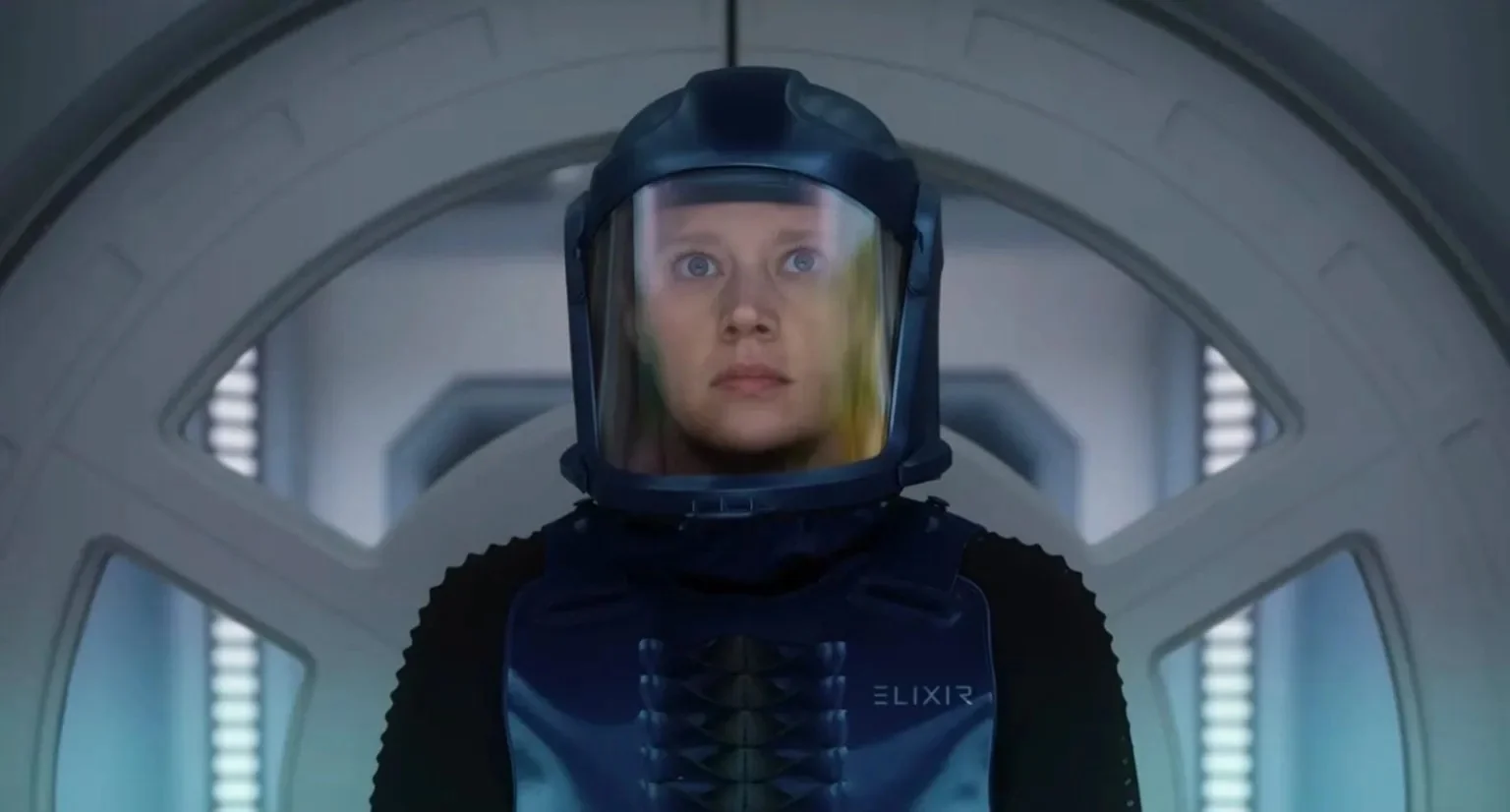
In its best moments, “In the Blink of an Eye” brims with intellectual ambition and visual rigour. Stanton dares to compress the sweep of human history into a single canvas, treating mortality as its binding force. Particularly in some of the Stone Age sequences, it achieves rare, solemn beauty. At its weakest, it feels underconstructed, its ideas stated rather than felt.
If this is the energy Stanton brings into 2026, and with “Toy Story 5”, which Stanton also directed, on the horizon, we have to pray that he retains the whimsical and memorable touch that has defined his greatest work. Here, however, purported cerebral ambition sometimes eclipses emotional clarity. The film is an intriguing, occasionally frustrating meditation on survival and continuity.
It’s a little ironic to think about this experience in retrospect. Simply, gone and forgotten… as this film posits, in the blink of an eye.

“In the Blink of an Eye” is currently streaming on Disney+.
The Review
"In The Blink of An Eye"
In a film brimming with ambition and philosophical scope, "In the Blink of an Eye" falters and remains a middling experience. Its journeys are compelling enough, but rarely carry the weight needed to hold the film together. By the end, we’re left with a largely forgettable experience that could, and should, have been much more.
Review Breakdown
- Mid