

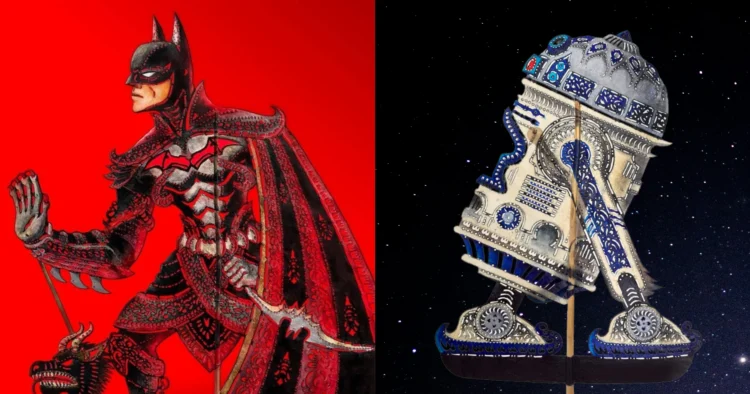
The lights go down. A white cloth screen glows at the front of the room. Stars appear on it, projected, cold and endless. Then a ship comes into frame, running, and behind it, something menacing closes in.
You know this scene. You’ve seen it on cinema screens, on laptops, and on TVs in living rooms. But you haven’t seen it quite like this. It’s the Tantive IV and the Imperial Star Destroyer rendered as shadow puppets, hand-carved, moving against a projected starscape, narrated in Malay, and accompanied by live traditional music.
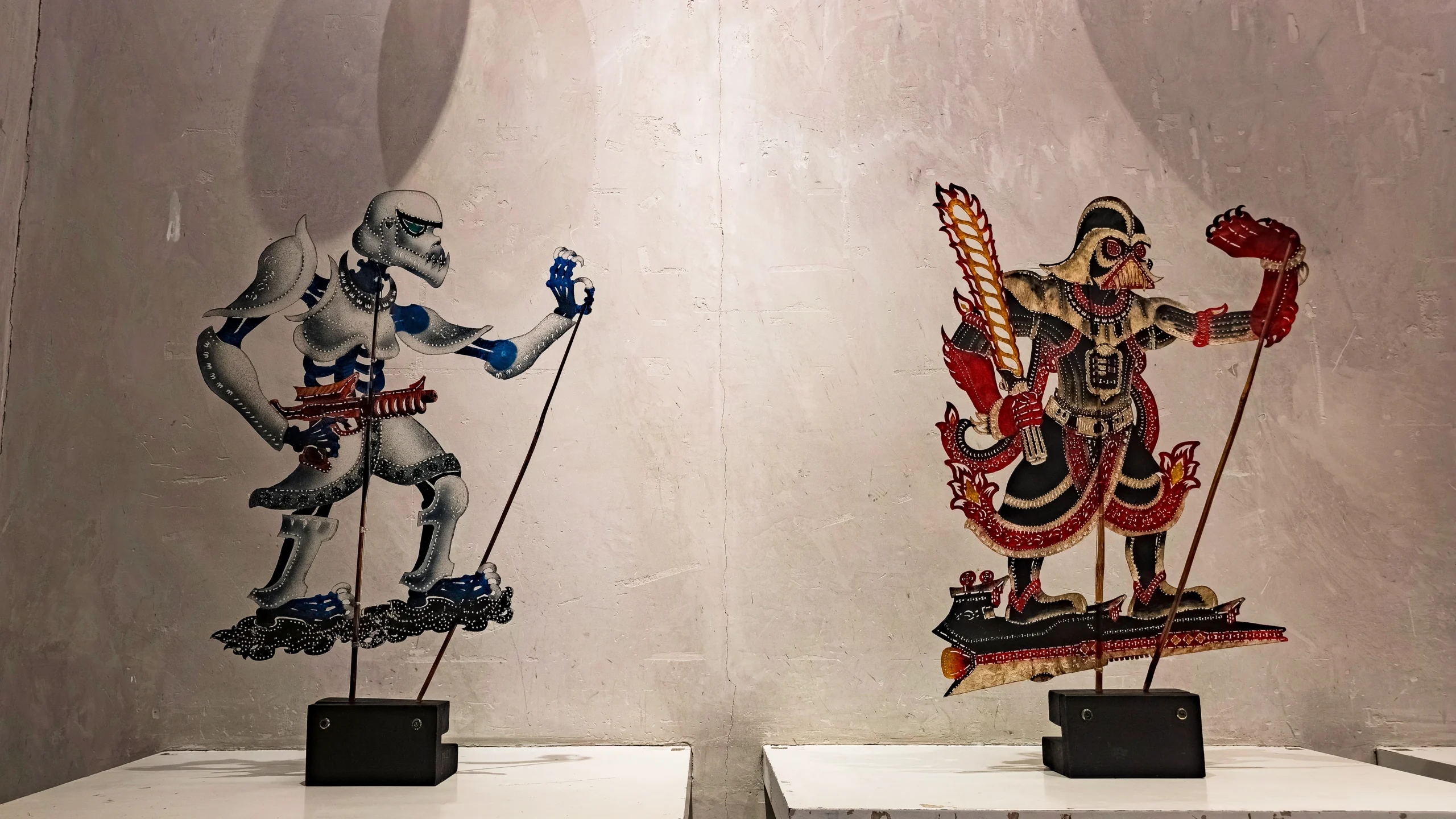
Enter Tuan Puteri Leia, Ah Tuh, Si P-Long, leather and shadowy renditions of Princess Leia, R2-D2, C-3PO. And then the background turns blood red. A Sith’s burning rage bleeds across the kelir. Sangkalah Vedeh has arrived.
Only Malaysians could have conceived of that. And only Malaysians did.
That’s Fusion Wayang Kulit for you, an award-winning troupe out of Kuala Lumpur that has spent over a decade taking one of Malaysia’s oldest, most endangered traditional art forms and colliding it head-on with the biggest pop culture franchises on the planet.
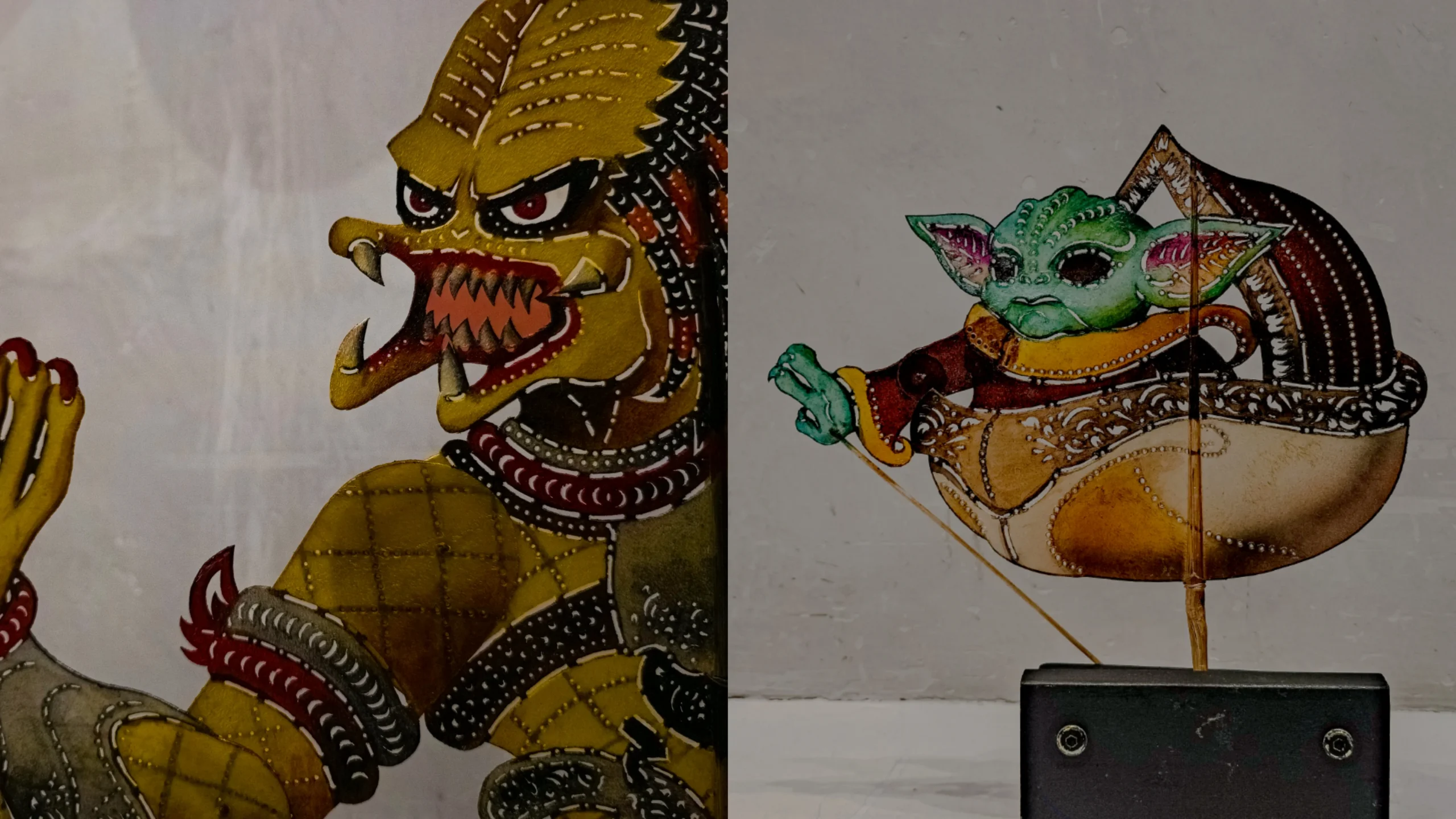
Recently, we attended Fusion Wayang Kulit’s Memory and Tomorrow event in the heart of Kuala Lumpur, and it was an eye-opener into how this troupe is keeping a sacred art alive.
But first, some context…
Few art forms carry the weight of centuries quite like wayang kulit. The oldest written record of a performance dates to 903 CE, etched into a Javanese royal inscription. Originating in Java and Bali, its stories drew from the Hindu epics of the Ramayana and Mahabharata (think sprawling chronicles of gods, demons, and the perpetual collision between light and darkness) before taking root across Southeast Asia.
In Malaysia, the tradition found its own distinct voice, most prominently in the east coast state of Kelantan. The Malaysian form is distinguished by puppets with a single movable arm, crafted from buffalo hide, hand-painted, and intricately detailed.
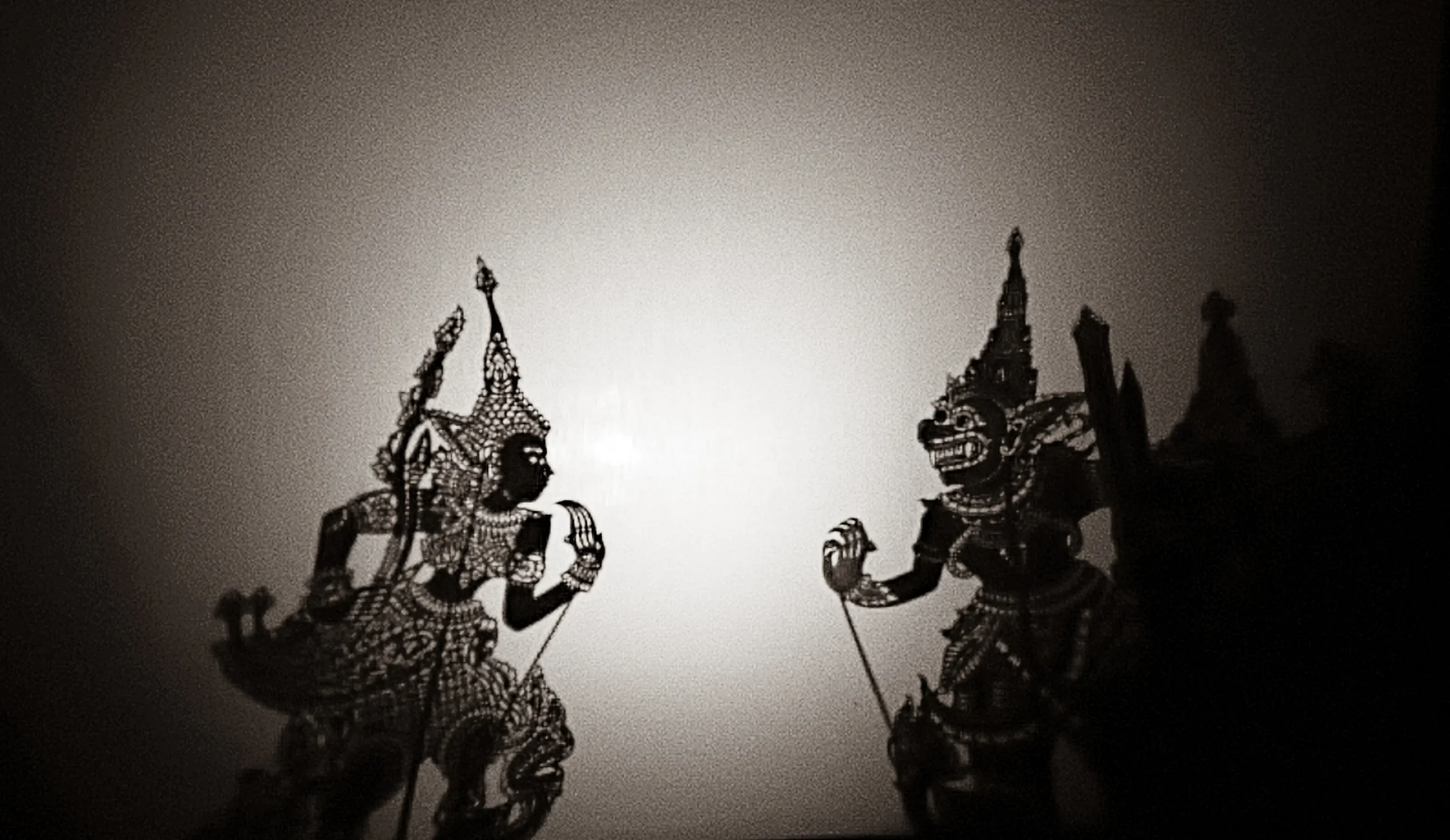
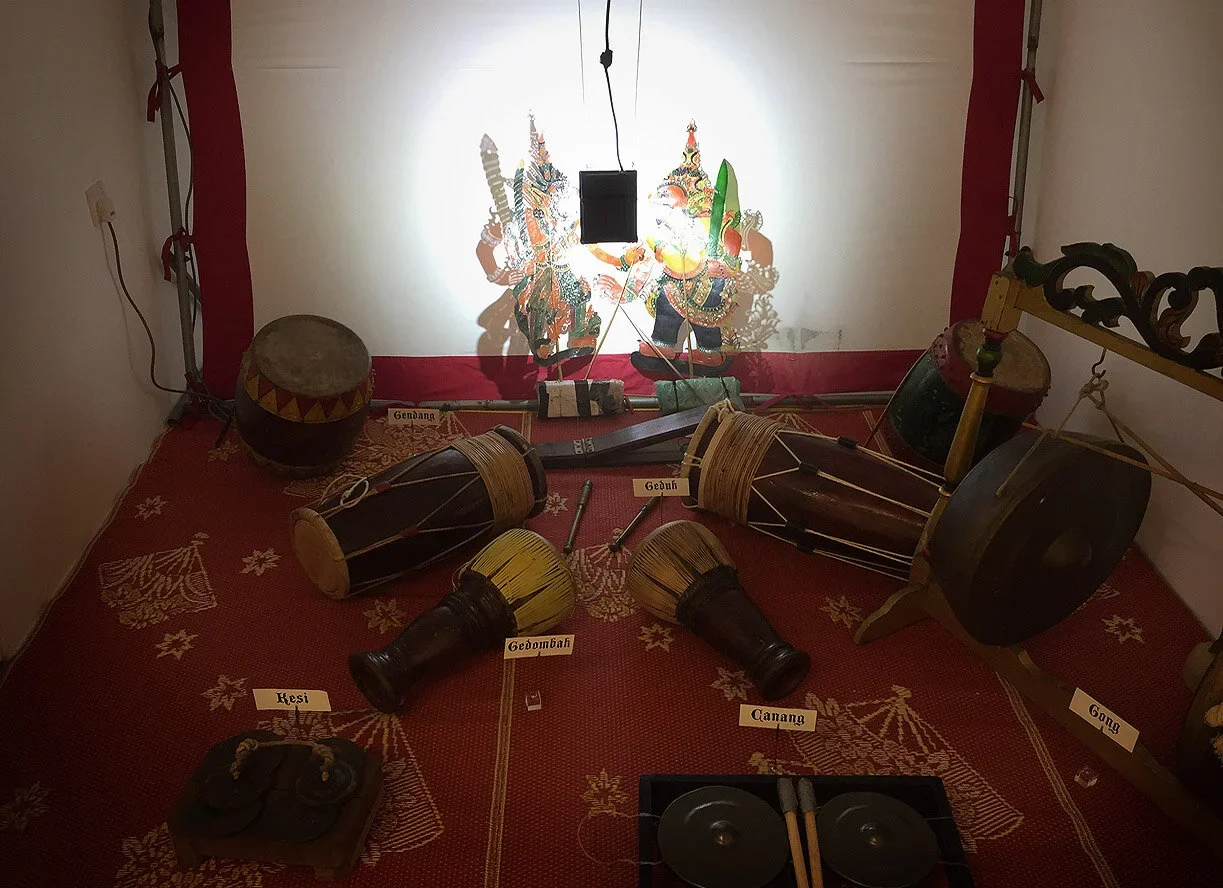
The performance itself is presided over by the Tok Dalang, the master puppeteer, who operates from behind a backlit white cotton screen known as the kelir. He is accompanied throughout by a live ensemble: the gendang (drum), rebab (a two-stringed bowed lute), serunai (a wind instrument requiring circular breathing), canang and gong, gedombak, geduk, and kesi (small cymbals).
The Origins from Memory
Not too long ago, on a planet not too far away, Tintoy Chuo, a multi-award-winning multimedia designer with a long-standing passion for comics and character creation, was invited to contribute to an art exhibition in Kuala Lumpur. He wanted to say something about Malaysian culture, landed on wayang kulit, and saw immediately how rapidly it was being abandoned by younger Malaysians. His solution was to pair it with “Star Wars”.
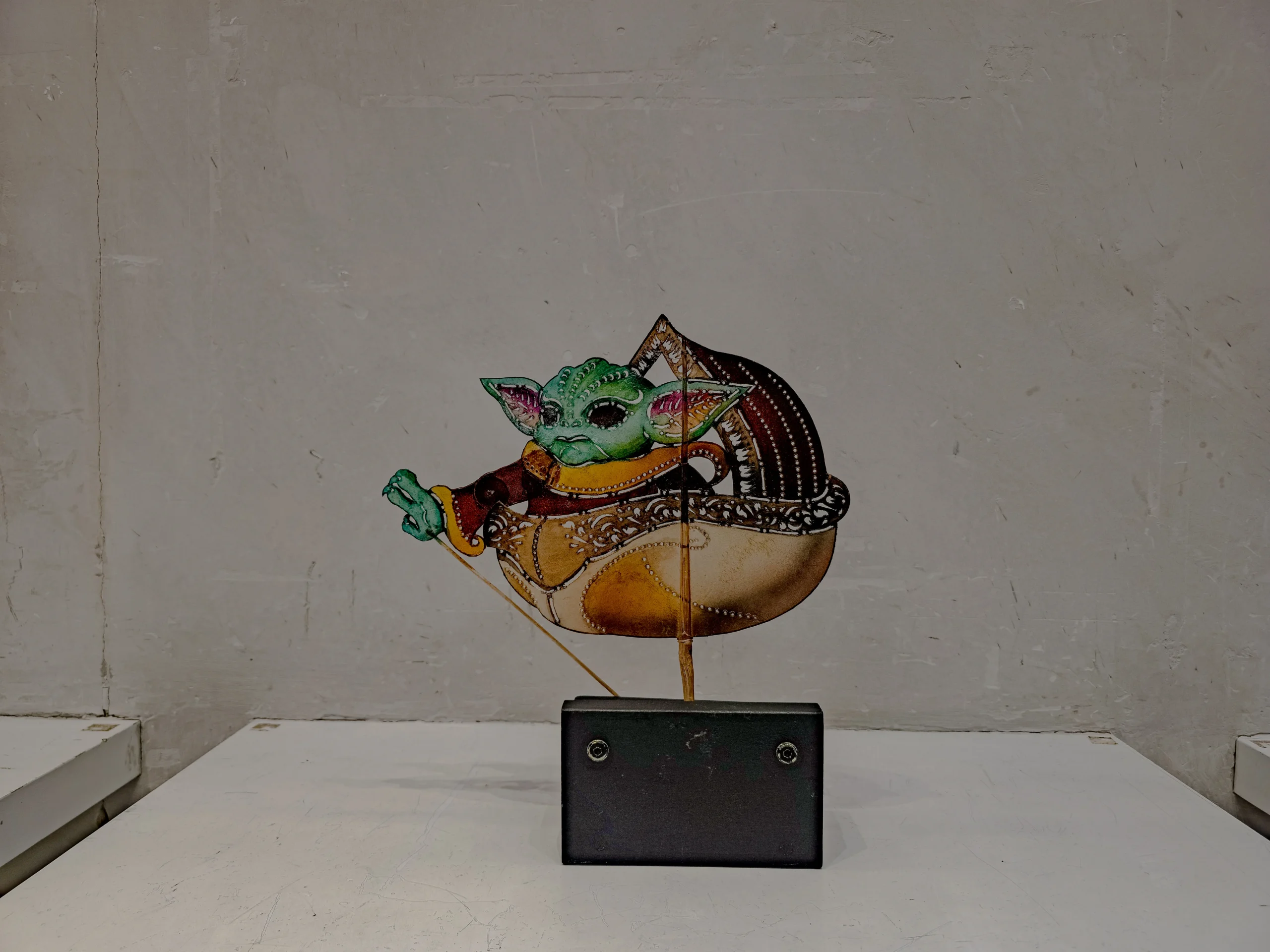
In his words, it was a way to combine something traditional with something futuristic. George Lucas himself had laid the foundations of “Star Wars” upon the works of Akira Kurosawa, Shakespearean tragedies, and folkloric mythologies. It was the hero’s journey, the fallen figure who might yet be redeemed, the cosmos-spanning war between light and dark.
Wayang kulit had been mapping that same space for over a thousand years…
To do it properly, Tintoy needed a Tok Dalang. He searched in rural Malaysia and eventually found one through Facebook in Pak Dain, a master puppeteer from Kelantan who had been practising the craft since the 80s.
But Pak Dain had never actually watched “Star Wars”. So, Tintoy sent him a DVD. After watching it, Pak Dain agreed to join in the fun.
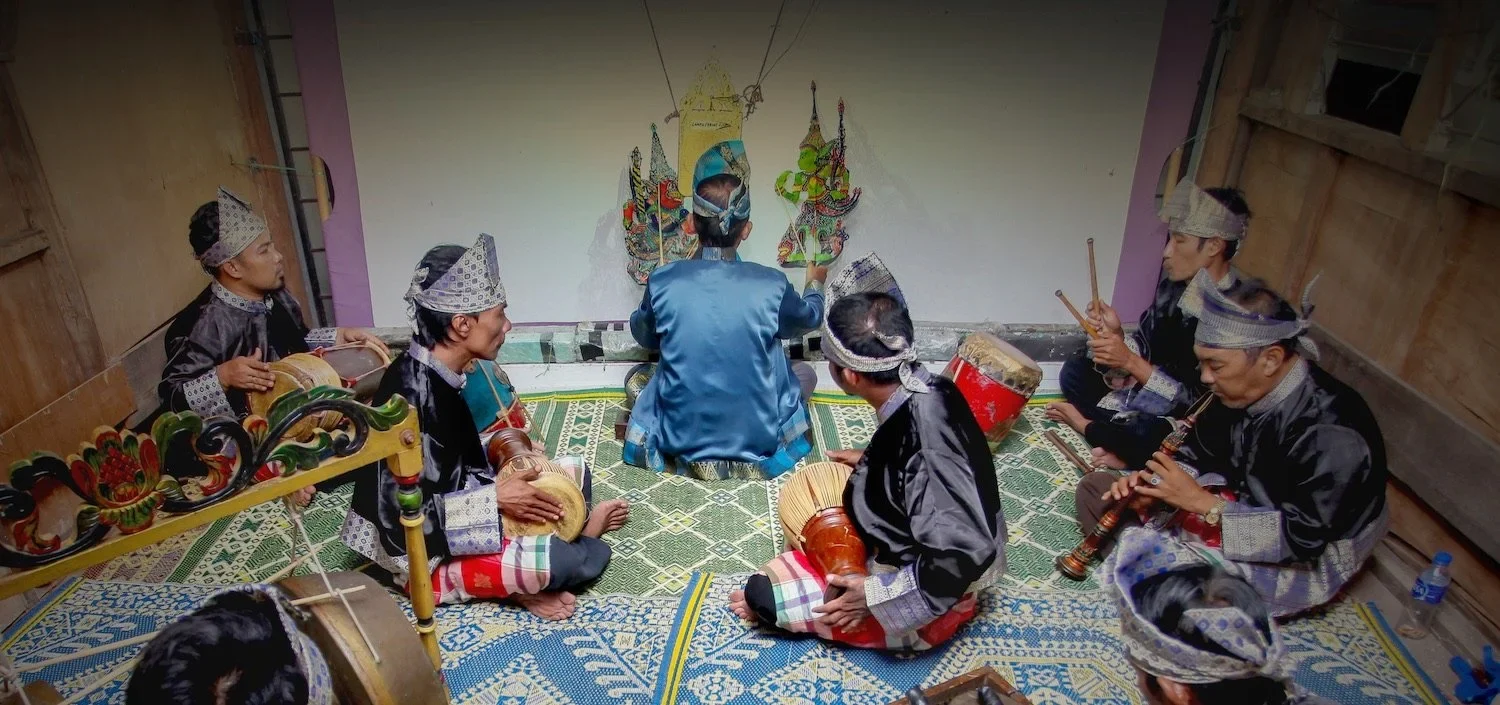
Together with art director Teh Take Huat, they held their first public performance on 18 October 2013 under the name “Peperangan Bintang”, the literal Malay translation of “Star Wars”.
Characters Reborn
The first puppet they created wasn’t Luke Skywalker or Princess Leia. It was Sangkalah Vedeh, the Darth Vader character, inspired equally by Vader and by the demon figures of the Ramayana. When Sangkalah Vedeh makes his entrance, the ensemble plays a traditional Kelantan melody composed specifically for him, one that carries the Imperial March’s unmistakable menace, transposed into a form that is centuries older than cinema.
At “Memory and Tomorrow”, we saw even more of their works. And these were characters sprawling from different galaxies and fandoms, including Ultraman, Batman, Superman, Predator, Grogu, The Mandalorian, Obi-Wan Kenobi, and a Stormtrooper.
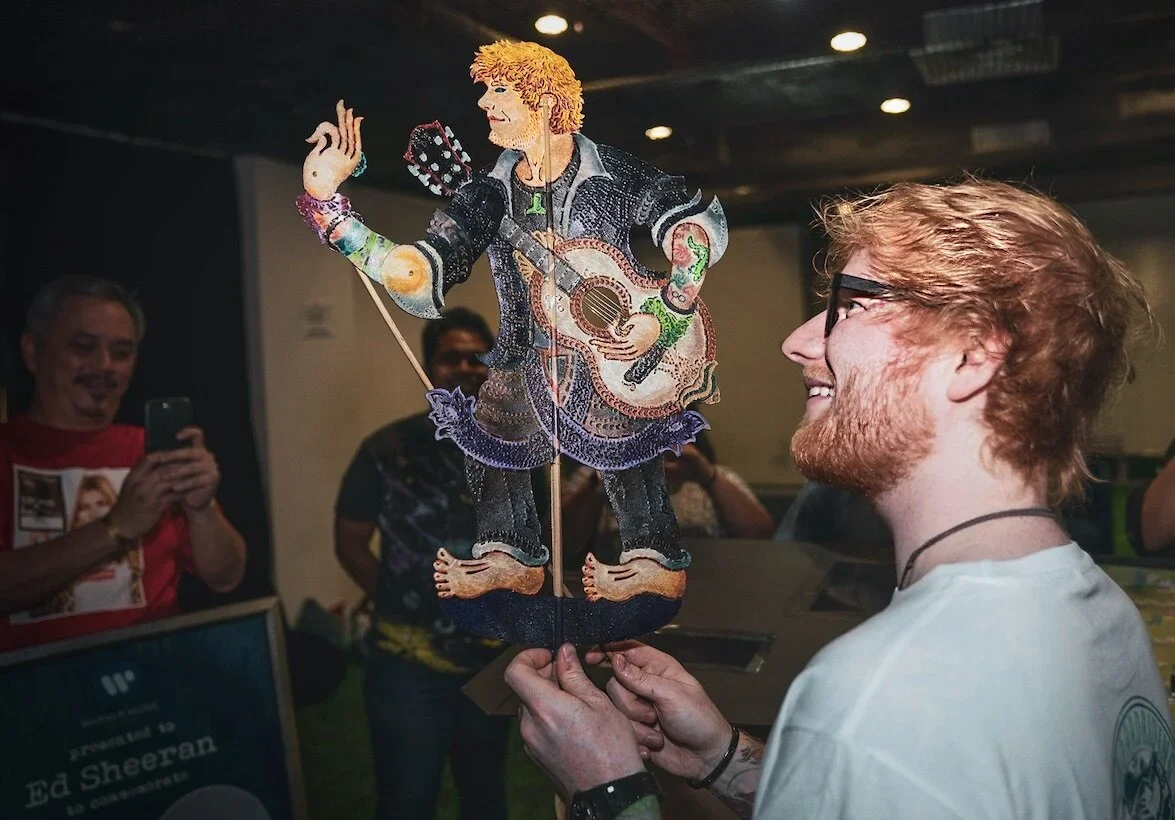
Beyond that, they’ve produced a Venom puppet for Sony Pictures Malaysia, adapted “Evangelion” and “Gundam” mechas into shadow puppet form, brought “Kamen Rider” to the kelir, created Per-Kasa and Tengkorar (their He-Man and Skeletor from “Masters of the Universe”), built an Ed Sheeran puppet for Warner Music Malaysia, and constructed what is believed to be the world’s first transformable wayang kulit puppet, inspired by “Macross”. The PlayStation collaborations alone span “God of War”, “The Last of Us”, “Horizon Forbidden West”, “Ghost of Tsushima”, and “Ratchet & Clank”. They’ve even brought Malaysia’s own beloved Upin dan Ipin to the kelir, proving this isn’t just about Western IP.
Every IP, every collaboration still holds the same argument that the stories the world keeps returning to are the same stories wayang kulit has always told.
The World Is Watching
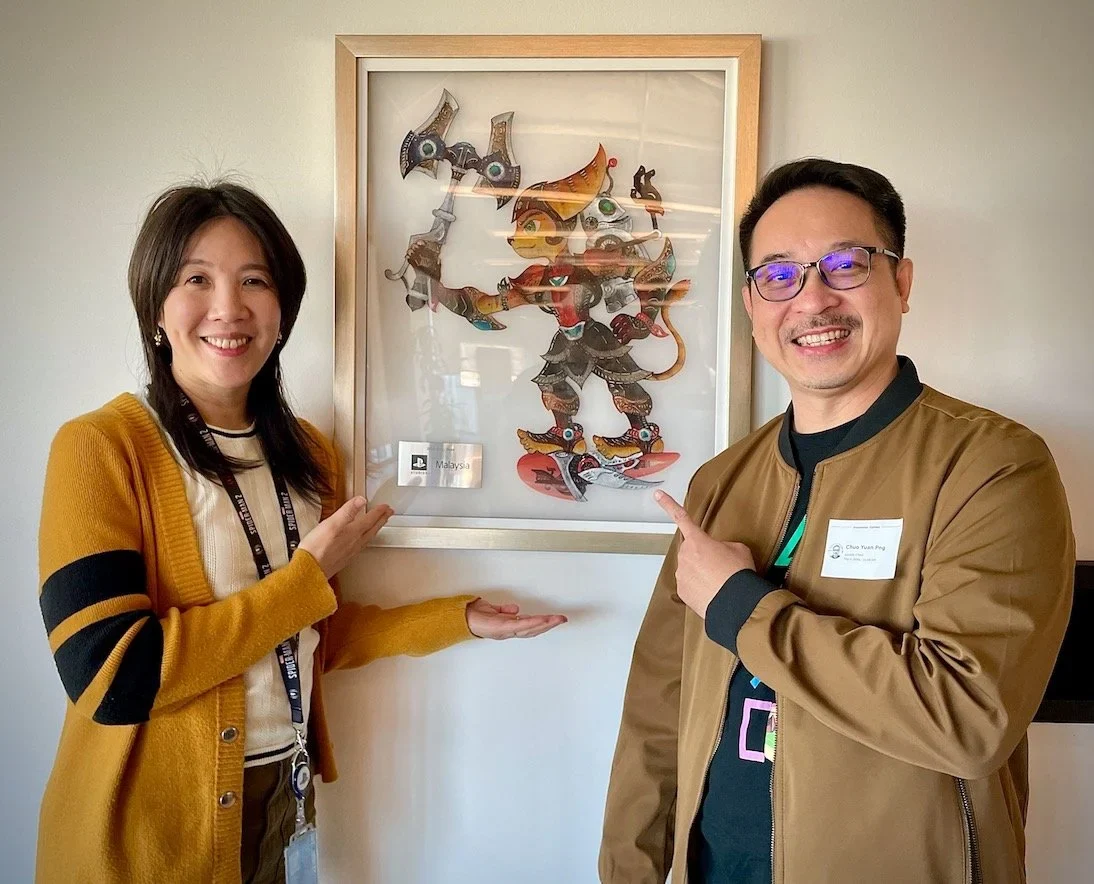
Fusion Wayang Kulit has played this game for a while, and they have the receipts to show!
Long before international stages, they were performing at the Petronas Twin Towers, fans showing up in full costume with lightsabers. And yet, the recognition didn’t stop as Mark Hamill, Mr Luke Skywalker himself, after accidentally tweeting a Malaysian flag instead of an American one, discovered Fusion Wayang Kulit and expressed admiration for the Luke Skywalker puppet.
The official Star Wars YouTube channel has featured their work. CNN, the Wall Street Journal, National Geographic Asia, Nikkei Asia, and the Goethe-Institut all covered them. They lectured at Pixar Animation Studios, and brought a Buzz Lightyear wayang kulit puppet along for the visit, because of course they did. Sony and PlayStation sought them out. They’ve performed across Singapore, China, Germany, Austria, Thailand, and Taiwan.
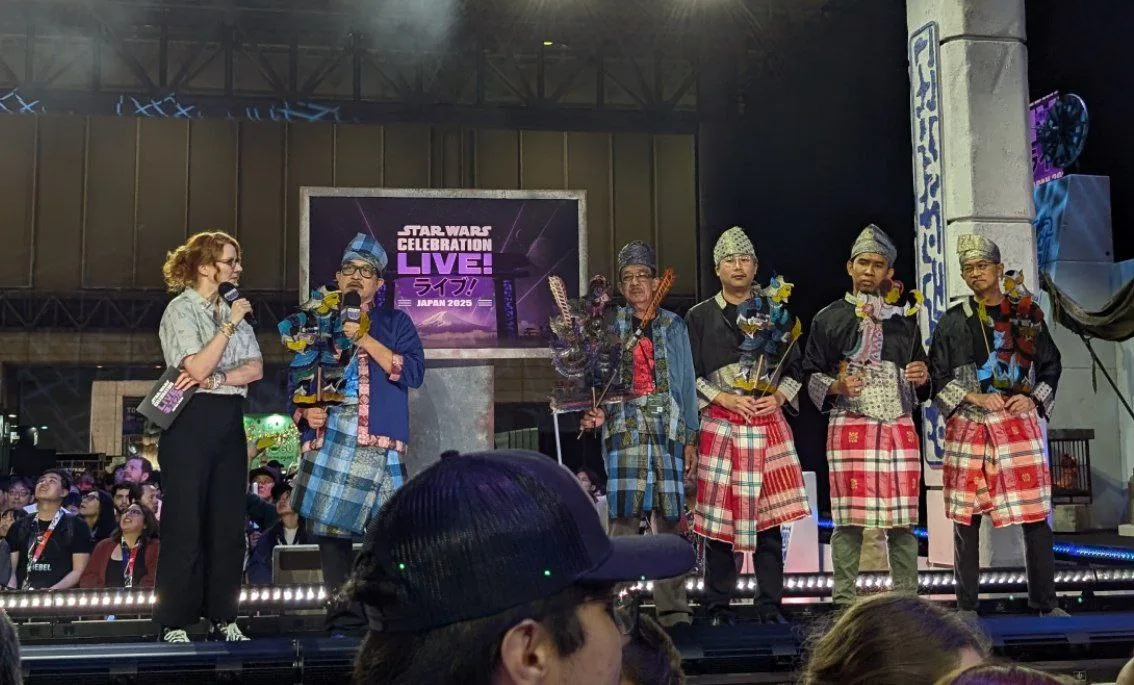
Then came Tokyo. A year ago, we were at Star Wars Celebration Japan when Fusion Wayang Kulit took to the Live Stage and performed a shadow puppet retelling of the “Rogue One” finale: that desperate sequence where the Rebels scramble to pass the Death Star plans to Leia while Darth Vader closes in. In Malay. With traditional music. To a packed room of Star Wars fans from across the globe.
Tintoy puts it better than we can: ” We went there in our traditional costumes, with our wayang kulit. And I asked permission to speak in Bahasa Malaysia. I didn’t care that 95% of the audience wouldn’t understand. I did it anyway.”
For Tintoy, that moment in Tokyo was a statement that Malaysia was in that room, represented not by something borrowed or imitated, but by something entirely on its own.
The Art of Learning
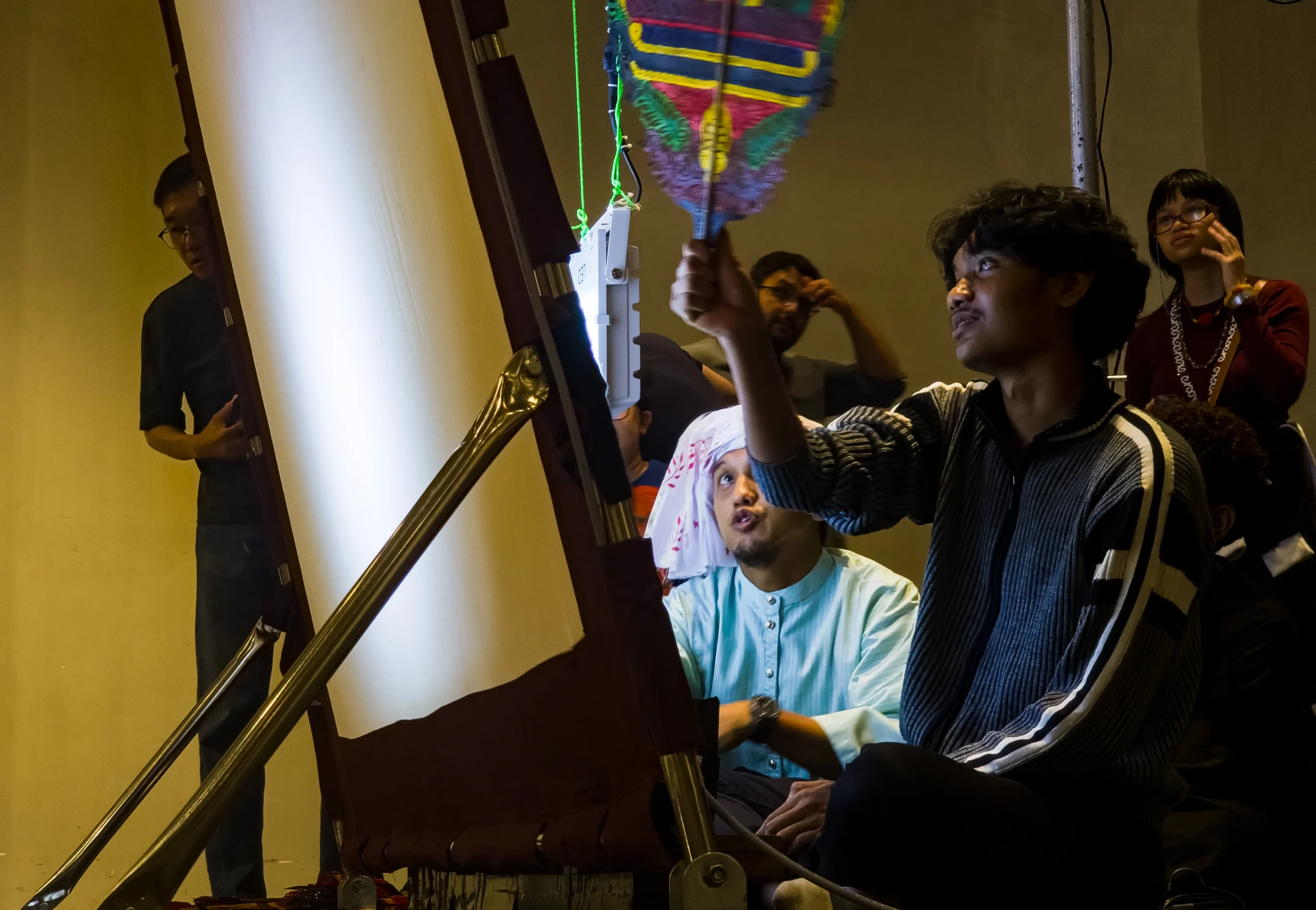
One thing that becomes clear very quickly at a Fusion Wayang Kulit event is that they genuinely want you to understand what you’re watching. The host wove facts between every segment throughout the evening: the history of the art form, how the kelir functions, and what the Tok Dalang’s role genuinely involves. It felt like being let in on something most people walk past their whole lives without noticing.
We learned several info nuggets, like how before each act, the Tok Dalang places the pohon beringin, an ornamental representation of the sacred banyan tree, at the base of the kelir. It is a ritual that has opened wayang kulit performances for centuries, a signal that the spirit of the performance is about to begin.
Indeed, that openness extends beyond just information. During a 30-minute break, the team handed the space over entirely. There was a hands-on puppet-making class, where attendees worked with materials and learned from the inside how the craft actually functions.
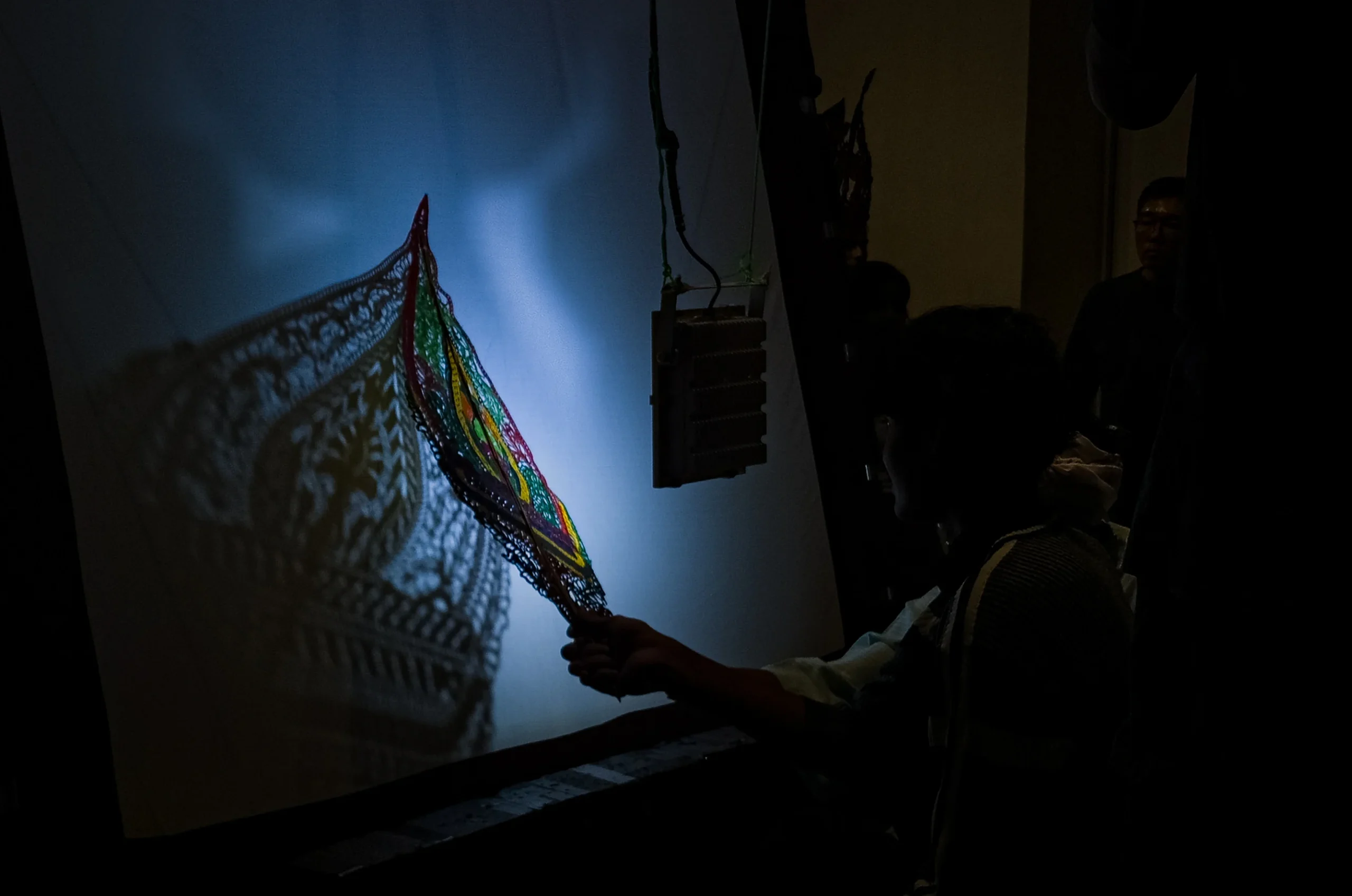
Then the stage itself was opened. Puppets out, instruments available, no structure. Children darted behind the screen, working out how the shadows shifted as the light caught the leather. Adults attempted the gendang and the gong with varying degrees of success. Nobody really knew what they were doing, and that was entirely the point.
Want to try it yourself before attending an event? Fusion Wayang Kulit has downloadable puppet templates on their website that you can print and cut out at home.
During their Star Wars performance, we noticed that there was a second projector providing some overlaid animated visuals. It’s a starfield, the looming hull of an Imperial Star Destroyer, the cold vastness of space. The leather puppets move against a living world. It’s the shadow and the universe at the same time, on the same screen.
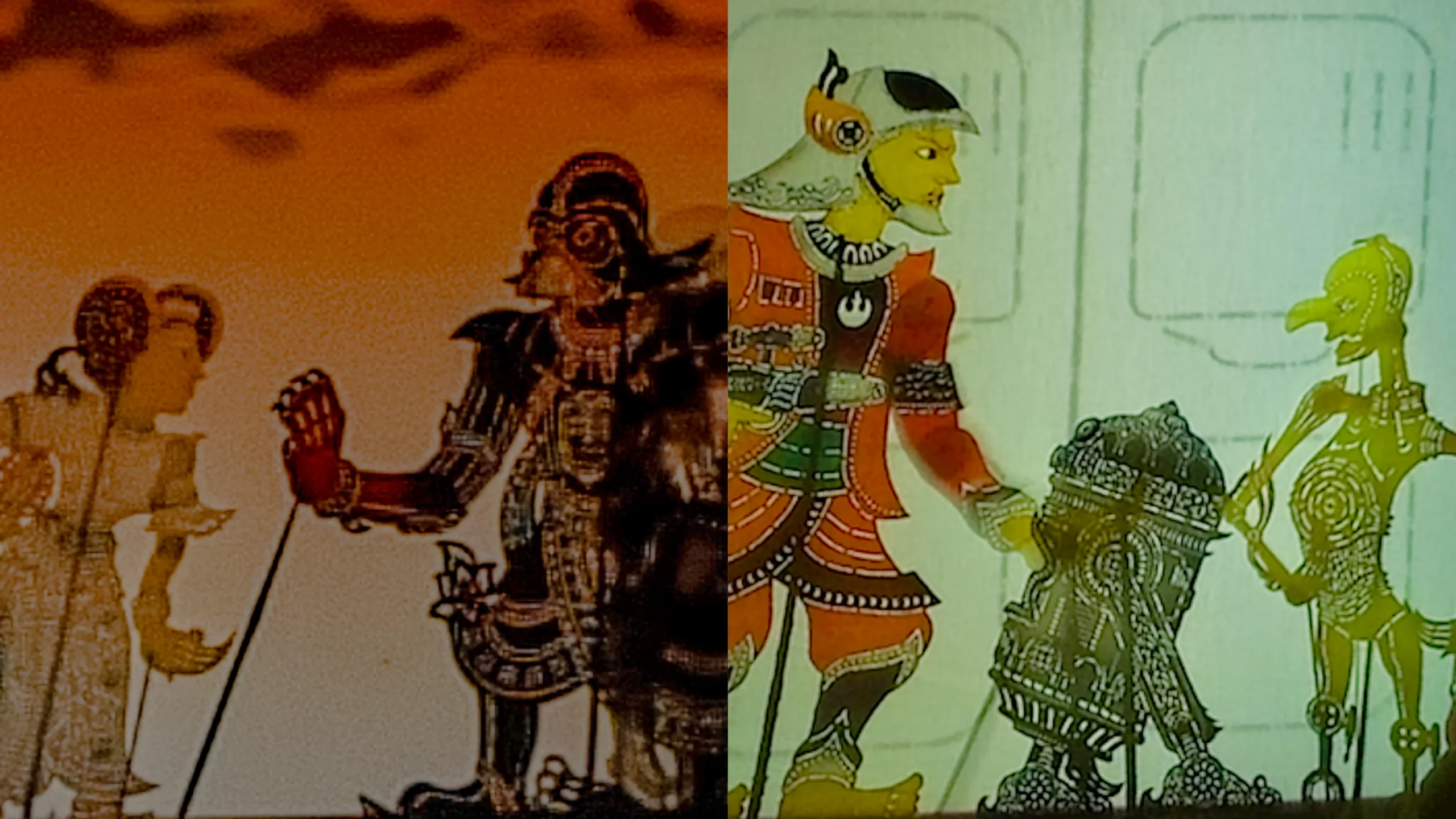
We asked Tintoy whether he put those background visuals together himself. He said yes. Then he told us he created them in Apple’s Keynote. Now, how about that? That simplicity surprised us.
And Tomorrow…
Among the performers that night were four young people, aged between ten and eighteen. Not seated in the audience. Not in the workshop. Performing. Behind the screen, working the puppets as part of the show.
Think about what that means for a moment. A ten-year-old, standing in the dark behind a kelir, moving a leather puppet so that its shadow falls just right on the screen in front of a room full of people. They’re not preserving anything. They’re not attending a cultural programme. They’re performing. There’s a version of this kid who never encounters wayang kulit at all, grows up, and the art form loses one more potential practitioner.
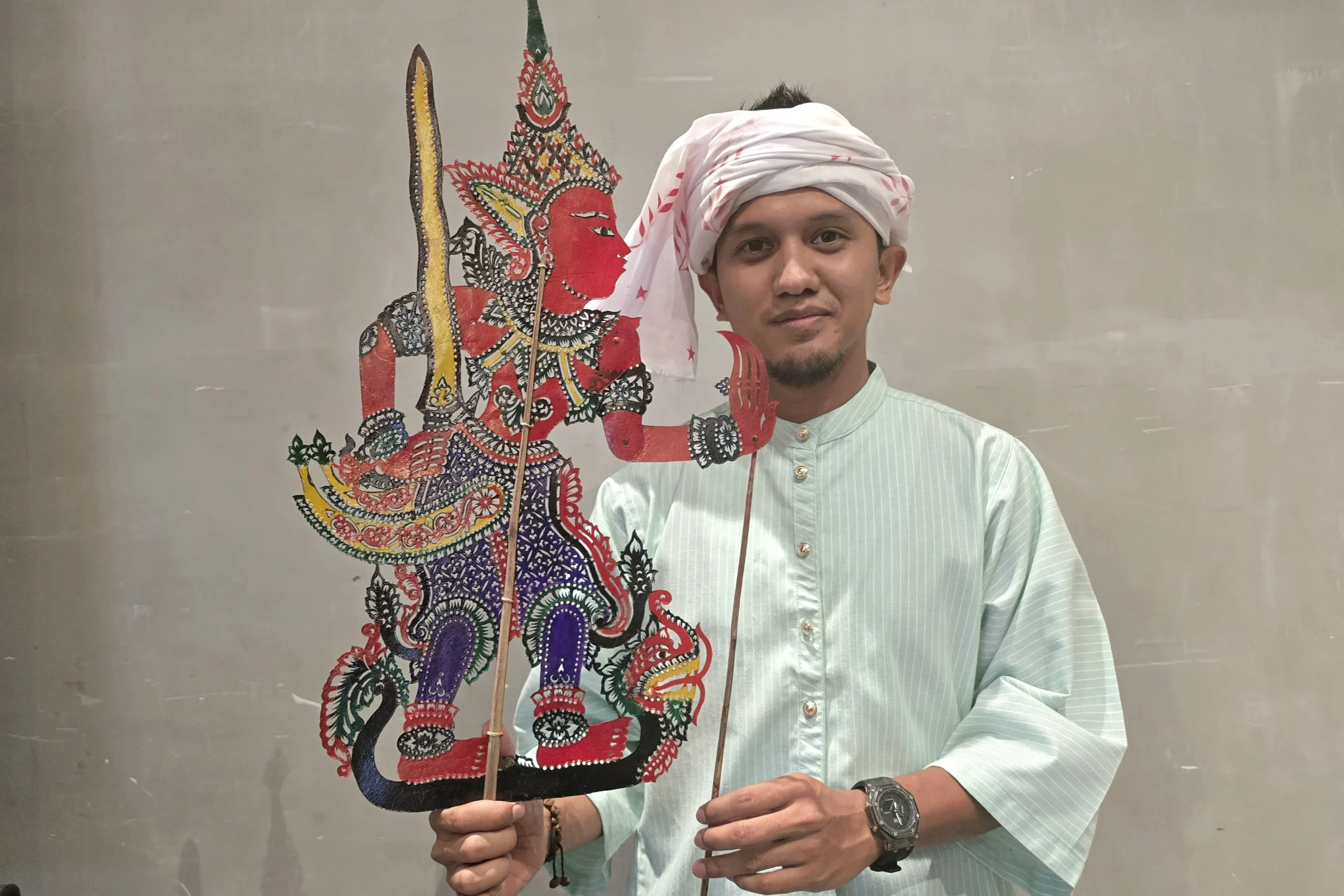
Pak Dain, before embarking on this project, believed wayang kulit would become extinct in Malaysia within ten years. His primary goal has always been to find and train a successor. Tintoy is unambiguous: “If there’s no one continuing to learn, it means nothing.”
Which is why Fusion Wayang Kulit’s free trial classes at GMBB carry as much weight as anything they do on an international stage. Their programmes cover puppet performance workshops led by a master puppeteer, puppet-making classes, and guided gallery tours through the history of the form.
Indeed, traditional wayang kulit in its purest form will always have its place. But in this form, it is reaching people it was never supposed to reach. And that’s what matters. And with enough work, awareness and recognition will follow.
The Force is with them…
Watch a preview of “Peperangan Bintang” here:

Fusion Wayang Kulit’s gallery is at GM-3-29 (3rd floor), GMBB KL, No. 2 Jalan Robertson, 50150 Kuala Lumpur. Open daily 11am to 8pm. Follow them at @fusionwayangkulit on Instagram, or visit fusionwayangkulit.com for upcoming programmes and events.