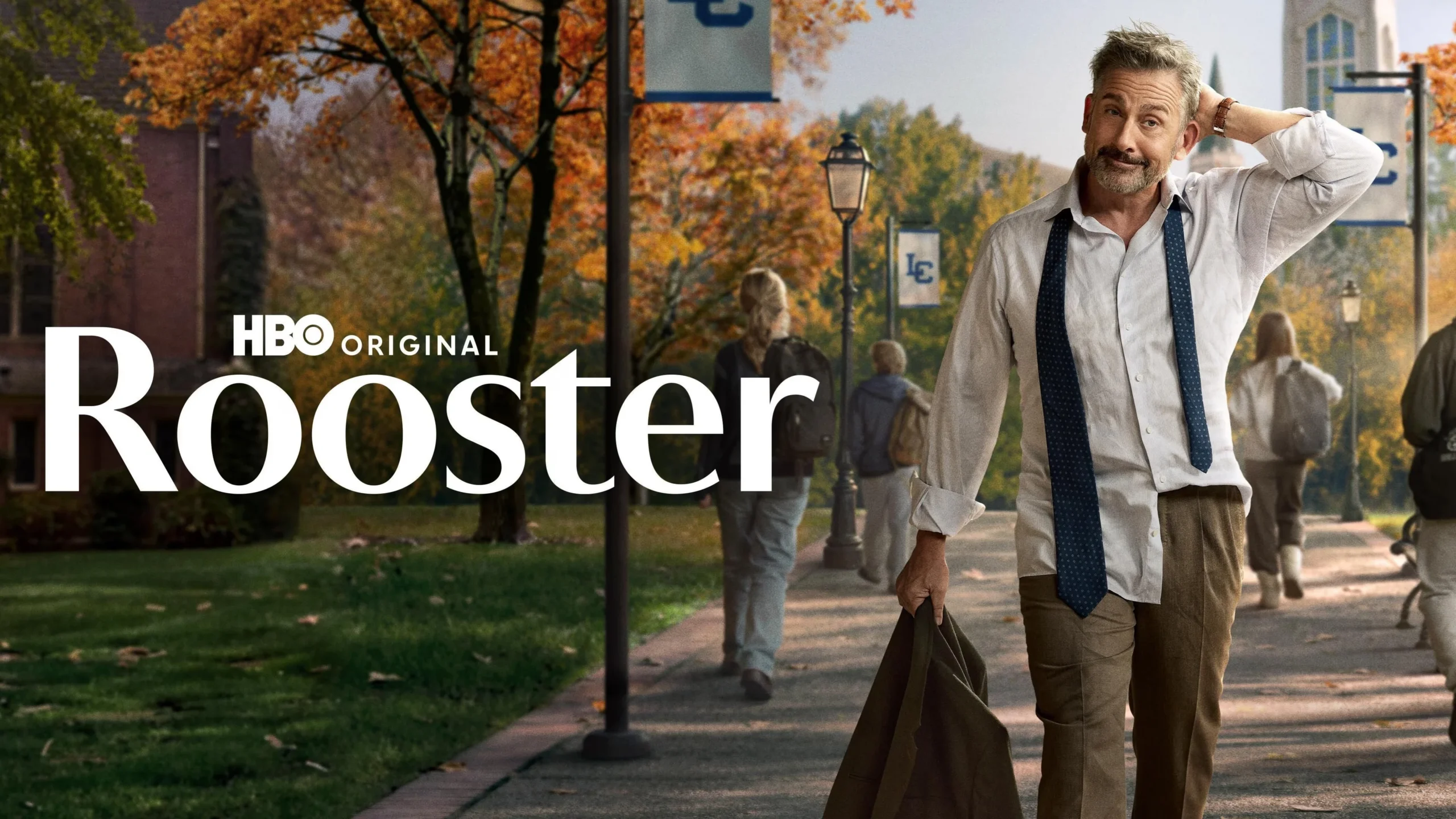
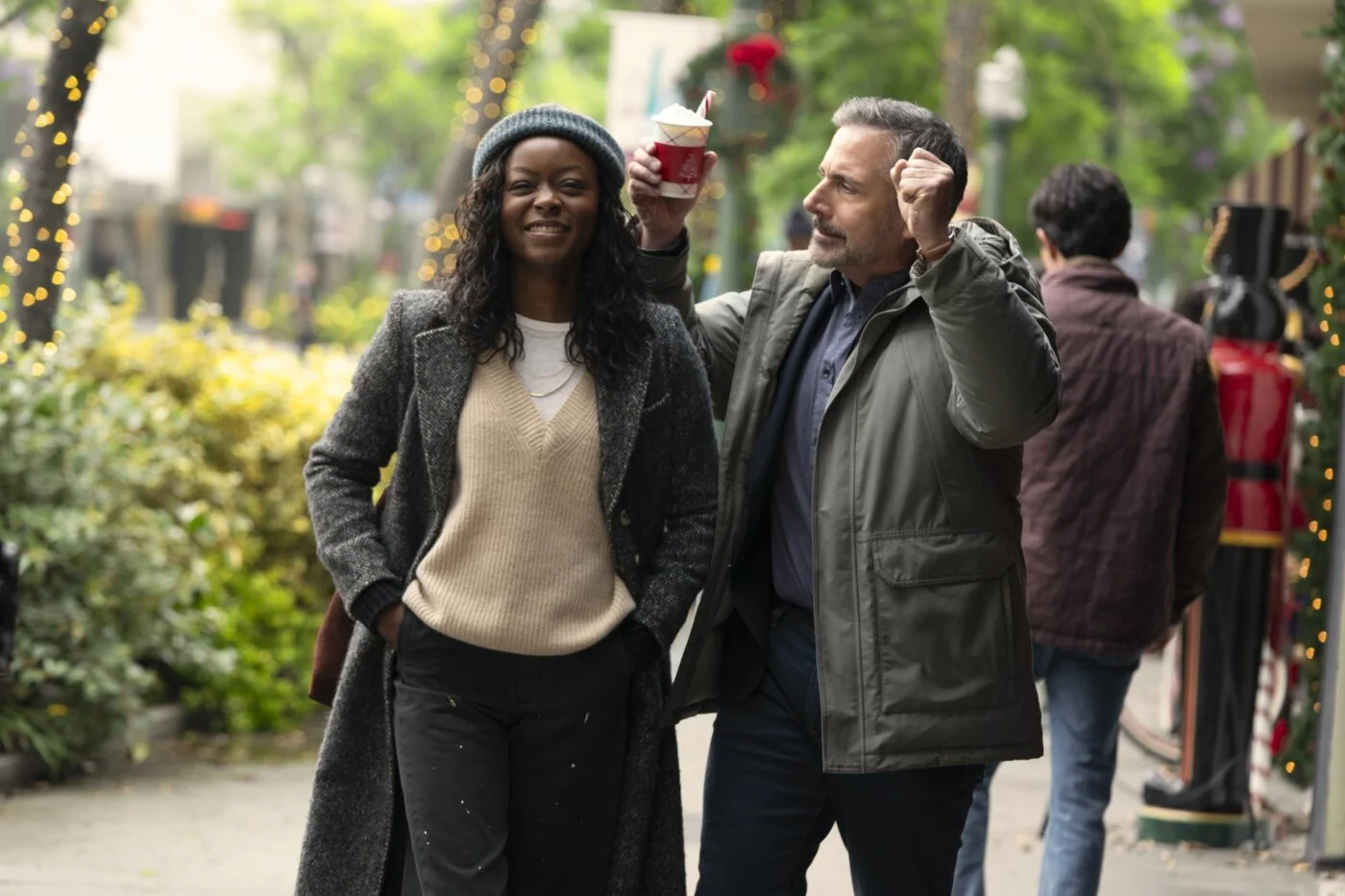
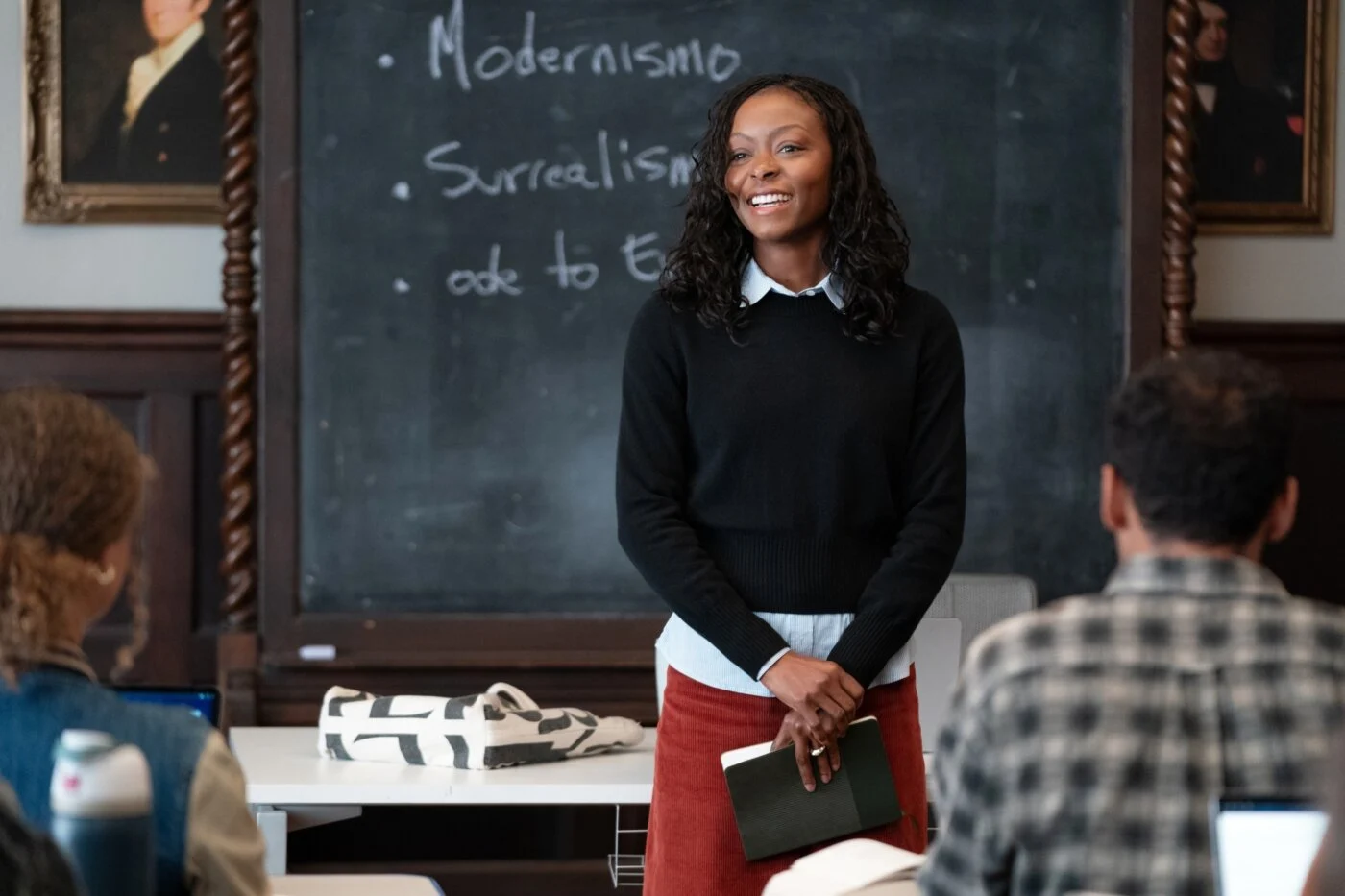
In an early scene for HBO’s “Rooster”, Steve Carell’s Greg finds himself floundering within campus walls, ever so slightly baffled by the young, freshly scented world around him. Posted beside his accomplice, Dylan, played by Danielle Deadwyler, he posits the question that sets the tone for the season: “How do I talk to a bunch of kids in college?” Dylan turns, winks and reminds him to invoke the poetry of Bad Bunny, to which Greg subsequently responds with bewilderment.
“What’s a Bad Bunny?”
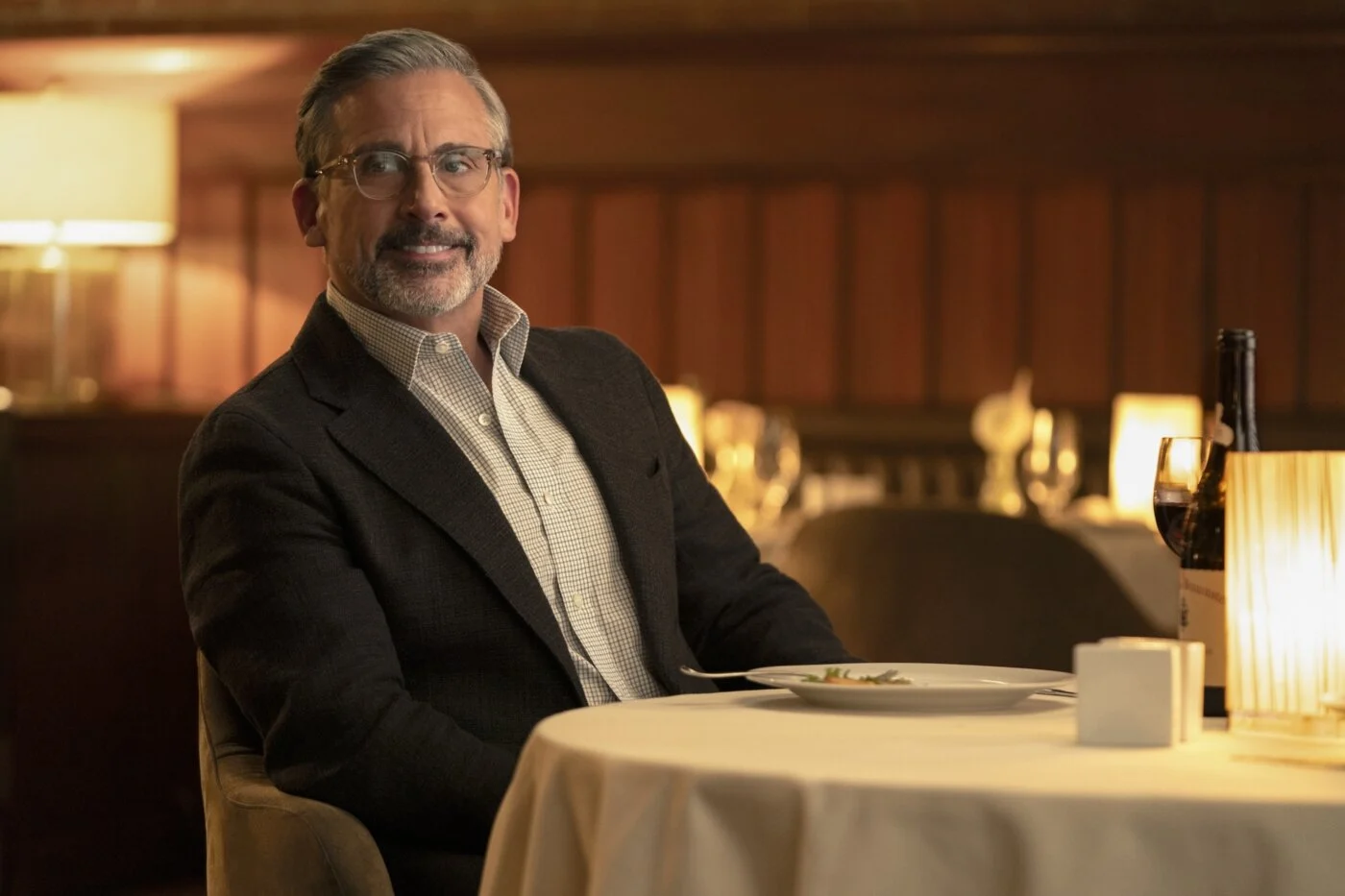
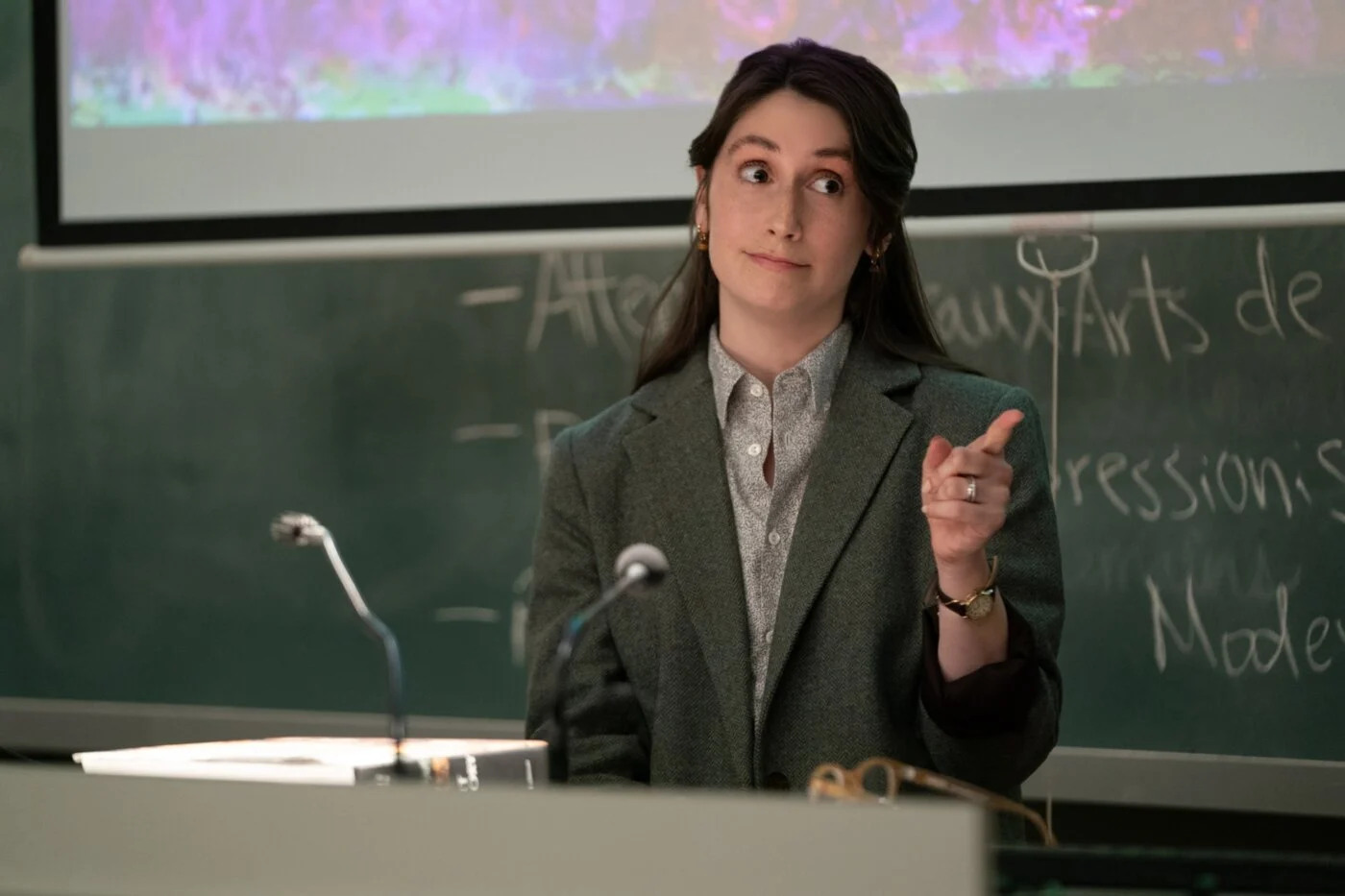
Indeed, the new 10-episode offering follows Greg Russo (Steve Carell), a best-selling author whose wildly popular beach novels revolve around a swaggering, hyper-competent hero named “Rooster.” While the books sell in droves, Greg’s own life feels like the opposite of that. As such, he relocates to a small New England liberal arts college to support his daughter, Katie (Charly Clive), an art history professor whose carefully constructed life has suddenly fallen apart.
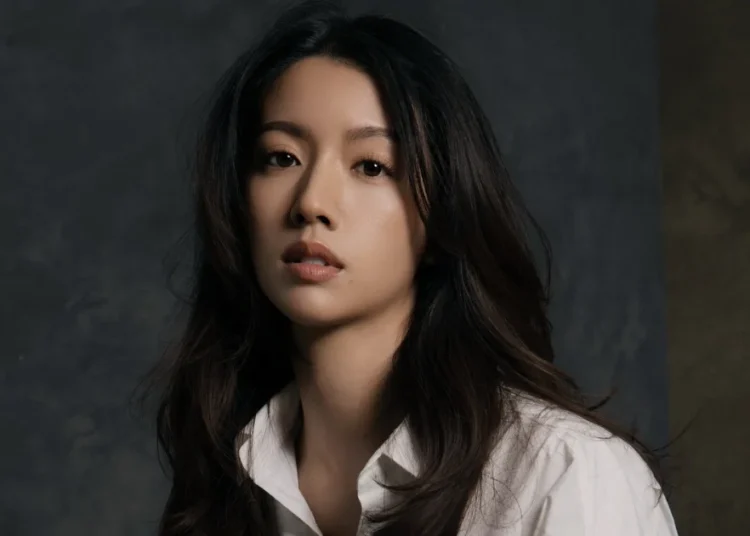
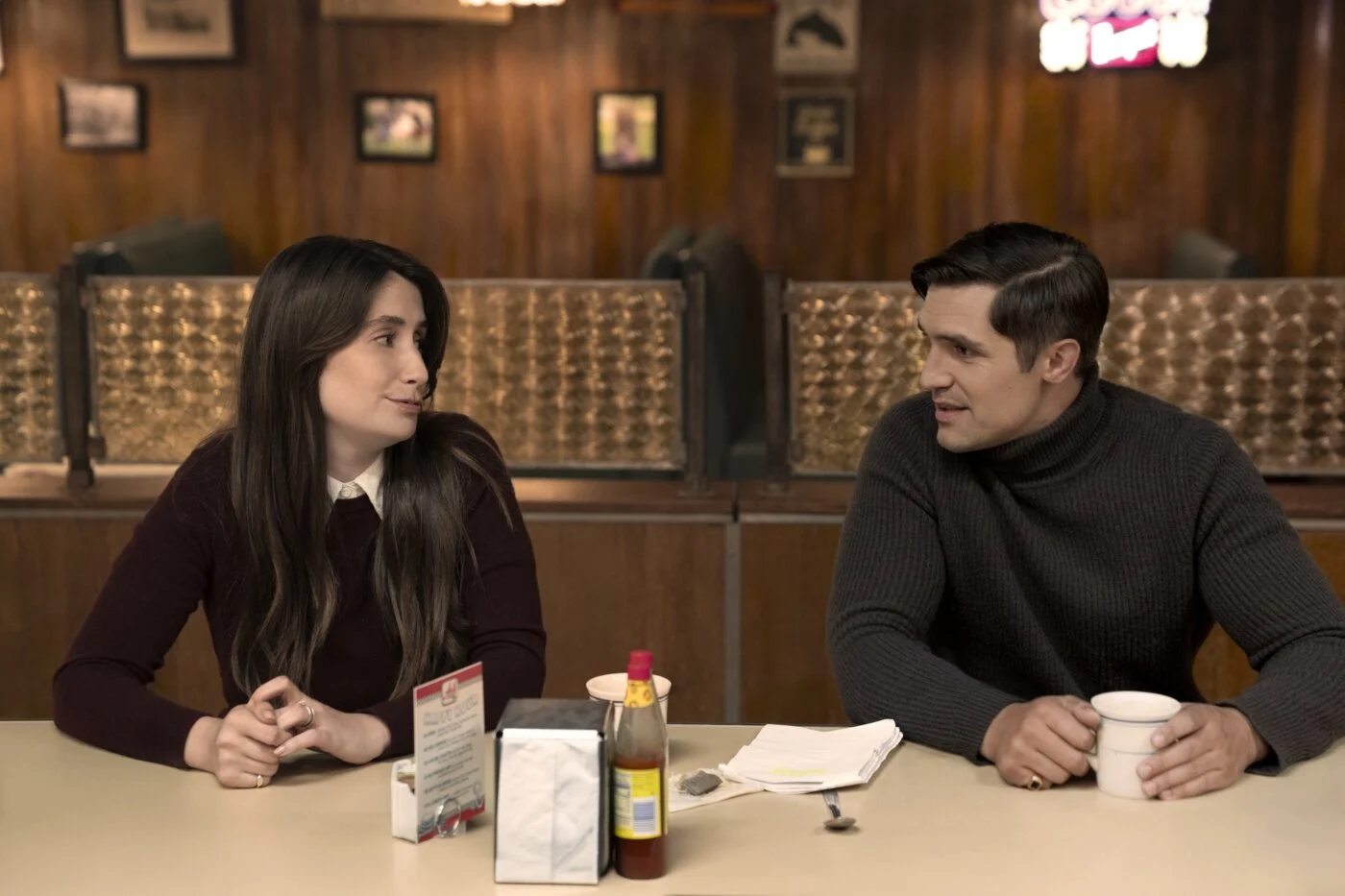
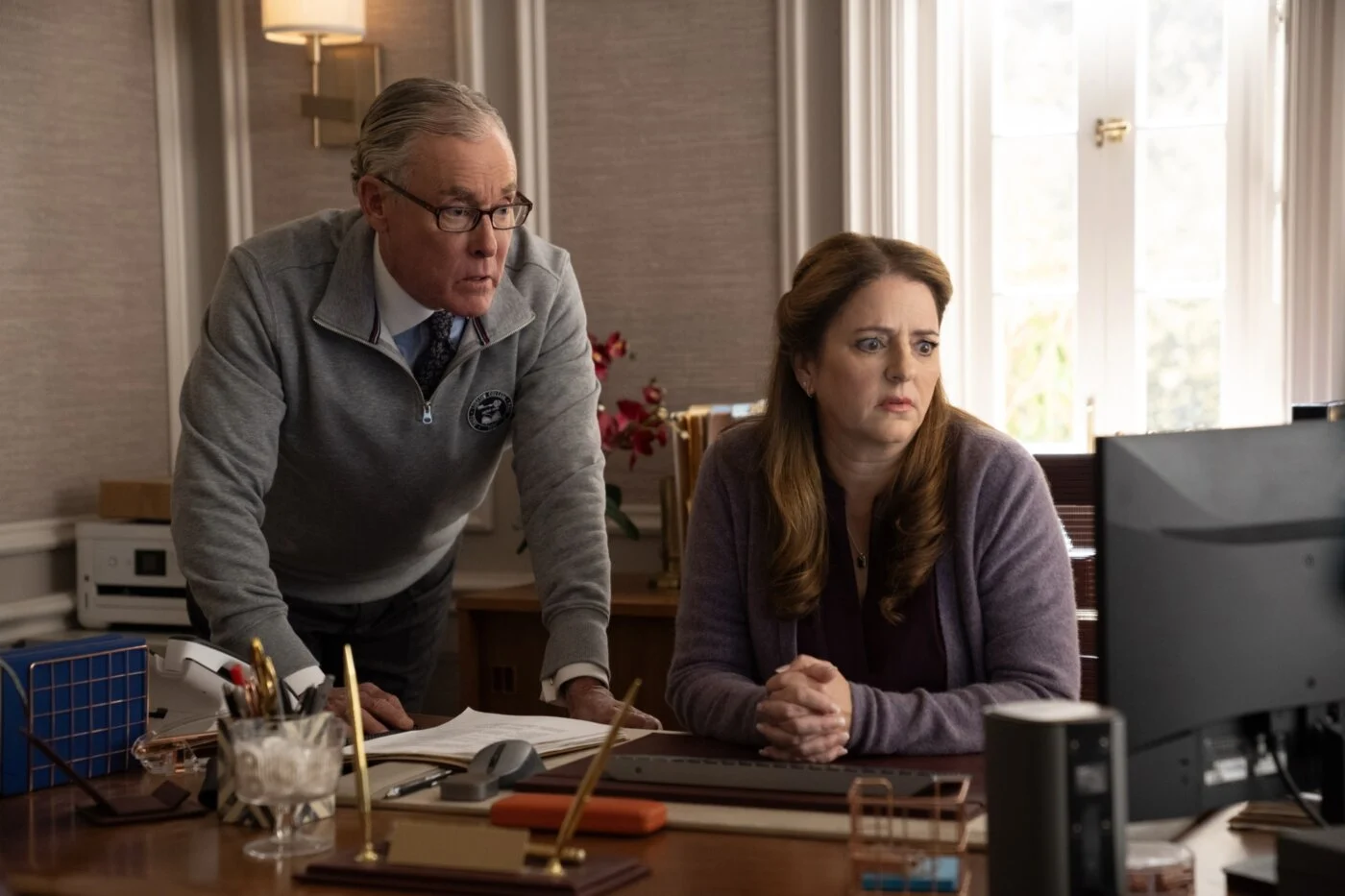
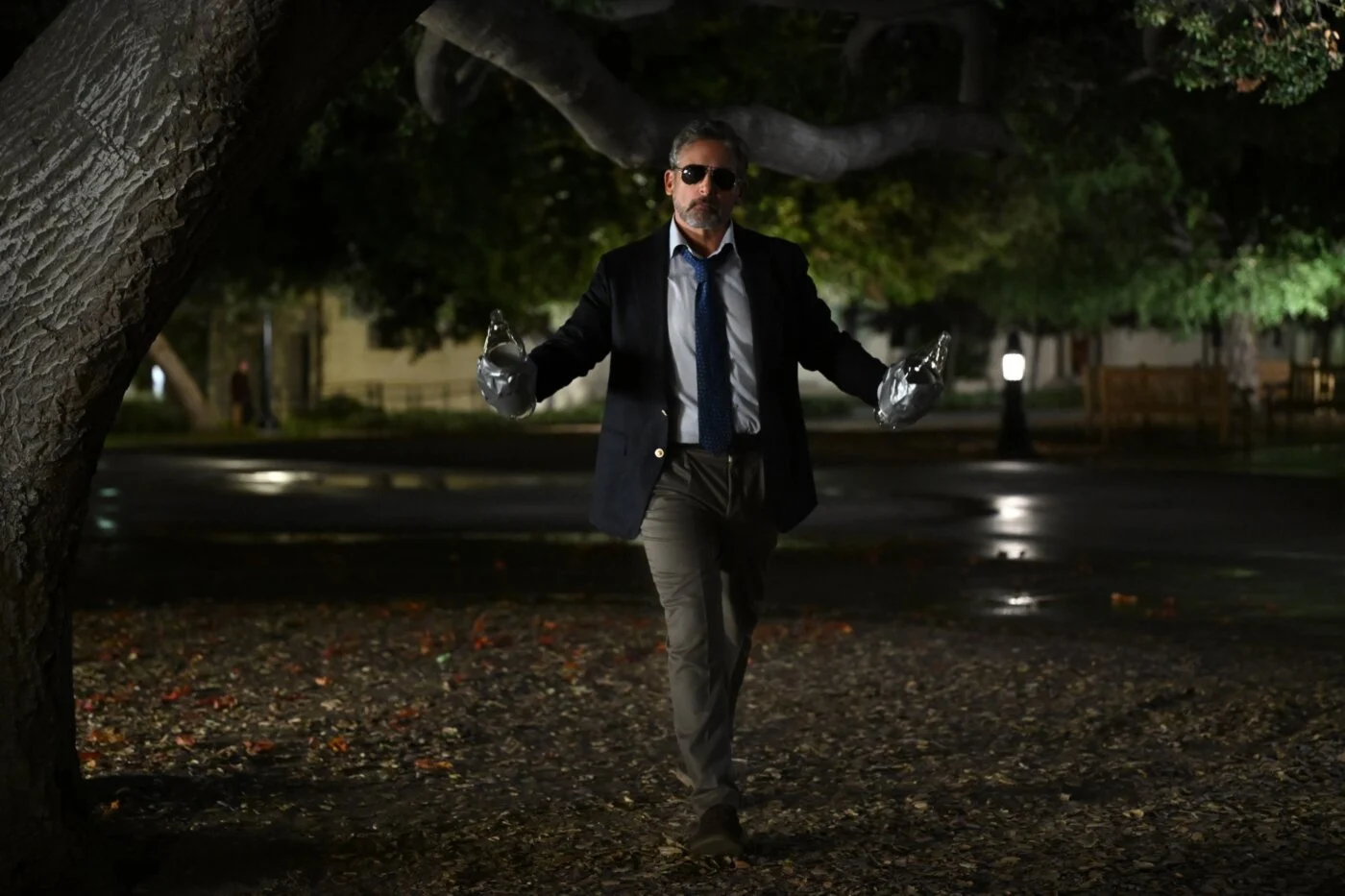
Katie’s marriage implodes when she discovers that her husband and fellow faculty member, Archie (Phil Dunster), has been having an affair with one of his graduate students, Sunny (Lauren Tsai). The fallout is spectacular, culminating in Katie carrying out an act of fury like no other. With her career now hanging by a thread, Greg strikes an unusual deal with the college’s enthusiastic dean (John C. McGinley) if the school agrees to give Katie another chance as well…
So what exactly is going on here? Mr Bunny? Rooster? Is this some play about a petting zoo and how it leads segues into a commentary or deconstruction of society? Not quite. Yet, from the very start, it becomes clear that the ten-part HBO series created by Bill Lawrence and Matt Tarses delights in embracing the absurd.
To unpack the show’s unusual blend of sorority caricatures, cross-generational fumbles and emotional, awkward honesty, we sat down with Steve Carell alongside creators Bill Lawrence and Matt Tarses, as well as cast members Phil Dunster, Danielle Deadwyler, Lauren Tsai and John C. McGinley to talk about bringing “Rooster” to life.
A Curriculum of Chaos on Campus
For “The Office” alum Carell, the appeal of “Rooster” was immediate. “The script was one of the best pilot scripts I’ve ever read,” he says. “It sets up a world that is funny, heartfelt, and fully realised, with all the backstory woven in efficiently.”
It goes without saying that Bill Lawrence and Matt Tarses have long built their reputations on telling emotionally grounded stories that never lose their sense of play. Thriving on a balance of sincerity and silliness, the duo weave the whimsical and occasionally downright goofy energy into narratives that still carry real emotional weight.
Audiences who embraced Lawrence’s previous hits, “Ted Lasso” and “Shrinking,” will recognise that familiar tonal blend here. With “Rooster,” Lawrence and Tarses once again lean into that signature approach. They pair heartfelt storytelling with a comedic sensibility that finds levity even in life’s messiest chapters.
Yet, this time around, a personal touch was factored in. Lawrence and Tarses intentionally drew from their own experiences in crafting their main draw. “We wanted a character who is still out there, trying to figure out where he fits in the world,” Lawrence says, citing inspiration from the work of the American journalist and novelist Carl Hiaasen, whose humility and perseverance mirrored the themes they wanted to explore. Tarses adds, “Greg is confronting challenges that middle-aged men face—parenting, loneliness, and questioning whether it’s too late to try something new. These are questions we’ve all faced, and they drive the story.”
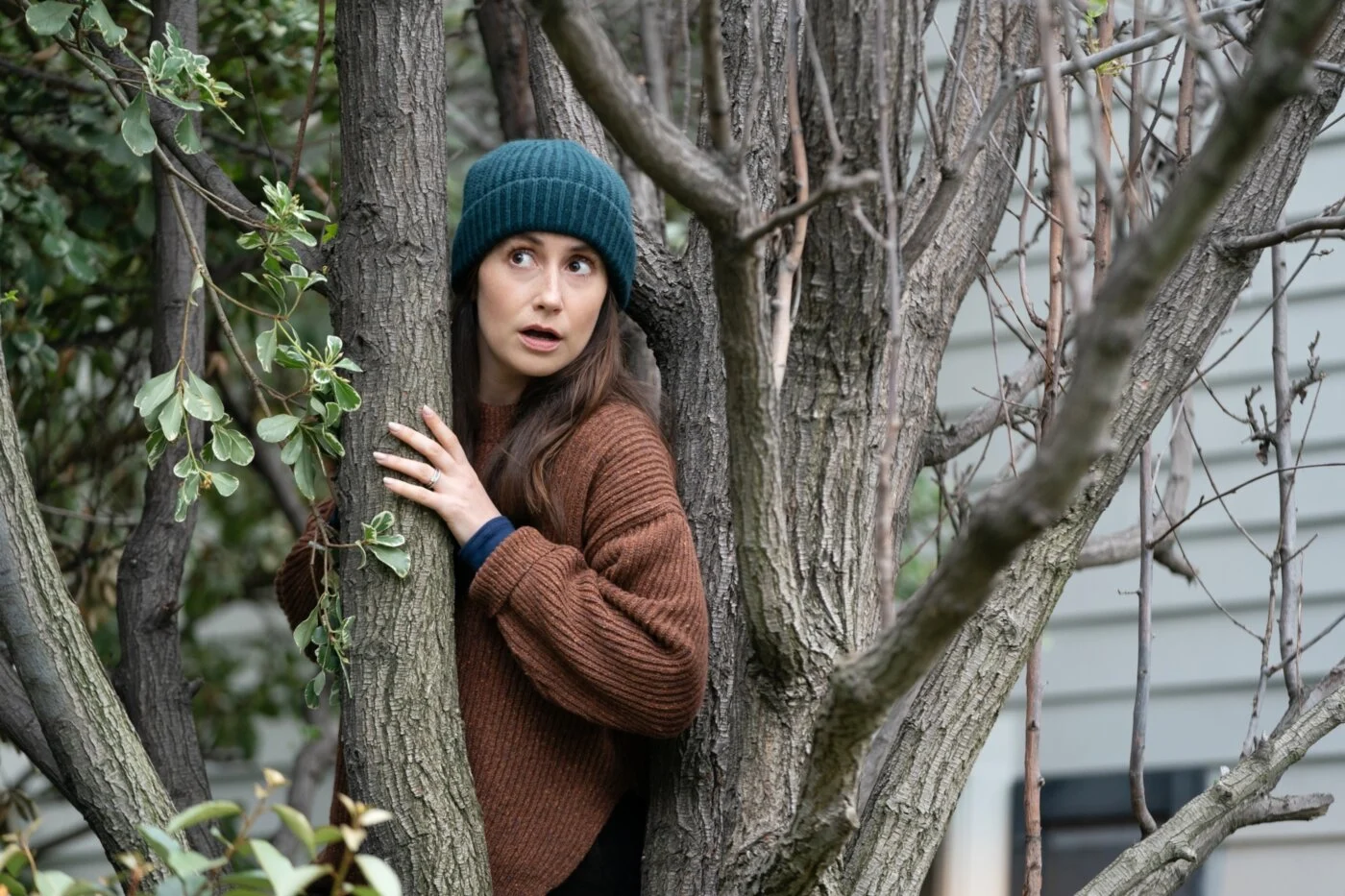
That spirit extends beyond the characters themselves and into the world they inhabit. As Clive notes, “Campuses are a bubble. Faculty and students alike go through drama and comedy every day, and that creates rich storytelling.”
The production design leans into the same playful authenticity, with the university setting becoming more than just a backdrop. In many ways, the campus operates as a character of its own, shaping the rhythms, tensions, and comedic collisions that unfold throughout the series. Dunster adds, “The production design is incredibly detailed, showing both the wear and polish of these spaces. Colleges are hubs of self-evolution, where personal discovery happens in real time.”
The Crushing and Overbearing Anxiety of Losing Your Child to Growing Up
Sure, it would be easy to grab that line about family from a certain bald action star who loves fast cars right off the shelf. But beneath the humour and campus hijinks, “Rooster” is ultimately a show about the other F-word. Yes, more specifically, it’s about… Fatherhood.
For Carell, Lawrence, and Tarses, giving life to this father-daughter dynamic wasn’t just a professional exercise. “We all have daughters around the same age,” Lawrence explains. “And like Greg, we’re constantly trying to figure out how to be present without being intrusive, how to guide without smothering.”
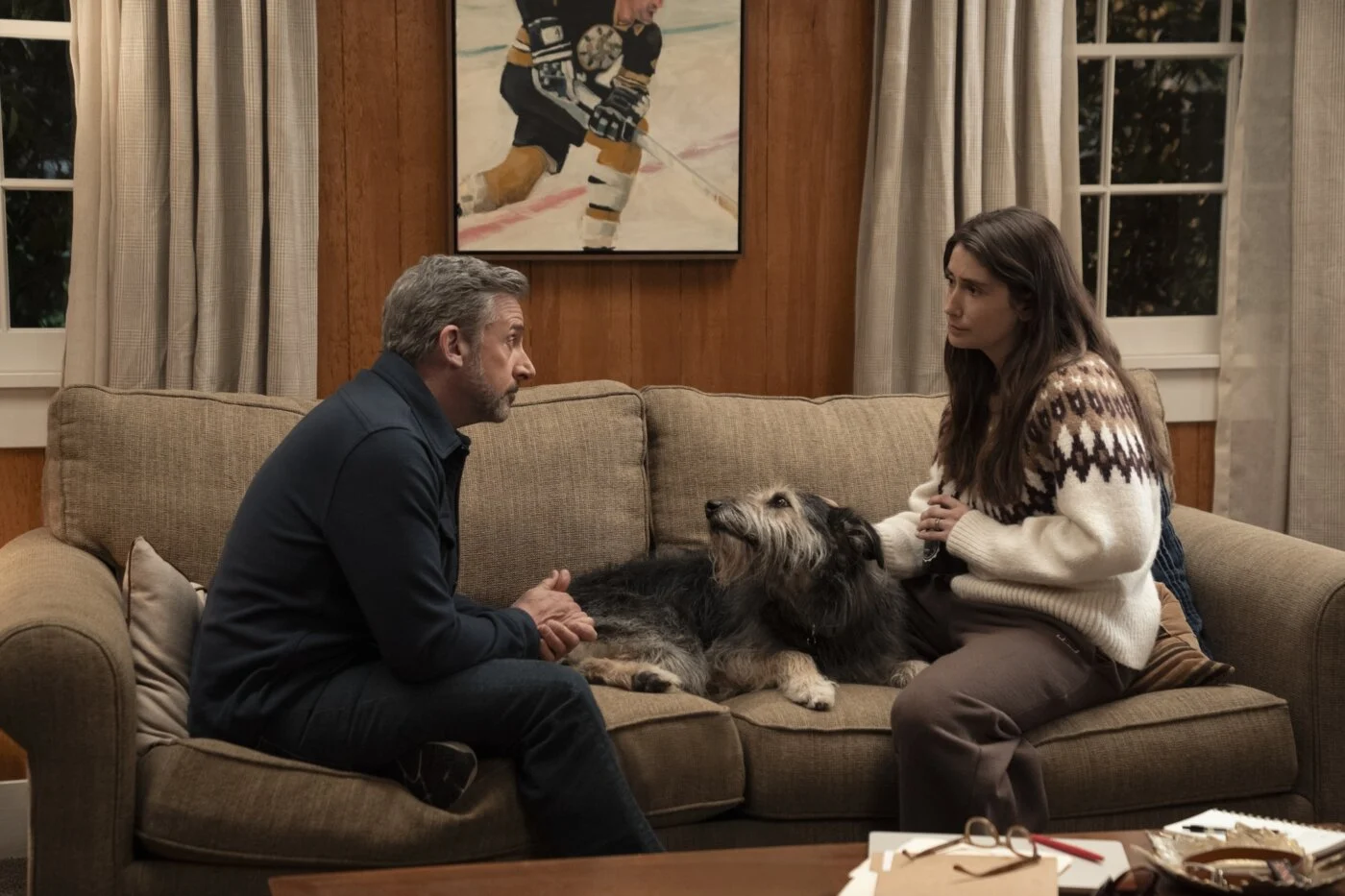
Carell echoes this, noting that the authenticity of the relationship comes from lived experience. “Steve is exploring the comic genius he’s known for, but grounded in the real emotions every parent feels—pride, worry, and hope. Watching Greg navigate his bond with his daughter, Katie, is reflective of what so many of us feel when we see our children stepping into the world.”
Tarses adds that fatherhood in “Rooster” is about more than just individual relationships—it’s about reconciling personal growth with family responsibility. “Greg is at a stage in life where he’s reassessing his purpose, balancing curiosity about the world with the needs of his family. That tension, I think, is universal for parents who are trying to model independence while still being a safe harbour.”
There is a serendipity in exploring this theme in this particular series. “Before this, we’d tried to write stories with no personal connection, and they didn’t stick. Here, we were wrestling with themes we understood intimately—parenting, loneliness, hope, and connection. That personal stake is what makes Greg’s journey resonate, and it’s why the father-daughter relationship at the core of the show feels so lived-in.”
When you’re striving hard for authenticity, there may be times when part of your life bleeds into the show. A perfect moment is when Carell heartwarmingly recalls a particularly tender moment on set. During a scene, he was meant to say, “I’d do anything for Katie,” referring to his character’s daughter, but he accidentally said his real daughter’s name, Annie. “I stopped, and everyone went, ‘Aww!’” Carell laughs. “My daughter was there, and you could see the connection in the room. It was a sweet, unplanned moment that reminded us all how personal this story really is.”
Where the Magic Happens (and Everyone Looks a Little Silly)
Of course, building a world like this takes intention and craft. And when Steve Carell himself says the show already felt rich and lived-in from the very first pitch, it is no surprise that the team behind it brought their very best to bring that vision fully to life.
The ensemble cast brings the world of “Rooster” to life with richness and specificity. John C. McGinley, who plays the authoritative presence on campus, emphasises the importance of Lawrence’s leadership. “Bill has always had a no-asshole policy, inspired by Mike Nichols. It creates a space where actors can flourish, and with Steve Carell leading the charge, everyone rises to the occasion.”
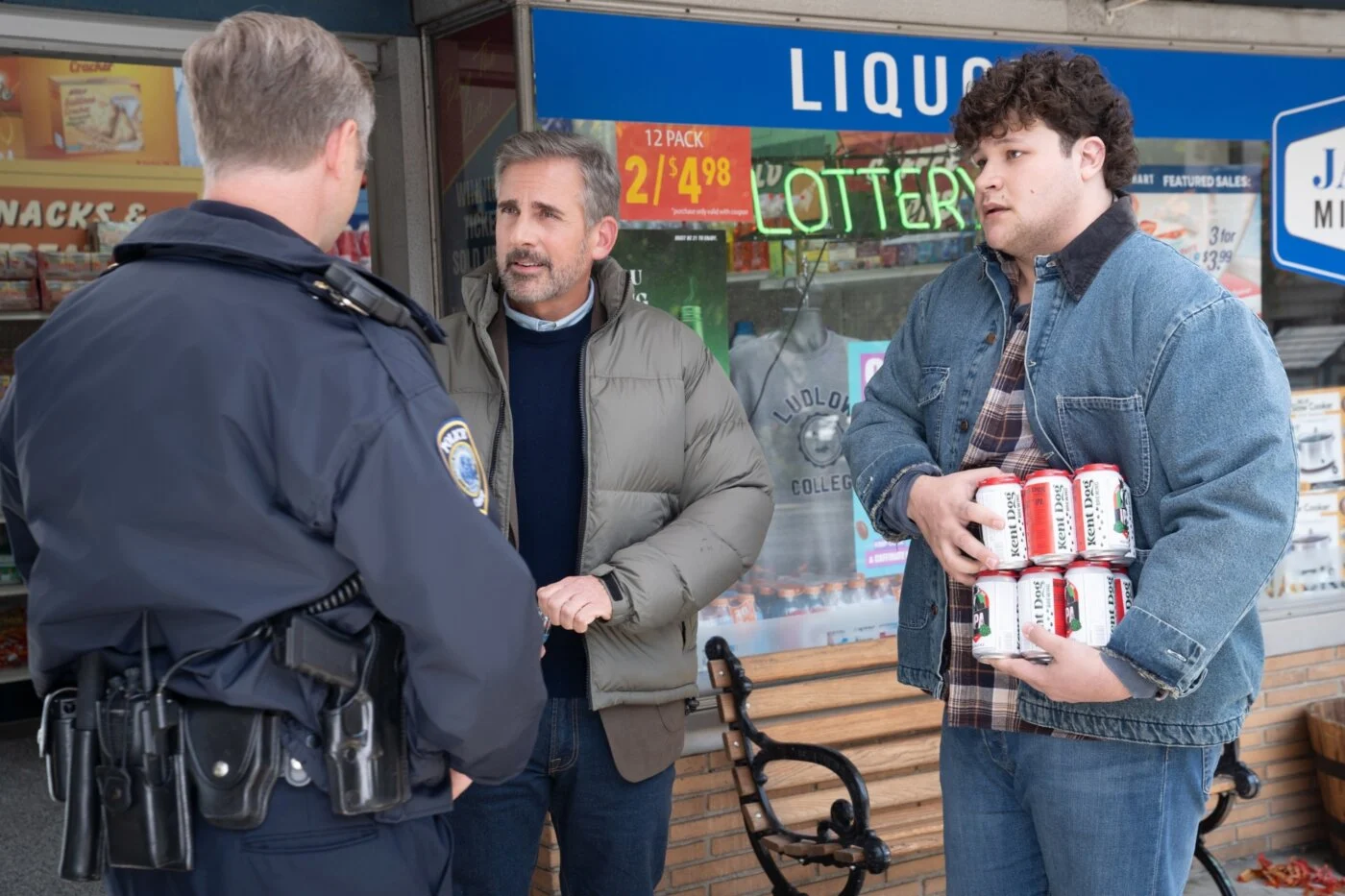
And when you bring in a comedic powerhouse like Steve Carell, you can expect something special. After all, this is the man behind Michael Scott, Gru, and Evan Baxter. When he walks onto your set, you know you are in very capable hands. And for these actors, it helped bring a certain energy to the show and enhance their performances.
Clive, who plays Katie, found that the connection with Carell came naturally. “We did a lot over Zoom at first, which actually gave us more time to explore the relationship. By the time we were together in person, the alchemy was already there,” she explains. “The scripts give Katie and Greg room to explore their awkwardness, their teasing, and their heartfelt moments. Trust was key—trust and the willingness to look like an idiot in front of someone else.”
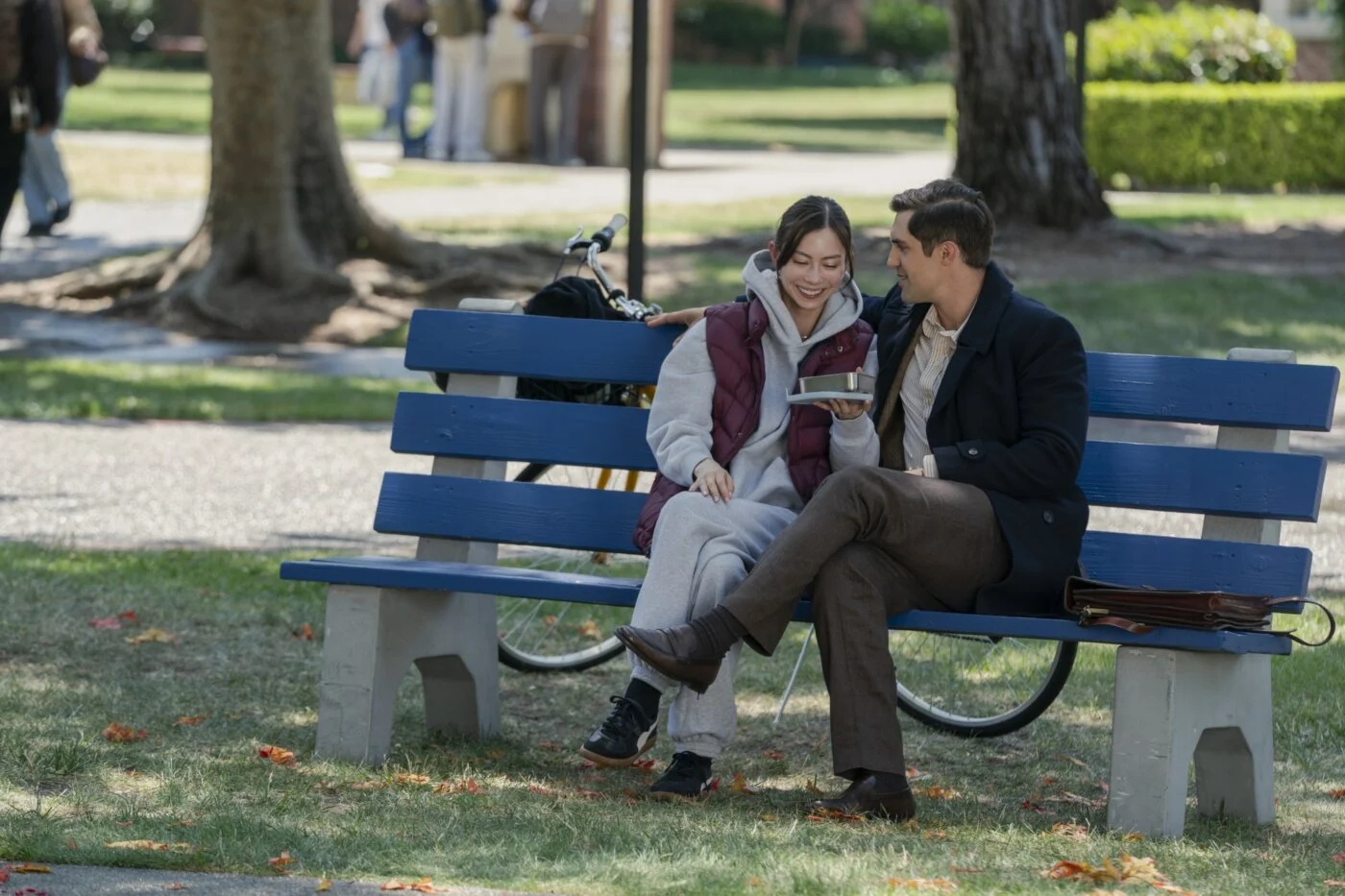
Of course, having industry veterans on set also meant that one could draw from their expertise. And that’s emphasised by Lauren Tsai, who plays Sunny, who highlights the balance of guidance and improvisation on set. “Bill and Matt come in with such a confident vision that it makes finding the comedy easier. Sometimes overthinking can kill the magic, but everyone brought out the best in each other.” She also points to the mentor-student dynamic between Sunny and Walt as a key element of her character. “It was fascinating to explore a safe space for a character to reveal vulnerability. That tension between aspiration and personal growth resonated deeply.”
Of course, an actor’s journey is never constant, and there are always new frontiers to explore over the horizon. And “Rooster” provided just that for Phil Dunster and Danielle Deadwyler. Speaking about his character, Dunster described the challenge of portraying someone like Archie as a collision of self-assurance and newfound accountability: “He has always pursued what he thought was greatness, but now he’s confronted with second-guessing and responsibility he hasn’t faced before.” Deadwyler reflects on the layered complexity of working with McGinley: “He’s sharp, old-school, and precise, and the comedy thrives when you navigate between generations, between past and present approaches.”
Why “Rooster” Feels Right for Right Now
Lawrence and Tarses also wanted the show to address broader cultural moments without veering into satire. “We didn’t want to lampoon academia,” Tarses says. “We wanted to explore relationships, curiosity, and the desire to contribute positively to a community. Greg reflects that curiosity, navigating a world he doesn’t fully understand, making mistakes, and striving to be better.”
Lawrence sees “Rooster” as both a comedic and deeply personal endeavour. “Audiences respond to work that is heartfelt and optimistic, especially in times of uncertainty. We write for ourselves first, hoping viewers will find something meaningful in it. It’s about connecting generations, exploring family dynamics, and finding hope in unexpected places.” The college setting amplifies this, capturing generational clashes, youthful exuberance, and adult insecurities. It does so in a way that is both humorous and poignant.
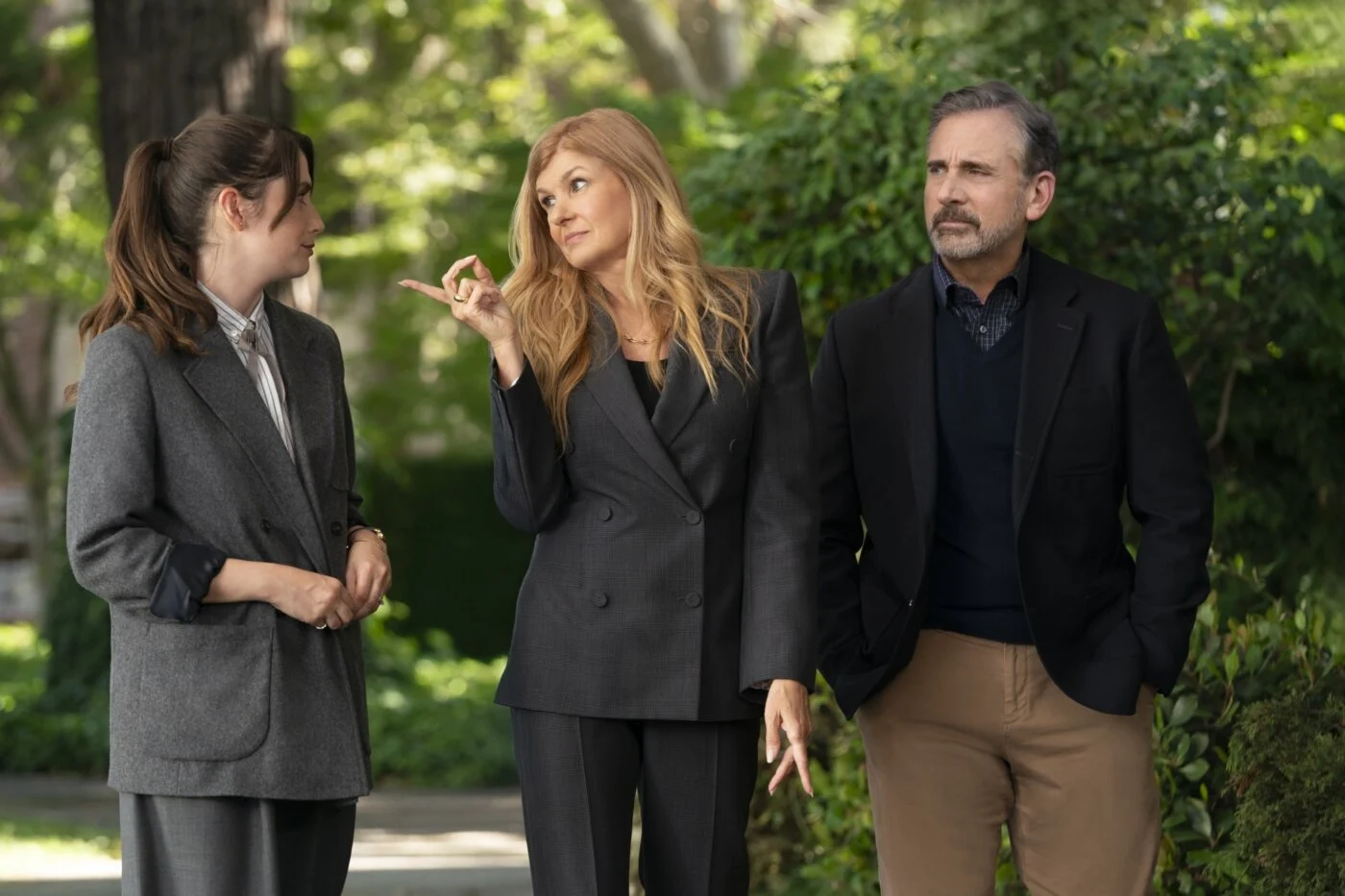
In many ways, “Rooster” is about the moments in life that force us awake. Greg may have spent years writing about a swaggering hero who always knows what to do, but life has a way of sounding its own alarm. On this campus, surrounded by students half his age and a daughter navigating her own chaos, Greg is slowly reinventing and learning how to be a good father. It might seem like a tall order. But just like the rooster, sometimes it just takes a little crowing at the break of day—a reminder that even after a long night, the sun still rises.
Watch the “Rooster” trailer here:

“Rooster” premieres Monday, 9th March 2026, exclusively on HBO Max.