Racism is not a minor misstep, nor is it a controversy that fades quietly with time. In an industry built on global audiences and cross-cultural exchange, words rooted in prejudice carry weight far beyond private conversations.
Earlier this year, K-pop group Kiss Of Life faced heavy backlash over their racially insensitive birthday theme, prompting widespread criticism and calls for greater awareness and accountability. Now, with KLP48 thrust into the spotlight over leaked messages involving racist remarks, the conversation resurfaces once more: how seriously should racism be treated, and when does a warning fall short of meaningful consequence?
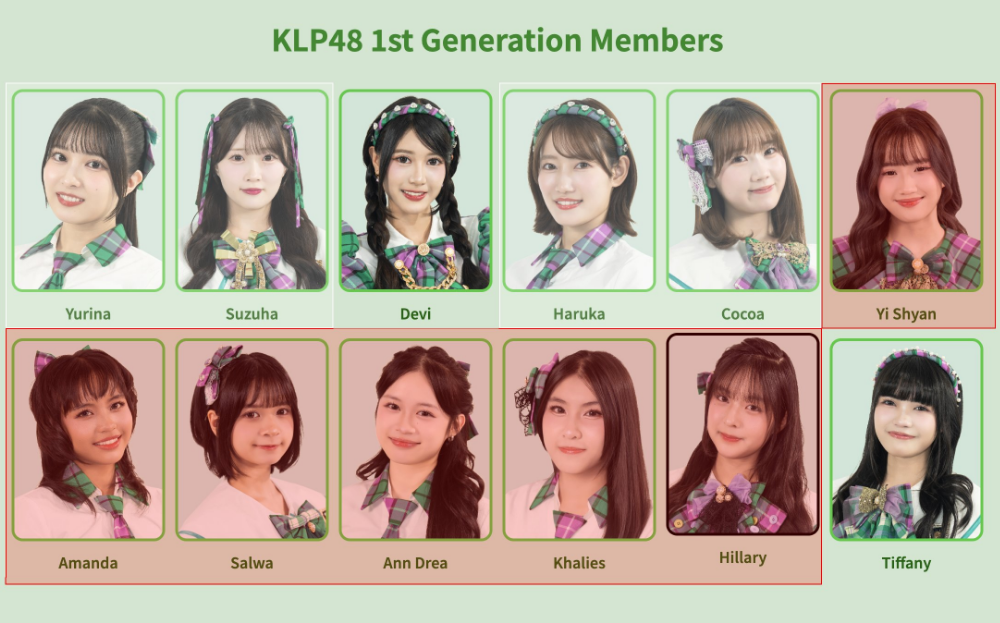
The KLP48 controversy centres on six first-generation members, Yi Shyan, Amanda, Ann Drea, Hillary, Khalies, and Salwa, who were allegedly part of a private group chat titled “Not the Colonizers”. Screenshots shared on social media appear to show the members speaking disparagingly and making racially charged remarks about the group’s Japanese members, with the messages written in English. Once exposed, the conversation quickly ignited outrage among fans, many of whom felt that such language directly contradicts the values the AKB48 sister group system claims to uphold.
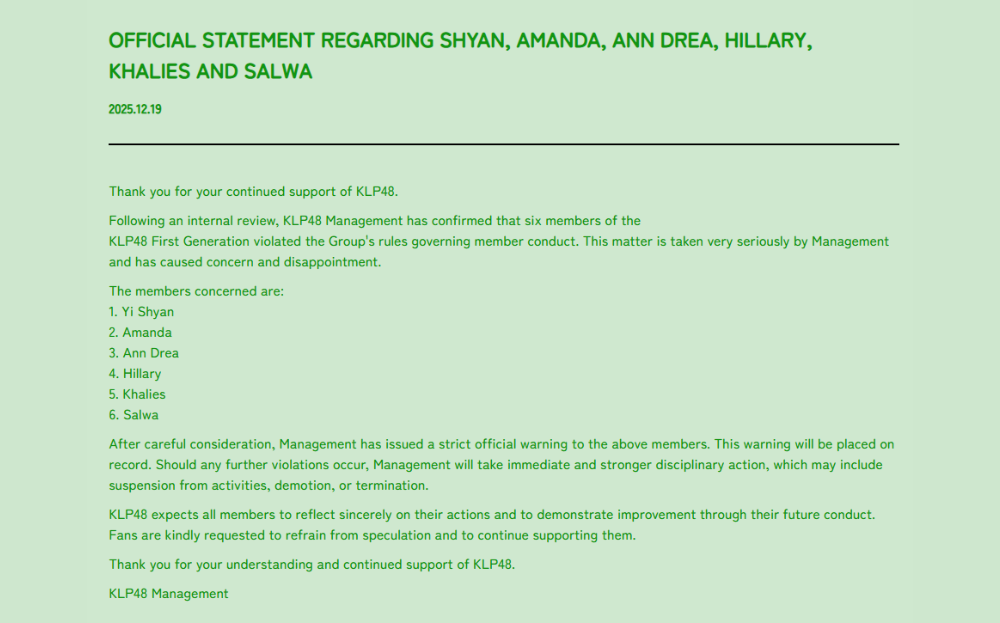
In response, KLP48 Management confirmed that an internal review had been conducted and that the members involved were found to have violated the group’s rules on member conduct. “This matter is taken very seriously by Management and has caused concern and disappointment,” the company stated.

After what it described as careful consideration, management issued a strict official warning to all six members, noting that the warning would be formally recorded. The statement further cautioned that “should any further violations occur, Management will take immediate and stronger disciplinary action, which may include suspension from activities, demotion, or termination.” Fans were also urged to “refrain from speculation and to continue supporting them” as the group moves forward.
Despite this, the decision has drawn criticism from parts of the fandom who believe the response does not match the seriousness of the offence. For many, racism whether expressed publicly or in private, cannot be resolved through a warning alone, especially when the individuals involved are public figures representing a multinational idol franchise. The backlash reflects a growing expectation that entertainment companies address such matters with transparency and meaningful consequences, rather than minimal damage control.
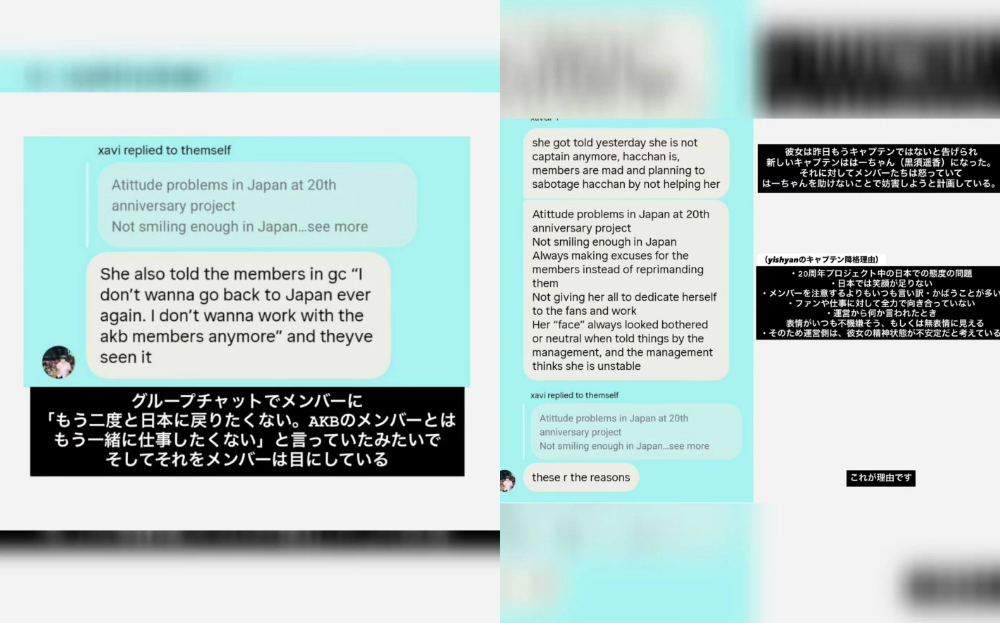
The situation has also revived long-standing concerns surrounding the AKB48 sister group system itself. Following the NGT48 incident, cross-group relations became increasingly cautious, and opportunities for international sister group members to appear in AKB48 senbatsu were significantly reduced. Only recently had fans begun to sense a renewed openness, as the franchise slowly reintroduced the idea of broader international collaboration.
Now, with KLP48 at the centre of a racism-related controversy, many fear that this progress may once again be jeopardised. Some fans have gone so far as to suggest that the likelihood of seeing sister group members in AKB’s senbatsu could diminish further, as trust between domestic and overseas groups faces renewed strain.