
When we think of Hollywood duos, certain names arrive almost automatically. Robert De Niro and Martin Scorsese. Katharine Hepburn and Spencer Tracy. Paul Newman and Robert Redford. These are partnerships that stretch across decades, accruing meaning not just through repetition but through trust. We return to them not only for the performances but for the assurance that something unspoken exists beneath the work, a shared language refined over time.
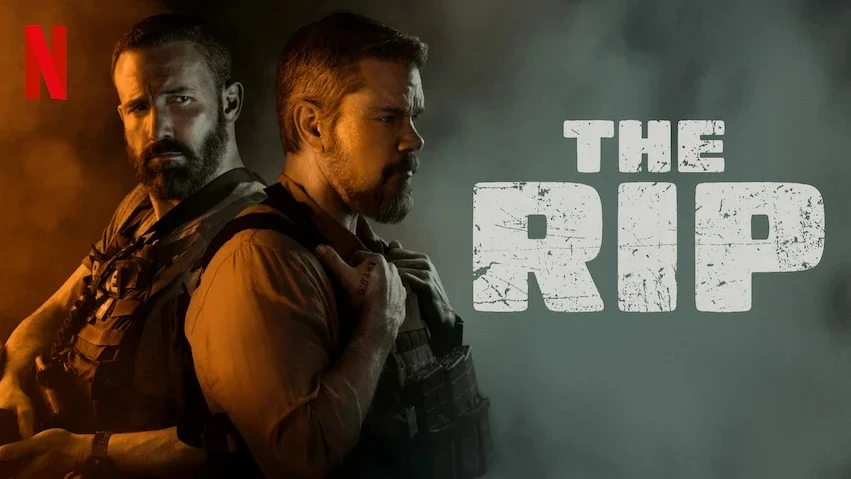
It is no surprise, then, that one of modern Hollywood’s most enduring pairings takes centre stage once again. Ben Affleck and Matt Damon, who have been orbiting each other’s careers since the late 1980s and reshaped their futures with Good Will Hunting, reunite in “The Rip,” a Netflix crime thriller directed by Joe Carnahan.

Their friendship has long been part of their mythology. But “The Rip” has little interest in hunting goodwill. Instead, it places that bond under stress. This is a film about pressure, about what happens when loyalty becomes a liability, and when trust begins to feel less like a refuge than a weapon.
From its opening moments, “The Rip” signals that it is operating on a different frequency. There is no sweeping establishing shot. Instead, the film begins in conversation as it fades into black. Lieutenant Dane Dumars (Matt Damon) speaks carefully, his words measured, his authority quietly asserted. The narrative settles around him rather than exploding outward. It is a restrained choice, one that immediately foregrounds dialogue, power, and subtext over spectacle.
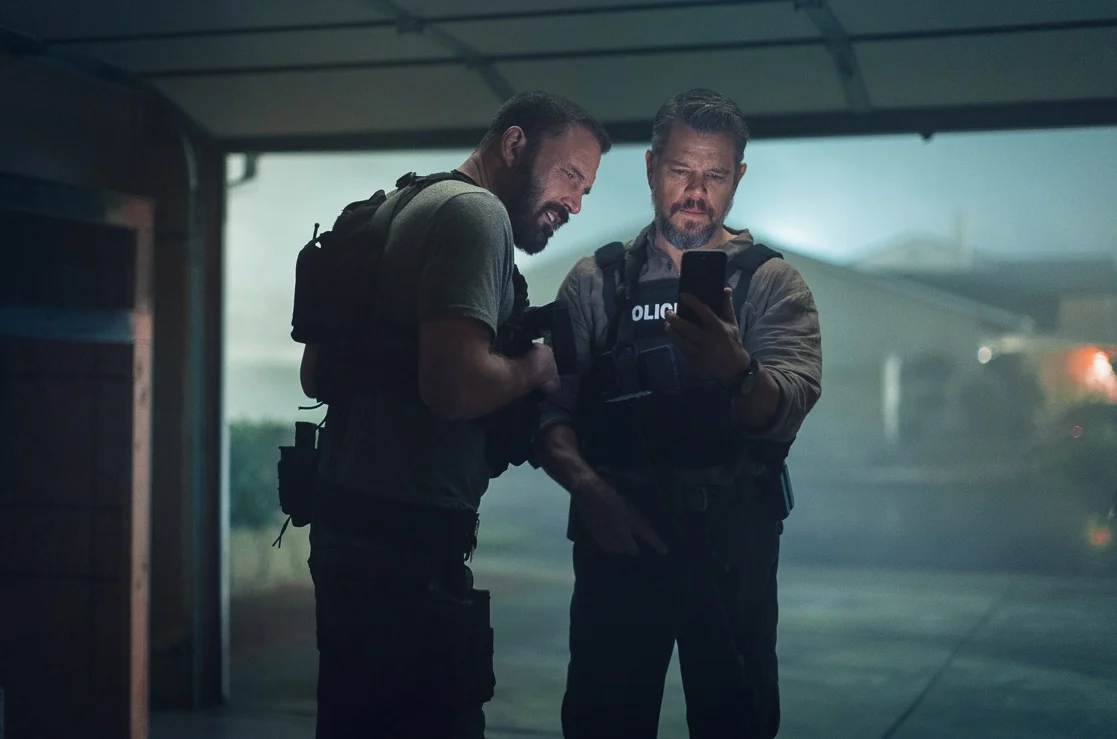
That restraint does not last long. Captain Jackie Velez, a respected officer in the Miami Police Department, is stalked, shot and killed with brutal efficiency. Her death functions less as a puzzle to be solved than as a moral rupture that destabilises everything that follows. Dumars, her second-in-command, finds himself pulled into the centre of the fallout. Detective Sergeant JD Byrne (Ben Affleck), more impulsive and emotionally exposed, carries the loss differently. Velez was closer to him, and that intimacy sharpens his grief into suspicion.
Distrust spreads quickly. Velez’s specialised unit, the Tactical Narcotics Team, becomes entangled in rumours of internal corruption, whispers of cops robbing drug houses under the cover of authority. Indeed, “The Rip” wastes little time in ripping apart any sense of safety and instead establishes paranoia as its central currency.

When Dumars receives a tip about a house in Hialeah and leads his team, Byrne, Mike Ro (Steven Yeun), Numa Baptiste (Teyana Taylor), and Lolo Salazar (Catalina Sandino Moreno) to investigate, that’s where the film tightens its grip. A bullet-riddled sign welcomes them into the neighbourhood and serves as a quiet warning for these characters. It’s a visual cue for that danger that is already baked into the environment.
Outside the house, Dumars and his team confront Desi Molina, the late homeowner’s granddaughter. Hesitant and visibly overwhelmed, she signs a consent form granting them entry after Dumars tricks her.
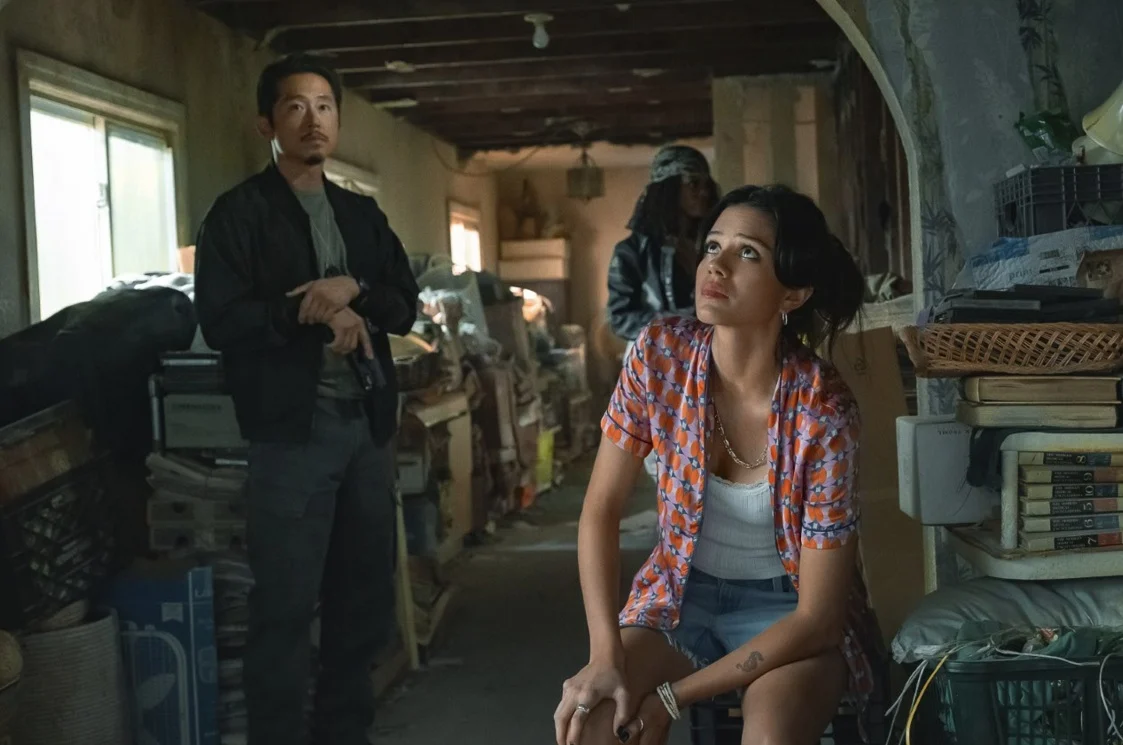
And hereby lies the film’s central conflict. Hidden in the attic is $20 million in drug cartel cash.
From there, protocol disintegrates. Dumars refuses to notify higher command. Phones are confiscated. Weapons are drawn. The money is counted in near silence. With every choice, the film narrows its focus, locking the audience into the same questions consuming its characters. Is there a snitch in the room? Is Dumars who he claims to be? And more damningly, is anyone here clean enough to trust?
This is where “The Rip” gets into its skin. The film is deceptively simple, built around a contained premise and a genuinely limited number of locations, with much of the action unfolding in and around a single house. Joe Carnahan understands that restriction is not a limitation, but leverage. The film never feels restless or padded because it places absolute faith in its own tension, proximity, and momentum.
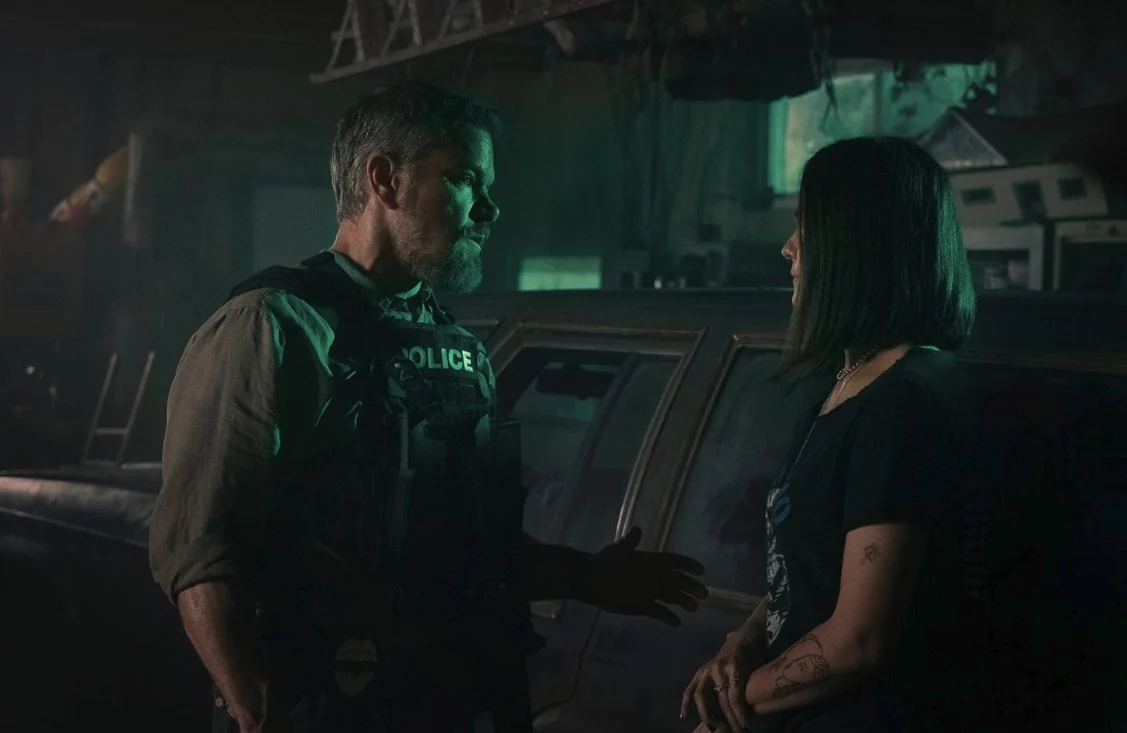
Carnahan has always gravitated toward muscular genre storytelling, from “Narc” and “Smokin’ Aces” to “The Grey” and “Boss Level.” Here, that instinct is refined into something more controlled. The visual language is stylish without being ostentatious. Carnahan disciplines the colour palette and keeps the camera in constant motion, tracking intention as much as action, so the audience always feels that something is being pursued, whether a lie, a glance, or a power shift. We are always on edge because of how the camera moves with intention.
One shot lingers in particular. Affleck’s Byrne drifts in and out of an extremely tight close-up, his face slipping briefly out of focus as the background blurs. It’s a small choice, but a telling one. Truth in “The Rip” is slippery. Perspective is unstable. Carnahan uses form to reinforce the theme, allowing the visuals to echo the film’s distrust of certainty.
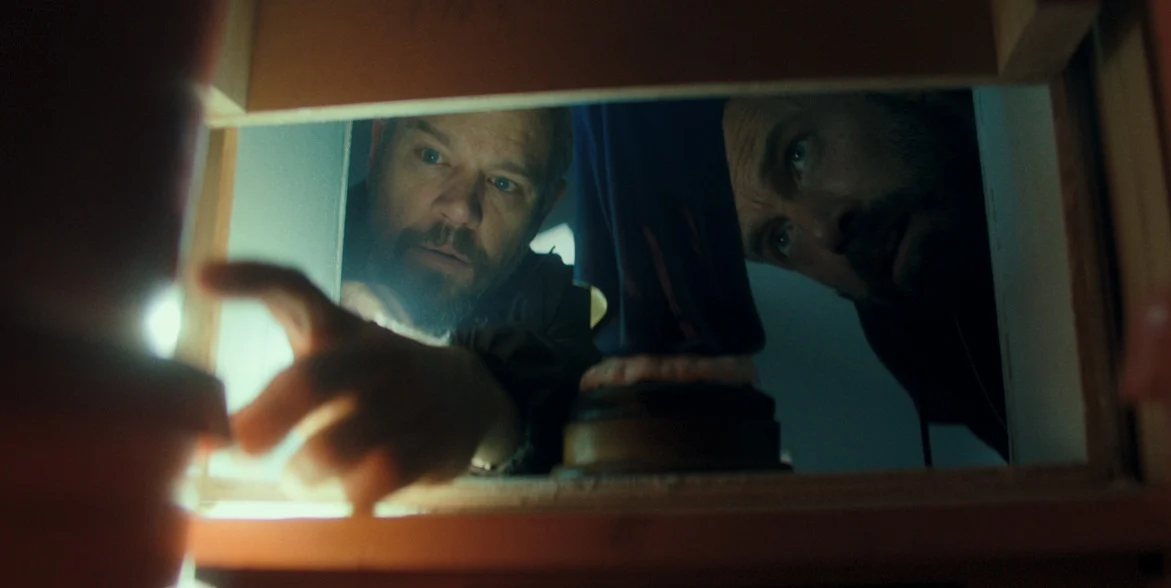
When the action finally arrives, it feels earned. The film builds tension the way water fills a glass, rising incrementally, the score swelling just beneath the surface, until the pressure can no longer hold. When that surface tension pops, Carnahan lets it spill. There is a cathartic movement to his rhythm, and we have to applaud how he does it.
Sure, that direction would mean little without performers capable of meeting the film at its level of intensity, and “The Rip” is anchored by an ensemble that commits fully to the collective. With Oscar winners and nominees across the cast, competence is a given. What distinguishes the film is how little anyone seems interested in dominating the frame, yet everyone is committed to selling it to their strengths.

Affleck and Damon, in particular, remind us why chemistry remains invaluable. Their shared history is immediately credible. The trust, the suspicion, the fractures all register instinctively. Crucially, they resist playing this as a nostalgic pairing. This is not Air, nor a victory lap. Their relationship here is adversarial, volatile, and frequently physical. When conflict erupts, they sell it completely. These are not two movie stars sparring; they are two men colliding under pressure.
Steven Yeun continues his run as one of the most compelling actors working today. There is still a trace of a boyish warmth, something audiences will recognise, but it sharpens here into something volatile and unsettling. Watching Yeun modulate and play around with the conflict is riveting.
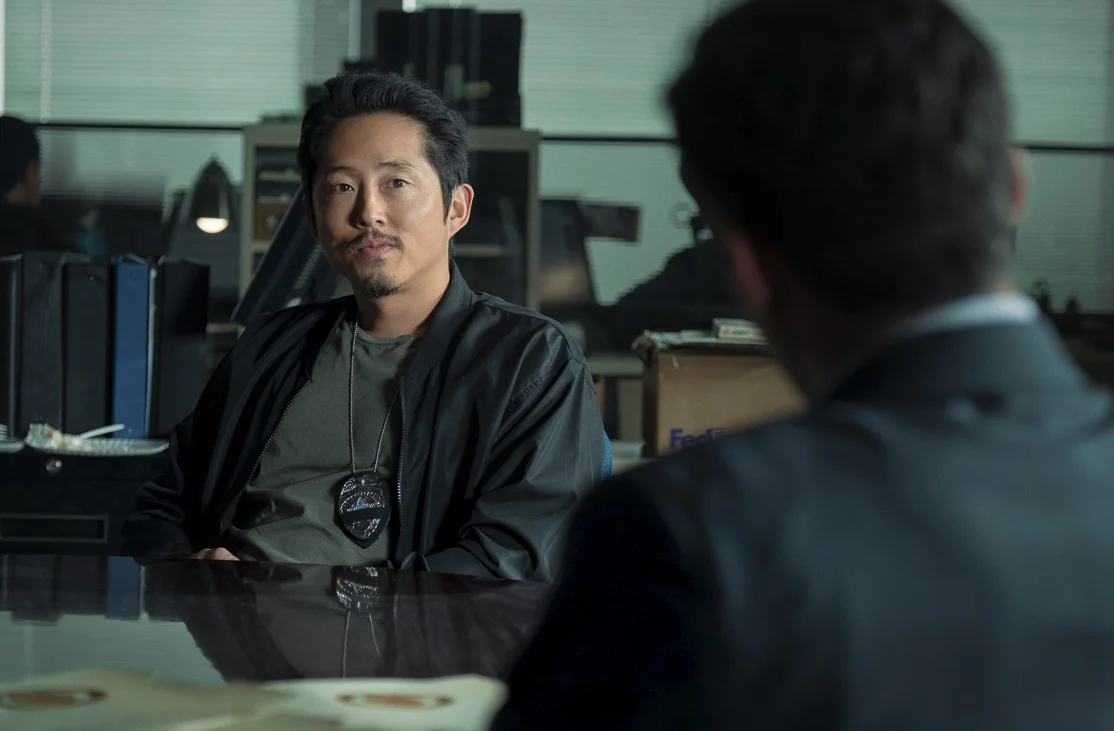
Teyana Taylor brings a different energy altogether. She’s more of the laid-back one this time. But having played law enforcement before, she arrives here with a new level of swagger. The control, the ease, the way she occupies space all signal an actor continuing to break her own barriers and try something new.
The ensemble extends beyond the leads, as these guys add layers of gravitas to the chaos. Kyle Chandler, our new Green Lantern, exudes his usual calm, measured authority, but he layers it with ambiguity, making it hard to tell whose side he truly occupies. And even Scott Adkins, who plays Byrne’s brother in here, does a convincing job of a foil.
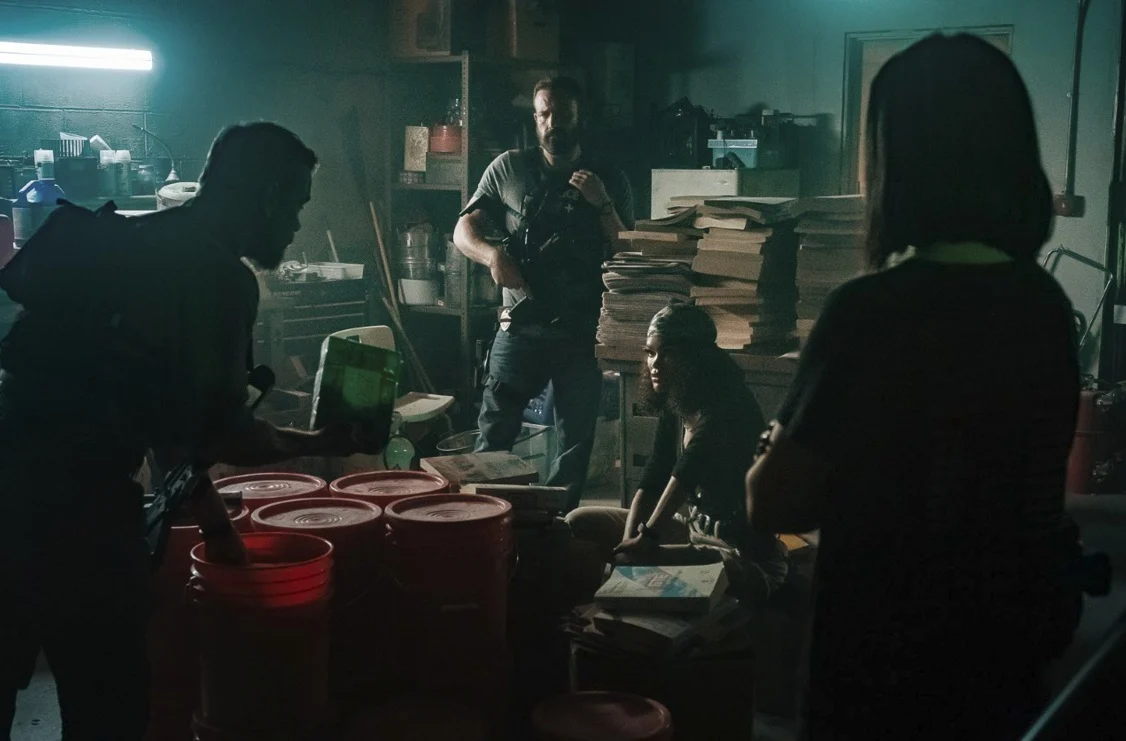
And sure enough, there are twists. But it’s gradual, like a string unravelling, they play out with precision, keeping the audience guessing without feeling manipulative. Loyalties seem to shift, and sometimes certain conversations aren’t what they seem, and the carefully planted red herrings pay off in ways that feel earned rather than contrived. The result is a thriller that never lets the tension sag, ensuring that the stakes remain both psychological and visceral throughout.
In one way, the film’s theme inevitably recalls another Netflix offering, “Triple Frontier.” Sure, that film obsessively explores greed and shows how morality erodes as the cash starts speaking like an evil mask. Both films are less interested in the mechanics of a heist than in the psychological toll it exacts, in how quickly money stops being abstract and starts demanding pieces of the self in return.

But where “Triple Frontier” sprawled across borders and terrain, “The Rip” compresses its tension into a suffocating space. The greed here is not operatic. It is intimate, corrosive, and immediate. The question is not how far these characters will go, but how quickly they are willing to betray the principles they claim to uphold.
Beyond the story on screen, “The Rip,” Damon and Affleck, alongside their company Artists Equity, served as producers on the film, pioneering a rare approach for Netflix: instead of paying the cast and crew entirely upfront, nearly 1,200 people on the production are eligible for performance-based bonuses over the first 90 days after release. Damon and Affleck consciously structured the deal to align the incentives of everyone involved, from star actors to grips and production assistants, giving the entire team a collective stake in the film’s success.
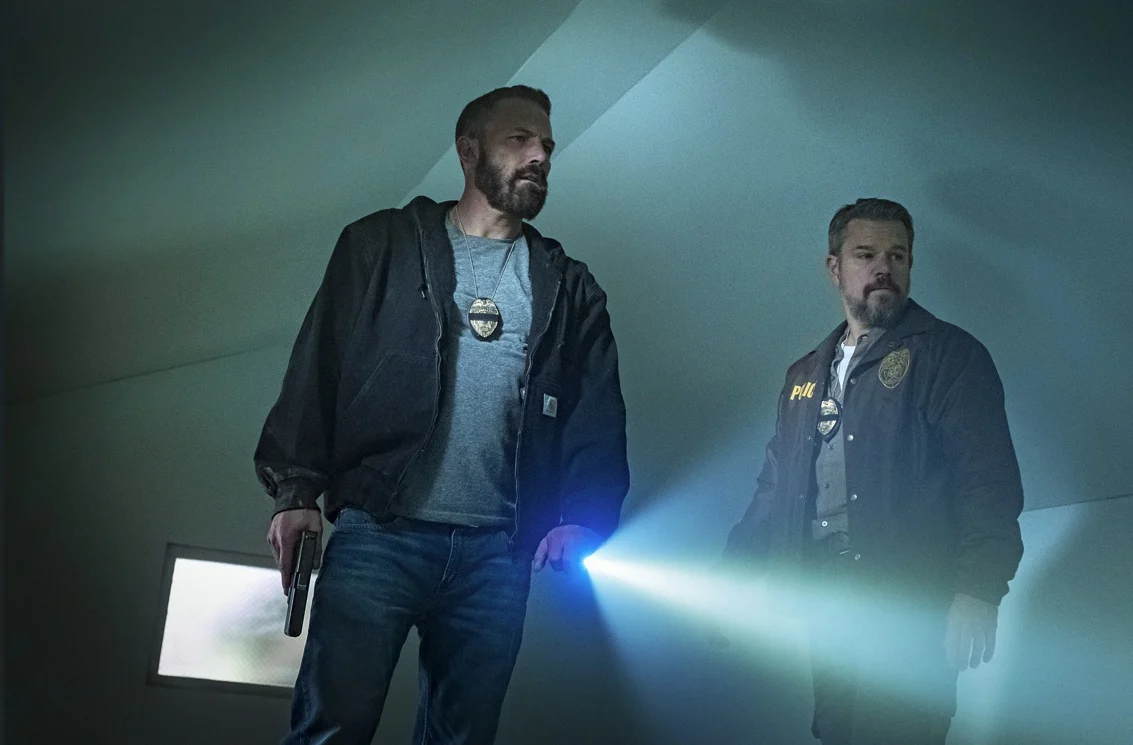
By the end, we were left smiling. Taken together, the cast and Carnahan’s disciplined direction transform a familiar setup into something taut, stylish, and consistently engaging. “The Rip” may not redefine a genre, but it sure as hell did give a lot of heart and soul into it.
Because in an era where many streaming releases feel interchangeable, “The Rip” reminds us that effort still matters. And if Damon and Affleck are paving the way for a new type of model that rewards excellence, we’re here for it. Because we want to see excellence in film. We want to see good movies in the theatre. We want to see good films at home. And regardless of where filmmakers place it, we want art to continue pushing boundaries and inspiring people to create in ways we have never seen before.

“The Rip” is currently tearing up the screen and playing exclusively on Netflix.
The Review
"The Rip"
"The Rip" is a taut, stylish Netflix crime thriller that thrives on tension, trust, and betrayal. Anchored by the magnetic chemistry of Ben Affleck and Matt Damon, Joe Carnahan’s disciplined direction keeps every twist and turn sharply focused, while a stellar ensemble, including Steven Yeun, Teyana Taylor, and Kyle Chandler, elevates the stakes. With a contained premise, relentless suspense, and a bold production model championed by Damon and Affleck’s Artists Equity, the film proves that smart storytelling and collaboration still matter in the streaming era. A gripping, well-crafted thriller that delivers both adrenaline and thoughtfulness.
Review Breakdown
- Thrilling